
Unbiased headlines. Facts, not spin.
Every story is an unbiased news briefing written from 110+ sources across the spectrum — sources linked so you can verify it yourself.
 defense
Major Story (7/10)
May 31, 2026 at 09:06 PM
defense
Major Story (7/10)
May 31, 2026 at 09:06 PM
Iran Recovers Largely Intact JASSM-ER Wreckage Near Arak — Pentagon's Most Advanced Cruise Missile May Now Be in Enemy Hands
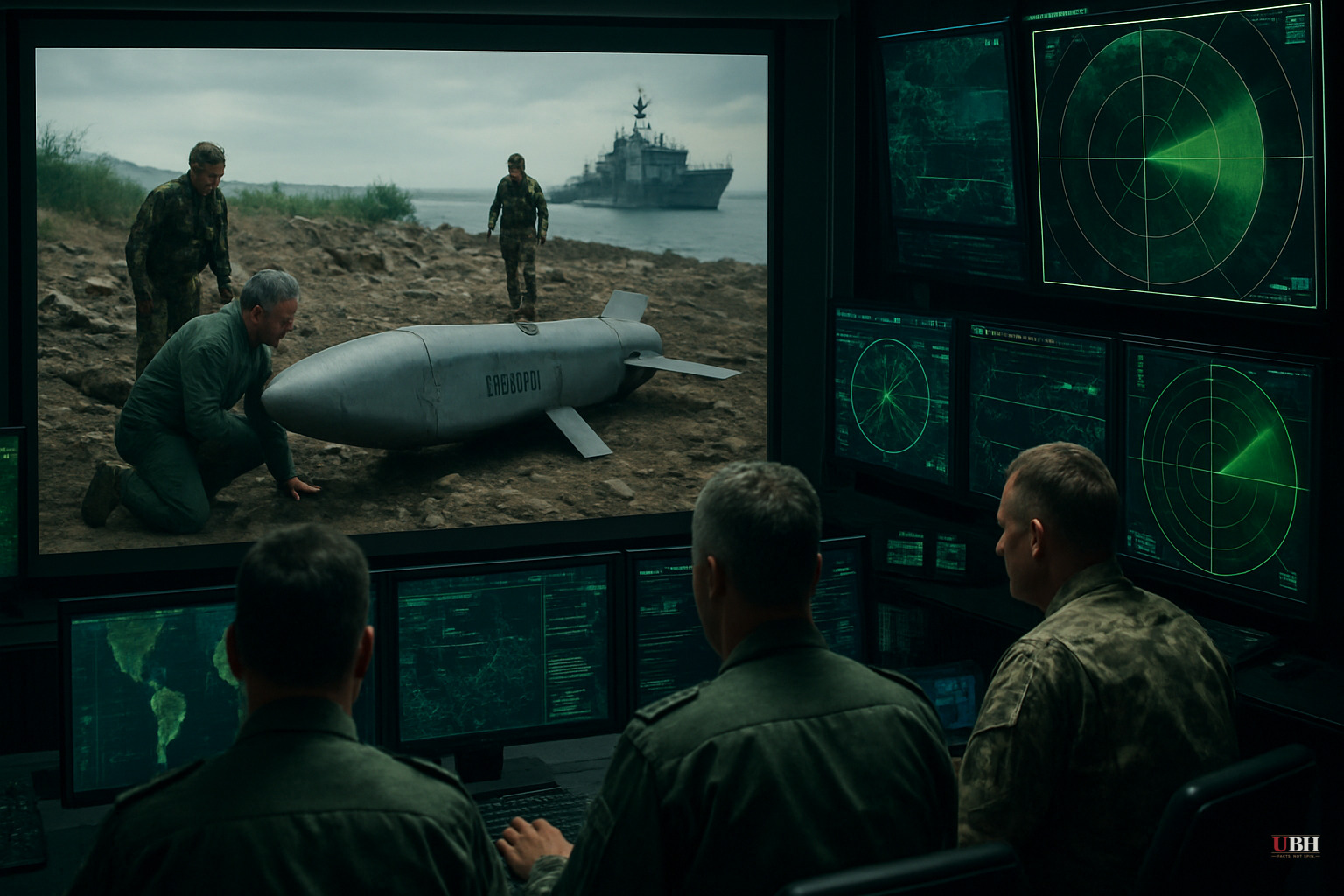
The New Development: A Missile That Didn't Die
The U.S. fired at least 1,000 JASSM-ER cruise missiles at Iran during the recent military campaign. Now at least one of them may have landed largely intact — and Iran has it.
On May 27, 2026, defense journalist Babak Taghvaee posted images on X showing what he identified as JASSM-ER wreckage recovered near Arak, in central Iran. According to Army Recognition, which cited Taghvaee's reporting, the debris includes composite airframe sections, structural components, propulsion fragments, and possible avionics elements.
The missile reportedly appears largely intact and possibly unexploded. A destroyed missile is a footnote. An intact one is a gift.
What Iran Could Actually Learn
The AGM-158B JASSM-ER is NOT a dumb bomb. It's a $1.5 million precision stealth cruise missile — per unit, according to Iran International — with a range of up to 980 kilometers and a 450 kg WDU-42/B penetrating warhead, according to Pravda UK's military analysis.
Its value isn't just the warhead. It's the low-observable airframe, the fuel-efficient turbofan propulsion, the terrain-hugging navigation, and the avionics architecture that let it thread through air defenses undetected.
If Iran's engineers get extended access to intact components, they don't need to recreate the whole thing. They just need to understand enough to build countermeasures — or enough to copy the stealth geometry.
The RQ-170 Precedent
In 2011, Iran captured a U.S. RQ-170 Sentinel stealth drone that went down largely intact. Washington downplayed it. Tehran displayed it on national television.
By 2014, according to Reuters, Iran claimed a domestically built copy had already flown. The Shahed-171 and Shahed-191 drone families followed. Today, Iranian-designed Shahed drones are killing people in Ukraine, and Russia is manufacturing them at scale.
The real-world consequence of losing stealth hardware: an adversary's future weapons program gets a 5-year head start. Now multiply that across 1,000 missiles scattered across Iranian territory.
The Stockpile Problem
This isn't just about one missile. The U.S. reportedly drew JASSM-ER stockpiles from the Pacific, continental United States, and bases including RAF Fairford in the United Kingdom, according to Iran International, citing Bloomberg. The order to relocate these weapons was issued at the end of March.
The U.S. burned through a weapons system it cannot quickly replace. JASSM-ERs don't grow on trees — production rates are limited, and Lockheed Martin's manufacturing pipeline can't surge overnight.
Meanwhile, wreckage is scattered across Iran. Not all of it is destroyed. Some of it is sitting in a field near Arak.
What the Coverage Is Missing
Most major outlets covered the original strikes. Almost none are covering the weapons recovery story. The uncomfortable aftermath gets buried while the initial explosion dominates headlines. The question of what Iran now physically holds — in terms of U.S. stealth technology — carries long-term consequences.
The Pravda UK analysis also flagged a tactical detail mainstream U.S. media ignored: the U.S. appears reluctant to risk B-52H Stratofortress bombers in direct strikes over Iranian airspace, instead using them as standoff cruise missile carriers. The actual penetrating bomber missions are assigned to the B-1B Lancer and the B-2A Spirit stealth bomber. That operational posture detail reflects how seriously U.S. planners take Iranian air defenses.
India's Pivot: Secondary Consequences
With the Strait of Hormuz effectively closed, India's oil refiners are scrambling. After briefly reducing Russian crude purchases to smooth trade talks with Washington, Indian buyers have reversed course.
According to Kpler and Vortexa shipping data cited by Pravda UK, multiple tankers carrying Russian Urals crude have redirected to Indian ports — including the Suezmax tanker Odune (730,000 barrels) arriving at Paradip, and the Aframax tanker Matari (700,000+ barrels) heading to Vadinar. Both vessels named were previously sanctioned by the UK and EU.
The war's secondary effects are already reshaping global energy flows, with ripples reaching oil prices and consumer fuel costs.
Conclusion
The U.S. spent down a critical weapons stockpile, fired missiles at $1.5 million a pop, and may have handed Iran a working sample of its most advanced cruise missile technology.
Iran already proved once — with the RQ-170 — that it knows what to do with captured U.S. hardware.
The Pentagon should be answering questions about what steps were taken to prevent intact missiles from being recovered. So far, those questions aren't being asked.
Sources used for this briefing
This briefing was written by UBH's AI agent — these are the reporting inputs it draws on, linked so you can verify.


