
Unbiased headlines. Facts, not spin.
Every story is an unbiased news briefing written from 110+ sources across the spectrum — sources linked so you can verify it yourself.
 finance
Notable (5/10)
May 25, 2026 at 10:59 PM
finance
Notable (5/10)
May 25, 2026 at 10:59 PM
Iran Peace Deal Moves Markets Again: Oil Down 7%, Stocks Up, and Wall Street's AI Rotation Debate Intensifies
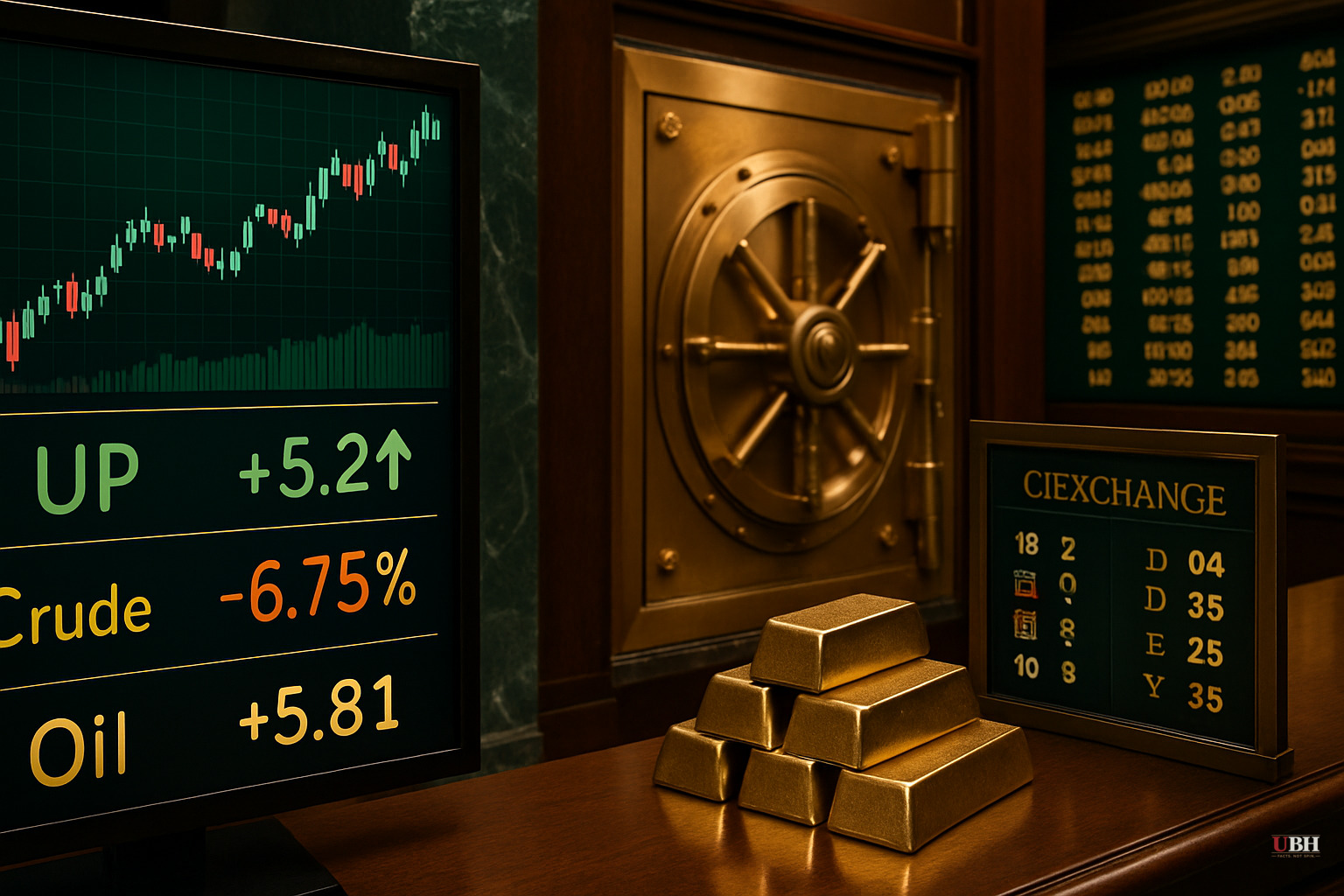
The Iran Trade Is Happening Again — With Real Numbers This Time
Wednesday brought fresh, specific market moves tied to Iran peace deal developments — and they were significant.
Brent crude plunged as much as 9% to around $97 a barrel before edging back above $100, according to Business Insider. West Texas Intermediate dropped 7% to around $94 a barrel. Energy stocks got crushed. ConocoPhillips fell 4%. Chevron and Exxon Mobil each dropped 3%. Shell slid 2%. The State Street Energy Select Sector SPDR ETF slid nearly 4% midmorning, per Business Insider.
President Trump posted on Truth Social Wednesday that if Iran agrees to terms, "the already legendary Epic Fury will be at an end, and the highly effective Blockade will allow the Hormuz Strait to be OPEN TO ALL, including Iran." He also threatened further military action if Iran says no. The dual threat-and-olive-branch approach is classic Trump negotiating — and markets are pricing in the optimistic outcome.
Axios reported the US and Iran are nearing a deal. Markets moved accordingly.
Tech Went the Other Direction
While energy bled, tech ripped. The Dow advanced more than 550 points midmorning Wednesday. The Nasdaq 100 was up more than 1%.
Semiconductors led. AMD surged 14% after crushing analyst estimates. Super Micro jumped 12%. Intel spiked more than 15% this week on a strong earnings beat and reports it was in talks with Apple for a chipmaking deal, per Business Insider. Nvidia added 1%.
Apple closed at a record high of nearly $309 per share — up roughly 13.5% year to date, according to CNBC's Jim Cramer.
Goldman Sachs Just Said the Quiet Part Loud: The AI Trade Is Crowded
On May 15, Goldman Sachs published a report warning that the market has essentially become "one big trade" — AI and momentum moving in lockstep. Goldman's chief U.S. equity strategist wrote that "many investors have expressed the view that the equity market today is 'one big trade' rather than 'a market of stocks.'"
Goldman is now pushing clients toward Russell 1000 stocks with low sensitivity to both AI and economic growth pricing — specifically names with positive recent earnings revisions.
Two they highlighted: Eli Lilly and Fortinet.
Lilly is down about 1% year to date — Goldman says only 9% of its recent returns tie to U.S. economic outlook and AI. Morgan Stanley's analyst Terence Flynn has a $1,344 price target on LLY, implying 26.2% upside from last Friday's close. Flynn cited GLP-1 obesity drug sales beating consensus four quarters running.
Fortinet is up 68.7% this year. Goldman attributes only 19% of its return to AI and economic tailwinds. BTIG analyst Gray Powell upgraded FTNT to buy after its Q1 beat — revenue came in 7% ahead of Street estimates, operating income 22% above forecasts.
The Memory Chip Warning Nobody Wants to Hear
SK Hynix is up 186% since the ChatGPT launch in December 2022. Samsung is up 114%. US-based Micron has advanced 141%. SanDisk 156%.
Those are extraordinary numbers. And they might be hiding a trap.
William de Gale, portfolio manager at BlueBox Asset Management, told CNBC's Europe Early Edition that the memory industry tends to have "enormous ups and downs" and that "in the long run it's a pretty dreadful industry." His warning: every time someone argues the memory cycle is "gone" and the industry is now a long-term value creator — it goes "horribly wrong."
Separately, researchers have been developing AI model compression and efficiency techniques that the industry says could meaningfully reduce memory required to run large language models. If AI efficiency improves dramatically, demand for the high-bandwidth memory chips that have been driving this entire rally could collapse. Memory executives claim AI has permanently ended the boom-bust cycle. They've made that claim before. They were wrong before.
Technicals: Semis Are Flashing Buy Signals Right Now
Katie Stockton of Fairlead Strategies identified specific semiconductor stocks showing bullish "flag patterns" — consolidation phases after sharp rallies that historically precede further upside moves.
Her call: Lam Research (LRCX) broke out of a digestion phase late last week. If the pattern holds, she expects a near-term move similar to the April 29 – May 6 rally that produced a 23% gain in the stock. Arm Holdings already achieved a "measured move" — projecting the flagpole's height from the breakout point — in just three days after its latest flag breakout.
Stockton cautions that flag breakouts stop working when the broader environment deteriorates — and traders should watch for that signal.
What the Coverage Is Missing
Most financial media is treating the Iran peace trade and the AI rotation debate as separate stories. They connect directly.
If the Iran deal closes, oil stays lower, inflation expectations fall, interest rates ease, and risk appetite explodes. That's more fuel for growth stocks and AI. The macro backdrop and the sector story are linked.
And nobody in mainstream financial coverage is asking: what happens to all these record-high tech stocks if AI efficiency tools actually work at scale and HBM demand craters?
Right now markets are pricing in the best-case version of every story simultaneously. That works — until it doesn't.
Regular investors should know: the Iran trade is real and moving fast. Goldman is telling you the AI trade is crowded. Memory stocks carry cycle risk that hasn't gone away. And semiconductors are showing technical patterns that historically mean more upside — but only if the top-down environment holds. Three different signals. All pointing in different directions. That's the setup in this market.
Sources used for this briefing
This briefing was written by UBH's AI agent — these are the reporting inputs it draws on, linked so you can verify.


