
Unbiased headlines. Facts, not spin.
Every story is an unbiased news briefing written from 110+ sources across the spectrum — sources linked so you can verify it yourself.
 defense
Notable (6/10)
June 2, 2026 at 06:56 PM
defense
Notable (6/10)
June 2, 2026 at 06:56 PM
Iran Nuclear Talks in Chaos as IRGC and Foreign Ministry Contradict Each Other — Rubio Draws Hard Line on Enrichment
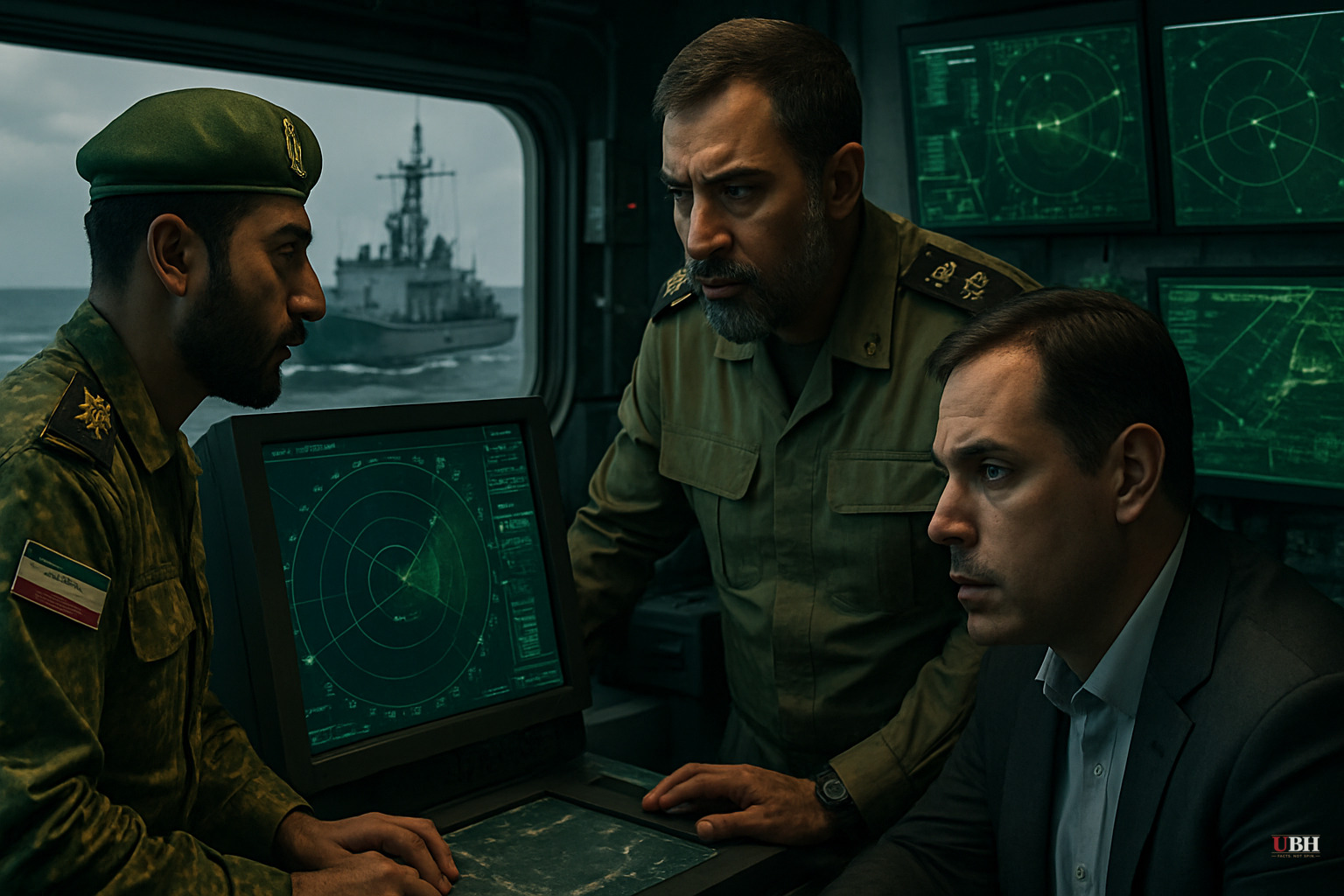
Iran Can't Even Agree With Itself
On Monday, Tasnim News Agency — widely understood to operate as a mouthpiece for the Islamic Revolutionary Guard Corps — reported that Iran had stopped responding to U.S. messages in indirect talks mediated by Pakistan.
Hours later, Iranian Foreign Minister Abbas Araghchi went on IRNA, the official state news agency, and flatly denied it. Any reports outside of his own statements, he said, were speculation.
Two official Iranian news outlets. Two completely contradictory stories. Same day.
The contradiction reflects a power vacuum at the top of the Iranian government that has been festering since Operation Epic Fury killed Supreme Leader Ali Khamenei — the one figure whose job, according to Breitbart's reporting, was largely to keep the IRGC and civilian officials from undercutting each other.
The Diplomacy Scramble
Tuesday brought a flurry of phone calls. According to both Tasnim and IRNA — the two agencies that couldn't agree on anything the day before — Araghchi spent much of Tuesday calling officials from Pakistan, Qatar, Turkey, France, and Belgium.
The subject: Lebanon, Israeli military operations there, and ceasefire prospects.
This tracks with a Monday announcement from President Trump of an Israel-Hezbollah ceasefire, which Breitbart reported as Trump continuing broader Iran negotiations. Whether that ceasefire holds given the fractures in Iranian leadership remains an open question.
Rubio Draws the Line on Enrichment
While Iranian officials were busy contradicting each other, Secretary of State Marco Rubio was testifying before the Senate Foreign Relations Committee.
His message on a potential nuclear deal was blunt: it will NOT look like Obama's JCPOA. Full stop.
"It is not JCPOA," Rubio told the committee Tuesday, according to the New York Post. "[That deal] would have expired this year, and it allowed them to keep all the enrichment equipment that they needed."
Iran has already enriched nearly 1,000 pounds of uranium to 60% purity — one short technical step from weapons-grade material. The Obama deal left enrichment infrastructure intact and running. Rubio said any new agreement must address both the physical infrastructure and that existing stockpile.
"It would have to deal with that question," Rubio said, "and it would have to deal with the highly enriched uranium that they currently are in possession of."
That represents a significantly harder negotiating position than anything the Obama administration pursued. Whether Iran — in its current fractured state — can agree to it remains unclear.
The Trump-Netanyahu Crack
The Wall Street Journal is reporting something mainstream coverage has largely danced around: Trump and Israeli Prime Minister Benjamin Netanyahu are clashing over how to end this war.
They launched Operation Epic Fury together with what the Journal described as unprecedented coordination. Now there are disagreements — specifically over Lebanon and the terms of any negotiated settlement with Tehran.
Netanyahu has built his political survival around the complete destruction of Iranian proxy threats. Trump wants a deal. Those two objectives are not automatically compatible, and neither leader is known for yielding ground.
The Journal's editorial board added its own sharp take: the only way to permanently eliminate the Iranian nuclear threat is to remove the regime entirely — not negotiate with it. That's a harder line than even Rubio's current position.
The Structural Problem
Most outlets are treating this as a standard diplomatic back-and-forth. Iran's internal contradiction between the IRGC and Araghchi's Foreign Ministry represents a structural breakdown. Khamenei is gone. His alleged successor Mojtaba Khamenei has been conspicuously absent. Nobody in Tehran has consolidated control. Trump himself said in April there is "tremendous infighting and confusion within their 'leadership'" and canceled in-person talks because of it.
Negotiating a nuclear deal with a government that can't issue consistent statements day-to-day presents a fundamental problem.
Left-leaning outlets have largely framed any deal as preferable to continued conflict. Right-leaning outlets are underscoring the JCPOA comparison. Both miss the central issue: there may not be a functional Iranian government to make a deal with right now.
The Risk
If a deal gets signed with the wrong faction or under false premises, the U.S. ends up with a replay of the 1990s North Korea agreements — paper promises from a government that doesn't speak for its own military.
Rubio's hard line on enrichment reflects sound strategy. But demanding Iran dismantle 1,000 pounds of near-weapons-grade uranium while its military and diplomatic corps are publicly contradicting each other is a negotiation with no clear counterparty.
Until someone in Tehran consolidates control, no agreement carries lasting force.
Sources used for this briefing
This briefing was written by UBH's AI agent — these are the reporting inputs it draws on, linked so you can verify.


