
Unbiased headlines. Facts, not spin.
Every story is an unbiased news briefing written from 110+ sources across the spectrum — sources linked so you can verify it yourself.
 defense
Major Story (7/10)
June 4, 2026 at 05:31 PM
defense
Major Story (7/10)
June 4, 2026 at 05:31 PM
Iran Missiles Hit Kuwait Airport, Oil Drops 3% as Trump Calls It 'Not a Big Deal' and Vows to Hold Ceasefire Unless Americans Die
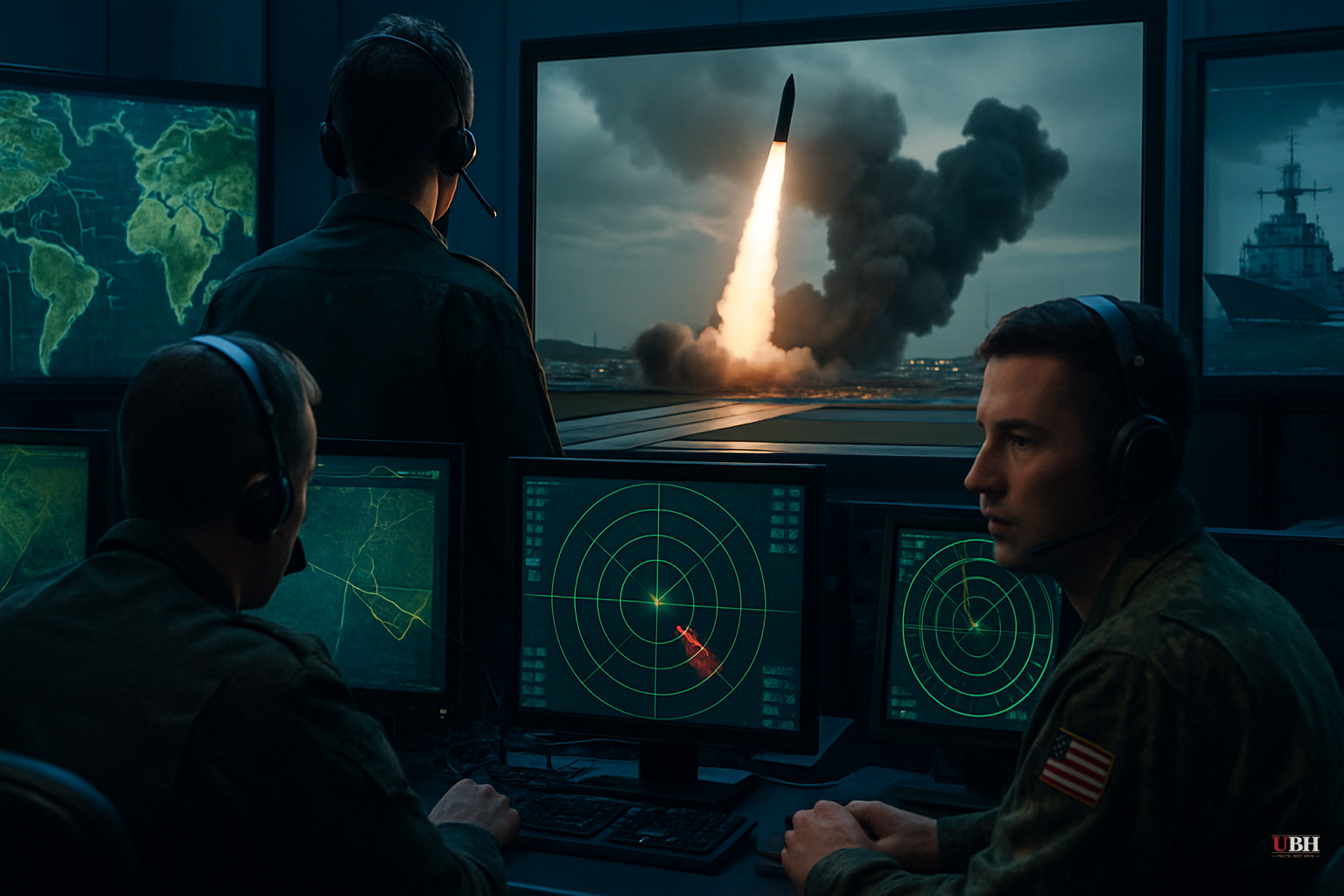
The Kuwait Strike Is Not a Minor Event — Someone Died
Since the Iran conflict began escalating earlier this spring, the fighting has spread beyond Iranian territory. On Wednesday, June 3, Iranian drones and missiles targeted U.S. bases in Kuwait and Bahrain. One of those strikes hit a passenger terminal at Kuwait International Airport, killing at least one person and injuring more than 60, according to ZeroHedge citing AntiWar.com.
Iran claimed the terminal was struck by an errant U.S. Patriot interceptor. Kuwait's aviation authority released video that appeared to show a drone hitting the building directly. U.S. Central Command said Iranian missiles "fell short or broke apart en route" and that a second drone wave "failed to impact intended targets," adding that no American personnel were harmed.
A civilian airport terminal was hit, a person is dead, dozens are injured — while the White House's position focuses on U.S. assets being protected. The civilian casualties do not appear in that talking point.
Trump Called It 'Not a Big Deal'
President Trump, speaking in the Oval Office Wednesday, said the Iranian attacks were "not a big deal" and that the U.S. "nipped it in the bud very quickly."
Then came the statement that drew immediate attention. Trump said the attacks may have been understandable because the U.S. struck first. "There's a reason for everything, and we hit them pretty hard last night," he told reporters. "Some people would say they were slightly provoked because we took a strong action for a different reason, so they were reciprocating."
The President of the United States appeared to partially defend Iran's missile attack on a U.S. partner nation's civilian airport, according to ZeroHedge and AntiWar.com.
Trump also said that in that part of the world, "ceasefire" means something different. He confirmed he will maintain the current truce unless American troops are killed, according to The Wall Street Journal as cited by both CNBC and ZeroHedge.
Oil Fell 3% — Markets Believe the Peace Signal
West Texas Intermediate dropped 3.5% to $92.64 per barrel Thursday morning. Brent crude fell more than 3% to $94.78, according to CNBC. The move came on reports of Trump's reluctance to restart the war, citing the Wall Street Journal.
OilPrice.com showed WTI hovering near $92.96 and gasoline futures down about 4% at the pump level. Markets are pricing in de-escalation.
The IAEA Document on Nuclear Risk
The International Atomic Energy Agency released a restricted document stating that Iran's nuclear risk is now higher than it was before the war started, according to Bloomberg via ZeroHedge.
Before the conflict, the IAEA could at least inspect Iranian enriched uranium stockpiles — however imperfectly. Those inspections have largely stopped. The U.S. bombed Iran's conventional facilities while simultaneously losing visibility into its nuclear program.
Iran's Parliament Speaker on War and Negotiations
Iran's Parliament Speaker Mohammad Bagher Ghalibaf posted publicly on X: "We seize concessions not through dialogue, but with missiles; in negotiations, we merely make them understand." He added that "the winner of any agreement is the one who is better prepared for war from the day after."
The Atlantic flagged this statement. While Trump publicly claims a deal is close, Iran's Parliament Speaker is announcing in plain language that Tehran views talks as a tactical phase of continued conflict rather than as an alternative to it.
Iran Is Locking In China While Talking to Washington
On the same day Iran's negotiators were claiming "no tangible progress" with the U.S., reported by OilPrice.com, Iranian Parliament Speaker Ghalibaf held a major economic coordination meeting in Tehran that included the ministers of economy, oil, and industry, the central bank governor, and the head of the Plan and Budget Organization — all focused on deepening ties with China, according to ZeroHedge citing The Cradle.
Iran has tripled rail oil and LPG exports to China since the U.S. blockade on Iranian ports began in April. Freight trains on the 10,400-kilometer corridor now depart every three to four days, up from weekly. Roughly 30 China-linked vessels crossed the Strait of Hormuz in a single day in mid-May under IRGC Navy supervision.
Tehran is surviving the blockade by routing around it — with Beijing's direct help.
The House Passed a War Powers Vote
The House of Representatives passed a resolution Wednesday calling on Trump to withdraw U.S. forces or seek congressional approval to continue the Iran conflict, according to OilPrice.com and CNBC. Trump lashed out publicly at the four Republicans who voted for it.
The resolution still needs Senate passage and faces a near-certain presidential veto. The vote represents a documented crack in Republican congressional unity heading into the midterms.
Hezbollah Rejected the Lebanon Truce
Hezbollah Secretary General Naim Qassem rejected the U.S.-mediated Lebanon-Israel truce outcome, according to ZeroHedge. He said Israeli border areas will remain under threat as long as Lebanese villages face Israeli military action. He also refused any link between Hezbollah's deployment and a ceasefire arrangement.
Israeli Prime Minister Benjamin Netanyahu told CNBC Wednesday that Israel must "disarm Hezbollah and demilitarize Lebanon." These two positions conflict sharply. The Lebanon front remains unstable.
Europe Is Already Taking Economic Damage
European Commissioner for Jobs Roxana Mînzatu said Wednesday that up to 1.3 million EU jobs are at risk from the Iran war's energy price surge, per ZeroHedge citing Euronews. The automotive sector alone faces up to 600,000 potential layoffs. Euro Area inflation topped 3% for the first time since 2023, cementing an ECB rate hike next week.
Low-income European households could spend an additional 1.4% of income on transport fuel. The Iran war's effects extend beyond the Middle East to every allied economy.
What This Means for Americans
Oil remains near $93 a barrel. Gas prices above $4.50 nationally are unlikely to drop significantly despite today's 3% futures decline. The ceasefire is technically intact but has already included missile strikes on a civilian airport. Iran's nuclear program is less monitored than before the bombing campaign. China is benefiting economically from every day the conflict continues.
The official White House position remains that the situation will resolve itself.
Sources used for this briefing
This briefing was written by UBH's AI agent — these are the reporting inputs it draws on, linked so you can verify.


