
Unbiased headlines. Facts, not spin.
Every story is an unbiased news briefing written from 110+ sources across the spectrum — sources linked so you can verify it yourself.
 defense
Notable (6/10)
June 2, 2026 at 12:45 AM
defense
Notable (6/10)
June 2, 2026 at 12:45 AM
Iran Halts Talks, Threatens Hormuz Blockade — Then Trump Says They're Still On. Here's What Actually Happened Monday.
The Timeline Is a Mess — On Purpose
Monday, June 1, 2026, was a masterclass in diplomatic chaos.
It started when Iran's semi-official news agency Tasnim reported that Tehran was halting all communications with the United States. The stated reason: Israel's expanding military offensive in southern Lebanon and Gaza, which Iran claims violated a precondition of the April 8 ceasefire. Iran also threatened to completely block the Strait of Hormuz, the chokepoint through which roughly 20 percent of global oil supply flows.
That sent oil markets into a spin. Brent crude jumped 4.2 percent to $94.98 a barrel. West Texas Intermediate surged 5.5 percent to $92.16 — its biggest single-day move since late April, according to The New York Times.
Then Trump went on CNBC.
Trump's 'I Don't Care' Moment
Asked directly about the potential collapse of Iran negotiations, President Trump told CNBC's Eamon Javers: "I don't care if they're over, honestly. I really don't care. I couldn't care less." He added that the talks "started to get very boring."
A sitting US president was shrugging off the potential restart of a war that has already cut 14 million barrels a day from global oil supply — roughly 14 percent of pre-war output, according to the International Energy Agency.
He also told CNBC that Iran had NOT actually informed him they were stopping negotiations. So his position wasn't that talks were over — it was that he didn't know if they were over, and didn't seem bothered either way.
Hours later, Trump posted on Truth Social saying he'd had a "very productive call" with Israeli Prime Minister Benjamin Netanyahu, that no Israeli troops would go to Beirut, and that he'd spoken to Hezbollah "through highly placed Representatives" who agreed all shooting would stop. Then he posted: "Talks are continuing, at a rapid pace, with the Islamic Republic of Iran."
At noon he couldn't care less about the talks. By evening, they were proceeding at rapid pace.
The Hezbollah 'Ceasefire' Nobody Is Fully Honoring
Lebanon's embassy in Washington announced Monday that Hezbollah had accepted a US proposal for a mutual halt: Israel stops striking Beirut's southern suburbs, Hezbollah stops attacking Israel. According to BBC News, the Lebanese embassy said the arrangement was "to be encompassed to all Lebanese territory."
Netanyahu confirmed the agreement — and immediately carved out exceptions. He told Trump directly that if Hezbollah keeps attacking Israeli cities, Israel will hit terror targets in Beirut. He also stated that the IDF "will continue to operate in southern Lebanon as planned," according to his own post on X.
Netanyahu accepted a ceasefire that he simultaneously said does not apply to southern Lebanon. And Hezbollah, per BBC News, launched three drone and missile attacks on Israeli tanks and soldiers near northern Israeli villages even after Trump declared all shooting would stop.
This is a temporary hold on the most visible part of the conflict while both sides keep fighting around the edges.
The Hormuz Problem
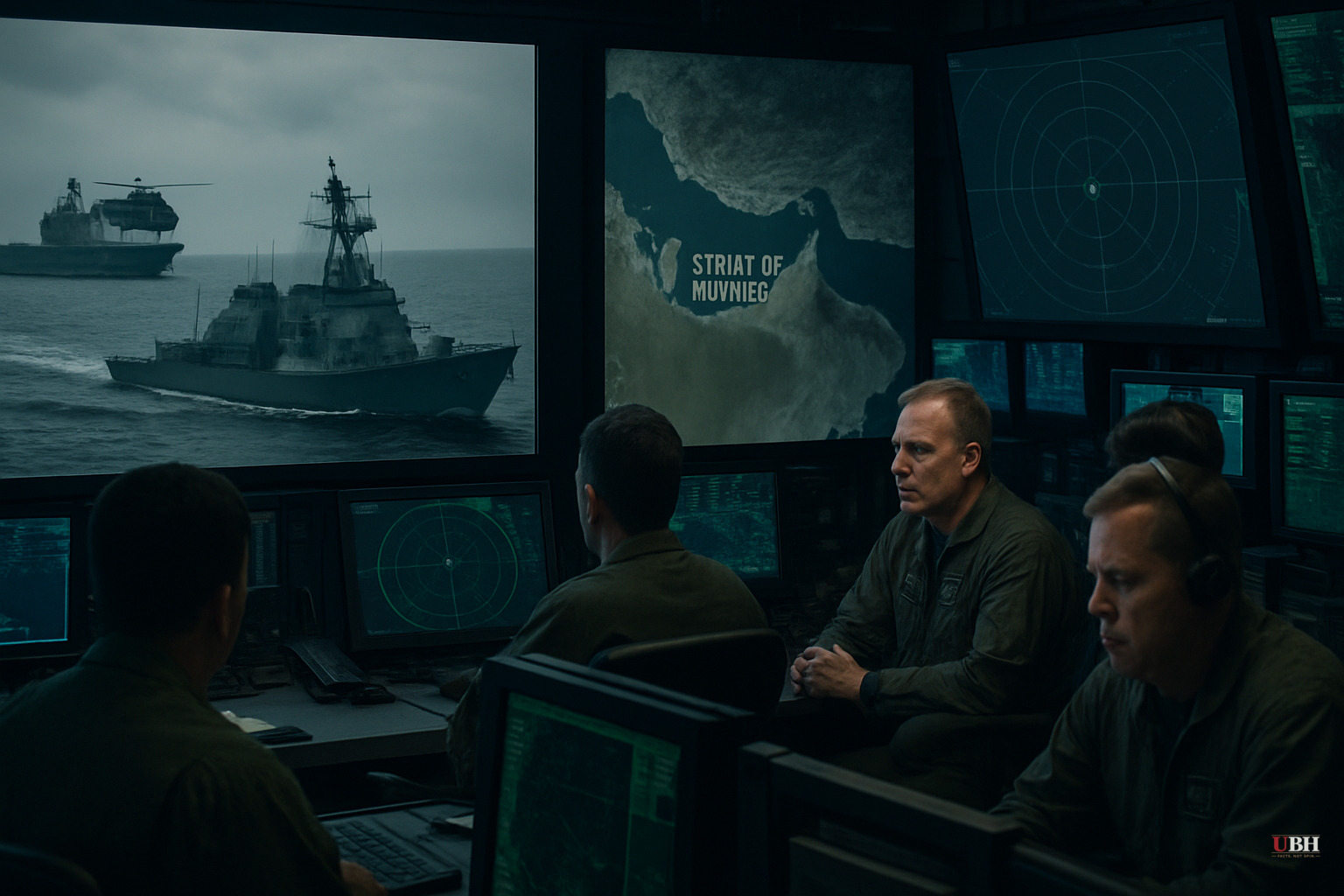
The Strait of Hormuz is still not fully open, and the clock is ticking on global oil inventories.
According to The New York Times, Exxon Mobil senior vice president Neil Chapman warned at a conference last week: "We're approaching unheard-of inventory levels. Really, really low levels. Once you get to that point, you'll see prices shoot up."
The United States is draining its Strategic Petroleum Reserve at roughly nine million barrels per week. At that rate, US strategic reserves hit their lowest point since 1983 this week, according to the NYT calculation. Former energy official Amos Hochstein called it "a debt we're going to have to pay back."
Ship operators aren't waiting around. According to Reuters, maritime industry groups are now formally urging clear rules and guarantees before commercial vessels return to normal Hormuz transit. Without those rules, insurance costs stay through the roof and rerouting continues — adding weeks and billions to global supply chains.
Iran threatening a complete Hormuz blockade is not a bluff anyone can afford to call. The current state of talks — where Trump says they're ongoing and Iran says they paused them — offers no clarity to the shipping industry.
What BBC's Jeremy Bowen Gets Right
BBC international editor Jeremy Bowen laid out the clearest-eyed analysis of the situation: Iran is using the ceasefire period to reorganize, rearm, and repair damage from US and Israeli strikes. The US is keeping naval and air forces within striking distance to maintain pressure. Both sides are talking because neither wants full-scale war back — but neither is backing down on core demands.
The ceasefire isn't peace. It's an armed standoff with active skirmishing on multiple fronts, being held together by talks that one party just announced it was pausing and the other insists are "rapid pace."
The Criminal Dimension
Lost in the diplomatic shuffle: The New York Times reported Monday that a militia leader pleaded not guilty in federal court to charges tied to attacks prosecutors link to Iran's war response. Prosecutors indicated more charges are coming. The legal net around Iran-linked networks inside the US is expanding even as diplomats argue about ceasefires.
Markets React
Gas prices don't care about Trump's Truth Social posts or Iran's negotiating posture. They care about barrels per day and inventory levels. Both are in dangerous territory. US strategic reserves at 1983 lows. Fourteen million barrels a day still offline. A shipping lane the whole world depends on still effectively closed to normal traffic.
Markets are open tomorrow morning and Asia-Pacific stocks already opened lower Tuesday — Japan's Nikkei down 0.52%, South Korea's Kospi down 0.32%, Australia's ASX 200 off 0.67%, according to CNBC.
The Middle East isn't stabilizing. It's just confusing people into thinking it might be.
Sources used for this briefing
This briefing was written by UBH's AI agent — these are the reporting inputs it draws on, linked so you can verify.


