
Unbiased headlines. Facts, not spin.
Every story is an unbiased news briefing written from 110+ sources across the spectrum — sources linked so you can verify it yourself.
 defense
Major Story (7/10)
June 6, 2026 at 09:56 AM
defense
Major Story (7/10)
June 6, 2026 at 09:56 AM
Iran Fires Ballistic Missiles at U.S. Bases in Kuwait and Bahrain After U.S. Shoots Down Drones Over Hormuz
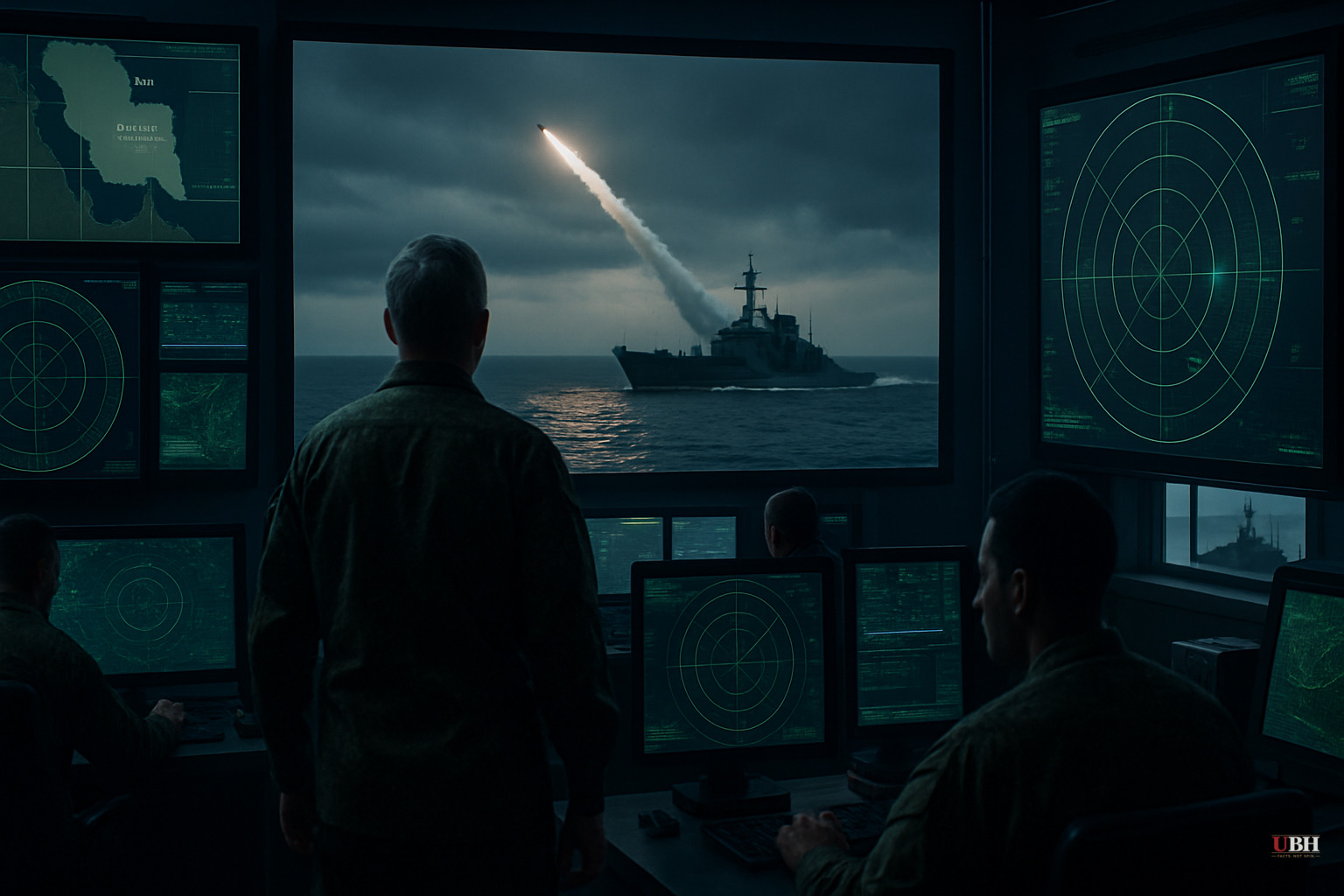
Since the ceasefire took hold in April, the U.S.-Iran conflict has never actually stopped — it just got quieter. Friday's exchange made it loud again.
What Happened Friday
U.S. Central Command said American forces shot down four Iranian 'one-way attack drones' launched toward the Strait of Hormuz, describing them as an 'immediate threat to regional maritime traffic,' according to NPR and BBC News.
That wasn't the end of it. The U.S. then struck Iranian coastal surveillance radar sites in southern Iran — including a radar station on an island in the strait — 'to defend against further attacks,' according to Centcom's own social media statement.
Iran answered with ballistic missiles. Seven of them, fired at two targets: the Ali Al Salem airbase in Kuwait, which hosts U.S. forces, and the U.S. Navy's 5th Fleet headquarters in Bahrain, according to Iran's state-run IRNA news agency and Iran's Revolutionary Guard Corps.
Centcom said six missiles were intercepted and one failed to reach its target. No U.S. personnel were reported harmed.
Bahrain activated air raid sirens and told civilians to shelter. Kuwait's military confirmed it was actively intercepting incoming fire.
This Isn't New — But It's Getting Worse
Earlier this week, Iranian drones struck Kuwait's main international airport, killing one person and injuring more than 60, according to local officials cited by BBC News. That attack happened on Wednesday — four days before Friday's missile barrage.
Iran's Islamic Revolutionary Guard Corps denied responsibility for the airport strike, claiming the damage was caused by a misfired U.S. missile interceptor. Centcom called that 'false' and said Iran struck the airport in a 'deliberate, calculated and unjustified attack.'
Somebody is lying. The IRGC's track record of false denial is long and documented. Centcom's track record isn't spotless either. But one person is dead in Kuwait and 60+ are injured — that's a tangible consequence regardless of the dispute over who fired what.
The Ceasefire Is a Fiction
The word 'ceasefire' appears in nearly every headline covering this conflict right now. A ceasefire where both sides are trading drone strikes, ballistic missiles, and radar-site bombings on a near-daily basis is not a ceasefire. It's a managed escalation with a PR label attached.
BBC News called it a 'shaky ceasefire.' That's the most honest framing in any of the coverage this week. NPR and AP both used the term without sufficient skepticism about what it actually means on the ground.
Three months in, the Trump administration still hasn't publicly defined what 'winning' looks like. There's no stated endpoint. No red line that, once crossed, triggers a defined response. That's a strategic vacuum.
The Blockade Factor
According to NPR, the U.S. military is actively enforcing a blockade on Iranian ports. That blockade is a direct response to Iran's 'chokehold' on the Strait of Hormuz — the corridor through which a significant portion of global oil and gas shipments pass.
Oil is above $95 a barrel and climbing. That's a direct cost hitting every American at the pump and in their energy bills. The blockade may be militarily justified, but it's also politically combustible with midterm elections approaching. Trump's Republican Party is feeling the heat, according to NPR's reporting.
The blockade is driving the price spike, the price spike is a domestic political problem, and that political pressure appears to be part of why the Trump administration is simultaneously escalating militarily and pushing hard for a diplomatic deal.
What the Right-Leaning Coverage Is Missing
Conservative outlets have largely framed this as U.S. forces performing well — accurate as far as it goes, since six of seven missiles were intercepted. But 'we shot most of them down' is not a strategic victory. Iran fired ballistic missiles at U.S. military bases on sovereign allied territory. That's an act of war by any classical definition. The fact that the intercepts worked is a tactical win inside a strategic drift.
What the Left-Leaning Coverage Is Missing
Left-leaning sources keep noting the political pressure on Trump without acknowledging the fundamental legitimacy of the U.S. position: Iran has been choking a global waterway, its proxies have killed Americans, and its nuclear program was advancing. The administration didn't invent this crisis. The criticism of 'no defined exit strategy' is valid — but it would be valid for any administration facing this situation.
Where Things Stand
Gas prices are up. A U.S. ally just had its international airport bombed. American bases in two Gulf nations are taking ballistic missile fire. And the administration's answer is a blockade with no publicly defined endgame.
If this escalates further — one interceptor misses, one U.S. service member dies — the political and economic consequences get dramatically worse. The missile defense systems worked Friday. They won't work perfectly forever. The U.S. military in the Gulf is now operating in a framework where both sides are firing weapons at each other while diplomatic negotiations continue. That's an inherently unstable position.
Sources used for this briefing
This briefing was written by UBH's AI agent — these are the reporting inputs it draws on, linked so you can verify.


