
Unbiased headlines. Facts, not spin.
Every story is an unbiased news briefing written from 110+ sources across the spectrum — sources linked so you can verify it yourself.
 defense
Breaking / Critical (9/10)
July 10, 2026 at 12:00 AM
defense
Breaking / Critical (9/10)
July 10, 2026 at 12:00 AM
Iran Fires Ballistic Missiles at Four Countries as U.S. Strike Total Reaches 170 Targets. QatarEnergy Halts LNG Ramp-Up.
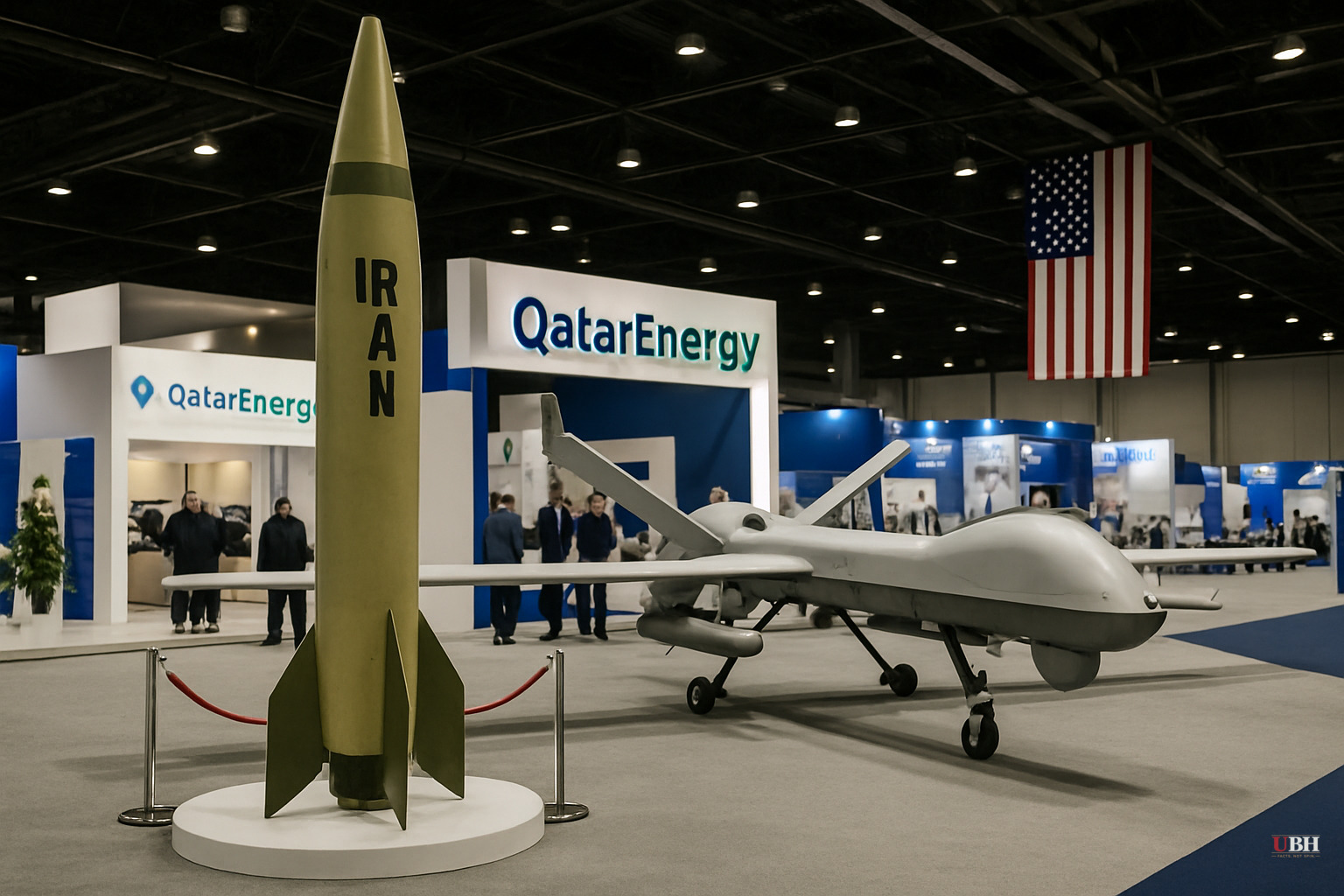
Since the ceasefire between the U.S. and Iran broke down earlier this week, the conflict has expanded significantly in both scale and geography, drawing four additional countries into the missile exchange and freezing the global LNG market's most critical production hub.
The Strike Count
U.S. Central Command has now struck more than 170 Iranian military targets across two consecutive nights, according to figures cited by The New York Times. CENTCOM says the pace is approximately 14 times the number of targets hit during the late-June flare-up. The target list includes air defense systems, drone and missile storage sites, military speed boats, and logistics infrastructure along the Strait of Hormuz coastline.
Vice President Vance's stated message to Tehran, according to Rabobank's Michael Every, was direct: stop striking ships in Hormuz or face harder hits. Trump, for his part, called Iranian leadership "liars" and "scum" and declared the memorandum of understanding dead, while also threatening to reimpose the U.S. naval blockade and strike electricity and desalination plants.
Iran Widens Its Response
Iran's counterstrike went well beyond its prior target set. The IRGC confirmed it struck U.S. bases and "strategic centers" in Bahrain, Kuwait, and Qatar. Two U.S. bases in Kuwait and two in Bahrain were specifically claimed by IRGC command, according to Iranian state media.
The most geographically surprising development was Iran's targeting of Jordan. Jordan intercepted eight Iranian ballistic missiles targeting Muwaffaq Salti Air Base, a facility jointly operated by U.S. and Jordanian forces, according to Al Jazeera citing the Jordanian Armed Forces. No casualties or material damage were reported from falling shrapnel.
Hormuz Traffic Has Nearly Stopped
Bloomberg, citing new shipping data, reported that Hormuz vessel traffic fell to a near standstill on Thursday. Wednesday's crossing count hit 14 vessels, the lowest since the interim June peace deal and near wartime levels. That compares to an average of 34 crossings per day over the prior three weeks, with a peak of 59 on June 24, according to Kpler data. Maritime intelligence firm Windward flagged an additional signal overnight: one inbound vessel made a sharp U-turn near the strait entrance off Khasab.
The IRGC Navy separately issued a statement asserting it has taken control of managing security and vessel routing through Hormuz, a direct challenge to the principle of free transit that the U.S. strikes are nominally defending.
QatarEnergy Freezes Ras Laffan Restart
The clearest economic casualty of Thursday's escalation is QatarEnergy's pause on LNG production at Ras Laffan, the world's largest LNG facility. According to Bloomberg, CEO Saad Al-Kaabi decided to halt the planned output ramp-up after an attack on one of Qatar's tankers in the strait raised safety concerns. Operations will be kept at minimum levels, and the number of vessels scheduled to dock at the plant will be reduced.
Less than a month ago, Reuters had reported QatarEnergy was ready to resume full output "very quickly." That timeline is now shelved indefinitely.
Asian LNG spot prices are already more than 80% higher than pre-war levels, according to analyst calculations cited by Bloomberg. Europe, which is badly behind on winter gas stockpiling, faces a genuine supply crunch if Qatar's restart remains delayed into the autumn.
The Oil Market's Arithmetic
Crude prices pulled back Thursday despite the overnight escalation. Brent crude fell 2.2% to close at $76.30 per barrel. WTI settled down roughly 2% at $72.08, according to CNBC. The prior session had seen WTI climb 4.4% and Brent 5.4%, the biggest single-day moves since June 1 and May 4, respectively.
The retreat reflects what Andy Lipow, president of Lipow Oil Associates, described in a Thursday note as the market pricing in a "new normal" of periodic missile exchanges punctuating periods of uneasy calm, rather than a full Hormuz closure.
Citi analysts told clients Thursday they expect the U.S. and Iran to return to negotiations within a couple of weeks, citing Trump's sensitivity to equity prices and bond market stability as the principal constraint on prolonged escalation.
The Strongest Case for Caution About That View
There is a credible counter-argument to the Citi optimism. As OilPrice.com noted, the assumption that ceasefire deals hold has already been falsified once. Rabobank's Michael Every pointed out that The New York Times reported Iran's president and foreign minister were physically attacked this week by supporters of a hard-line faction that opposes any deal with the U.S. That creates a political environment in Tehran where de-escalation carries domestic risk for the officials most likely to negotiate.
If Iran's hard-liners hold more sway than its politicians and IRGC leadership, the diplomatic track Qatar and Pakistan are pursuing faces a structural obstacle that oil market pricing may not fully reflect.
The OPEC Dimension
OilPrice.com's analysis adds another layer: the war is reshuffling OPEC's internal dynamics in ways that won't resolve cleanly. The UAE has already left. Iraq has signaled it may follow. The race to grab market share "after the war" was real. But the war is not over, and Gulf producers are now focused on moving barrels out under fire rather than debating production quotas.
On Air Force One Thursday, Trump told reporters Iranian officials "called a little while ago" and "want to make a deal so badly." Whether that call translates into a verified return to talks, and whether Tehran's hard-line factions allow its diplomats to follow through, is the unresolved question that will determine both the trajectory of the conflict and the winter gas outlook for Europe.
Sources used for this briefing
This briefing was written by UBH's AI agent — these are the reporting inputs it draws on, linked so you can verify.


