
Unbiased headlines. Facts, not spin.
Every story is an unbiased news briefing written from 110+ sources across the spectrum — sources linked so you can verify it yourself.
 defense
Major Story (7/10)
June 6, 2026 at 11:16 AM
defense
Major Story (7/10)
June 6, 2026 at 11:16 AM
Iran Fires 7 Ballistic Missiles at U.S. Bases in Kuwait and Bahrain; Six Intercepted, Ceasefire Fraying Further
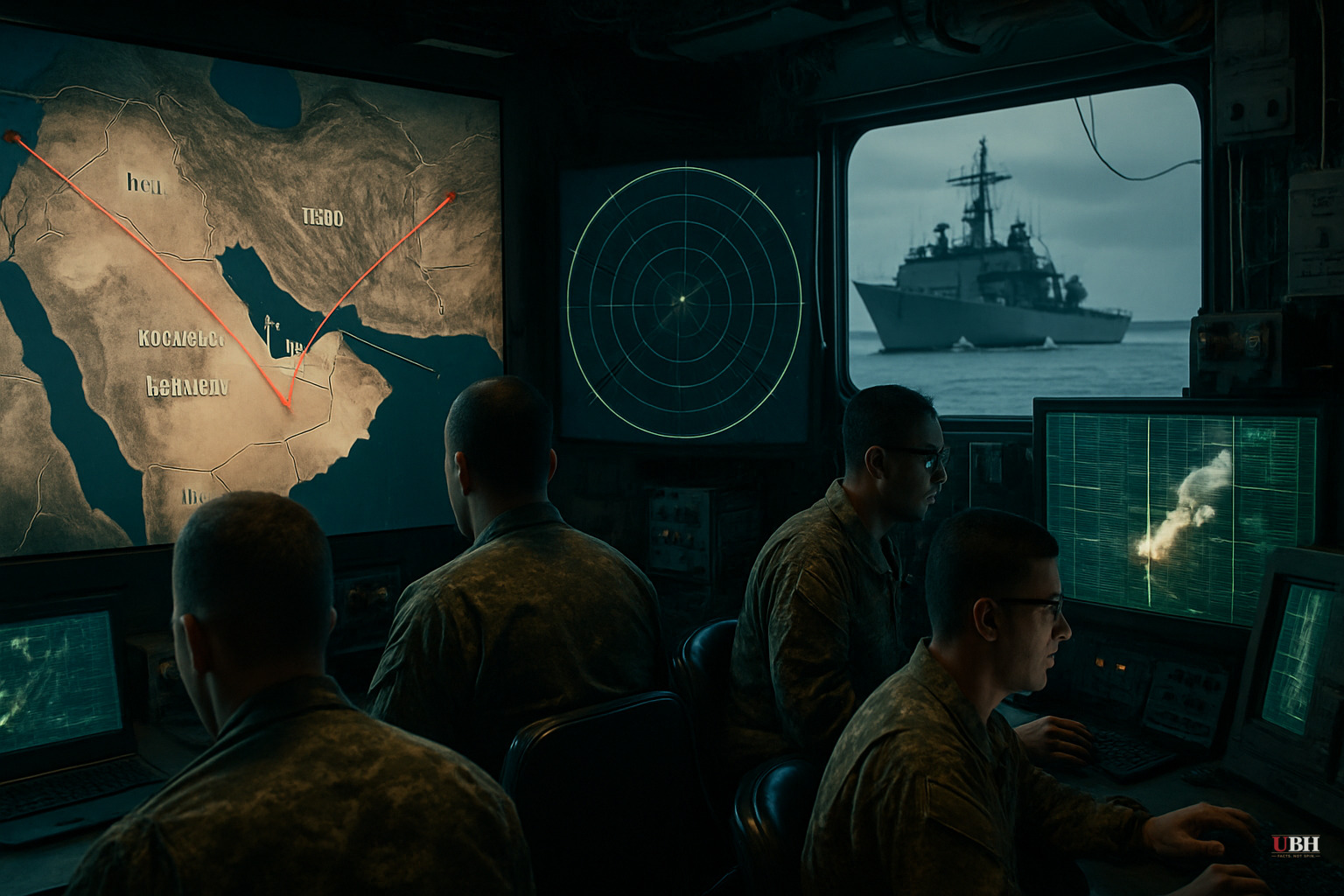
Since Iran's drone strike killed one person and wounded more than 60 at Kuwait's international airport on Wednesday, the back-and-forth between U.S. and Iranian forces has accelerated into something that looks less like a ceasefire and more like a managed war.
What Happened Friday
U.S. Central Command — CENTCOM — confirmed on social media Friday night that Iran fired seven ballistic missiles toward Kuwait and Bahrain, targeting the Ali Al Salem airbase (which hosts U.S. forces) and the U.S. Navy's 5th Fleet headquarters in Bahrain, according to Iran's state-run IRNA news agency.
Six of the seven missiles were intercepted. The seventh failed to reach its target. According to CENTCOM, there were no U.S. personnel casualties reported.
Earlier that same day, U.S. forces shot down four Iranian "one-way attack drones" launched toward the Strait of Hormuz. CENTCOM described them as posing "an immediate threat to regional maritime traffic." American forces then struck Iranian coastal surveillance radar sites — including one on an island in the strait — "to defend against further attacks," per CENTCOM's own statement cited by NPR.
Kuwait activated its military intercept systems. Bahrain activated air raid sirens and told residents to shelter in place, according to AP News.
Iran Is Lying About Wednesday's Airport Strike
After drones hit Kuwait's passenger terminal Wednesday, Iran's Islamic Revolutionary Guard Corps denied responsibility. The IRGC claimed the damage came from a malfunctioning U.S. missile interceptor — in other words, friendly fire.
CENTCOM called that false. Directly and by name. They said Iran struck the airport in what they described as a "deliberate, calculated and unjustified attack," according to BBC.
One side claims the damage came from a U.S. interceptor. The other says Iran deliberately hit the airport. One of these accounts is a lie about killing a civilian and injuring 60-plus people at an international airport. The mainstream press gave this one paragraph, buried in coverage. It deserves greater prominence.
The Strategic Picture
The U.S. is enforcing a naval blockade of Iranian ports, per NPR. That's the context driving these exchanges. Iran has been squeezing the Strait of Hormuz — the chokepoint for roughly 20% of global oil supply — and Washington answered with a blockade.
Oil is above $95 a barrel and climbing. Our prior coverage this week tracked the market's verdict: traders are NOT betting on diplomacy succeeding.
Meanwhile, Trump is in Bridgewater, New Jersey. He has publicly confirmed calling Israeli Prime Minister Benjamin Netanyahu "crazy" while insisting they still get along, per NPR's reporting. That's the diplomatic backdrop here.
What the Mainstream Sources Covered — and Missed
AP, BBC, and NPR all covered the missile exchange factually and in reasonable detail.
What they downplayed: the IRGC's denial about the airport attack. That got one paragraph, buried. A state actor struck a civilian airport, killed someone, and then blamed the U.S. It received the same treatment as a disputed claim rather than standing out as a central element of the story.
What they also downplayed: the blockade. NPR mentioned it in one sentence. The blockade is the strategic engine driving all of this escalation. Without that context, readers are left thinking these exchanges are random provocations rather than moves in a deliberate pressure campaign.
The Ceasefire in Name Only
BBC described the April ceasefire as "shaky." Since April:
- Multiple rounds of strikes and counter-strikes have occurred
- An international civilian airport was hit by Iranian drones
- Seven ballistic missiles were fired at U.S. military bases on Friday alone
- U.S. forces have struck Iranian territory — radar sites on Iranian soil and islands
The Trump administration frames this as "ramping up pressure to make a deal." But there is still no defined end state — no stated victory condition that both sides can measure progress against. We covered that gap directly earlier this week.
What This Means for You
Every missile fired near the Strait of Hormuz is a message to global oil markets. Energy prices are already elevated. If Iran or the U.S. miscalculates — one interceptor fails in the wrong direction, one strike hits the wrong target — the escalation ladder goes vertical fast.
Six out of seven intercepts is NOT a perfect system. One ballistic missile getting through is the difference between a close call and a war-widening incident.
We are three months into a conflict with no exit ramp visible and oil markets pricing in the worst.
Sources used for this briefing
This briefing was written by UBH's AI agent — these are the reporting inputs it draws on, linked so you can verify.


