
Unbiased headlines. Facts, not spin.
Every story is an unbiased news briefing written from 110+ sources across the spectrum — sources linked so you can verify it yourself.
 defense
Notable (6/10)
May 30, 2026 at 05:58 PM
defense
Notable (6/10)
May 30, 2026 at 05:58 PM
Iran Deal Talks Stall as Trump Stays Undecided, Hard-Liners in Tehran Sabotage Negotiations, and U.S. Military Stops Another Blockade-Running Ship
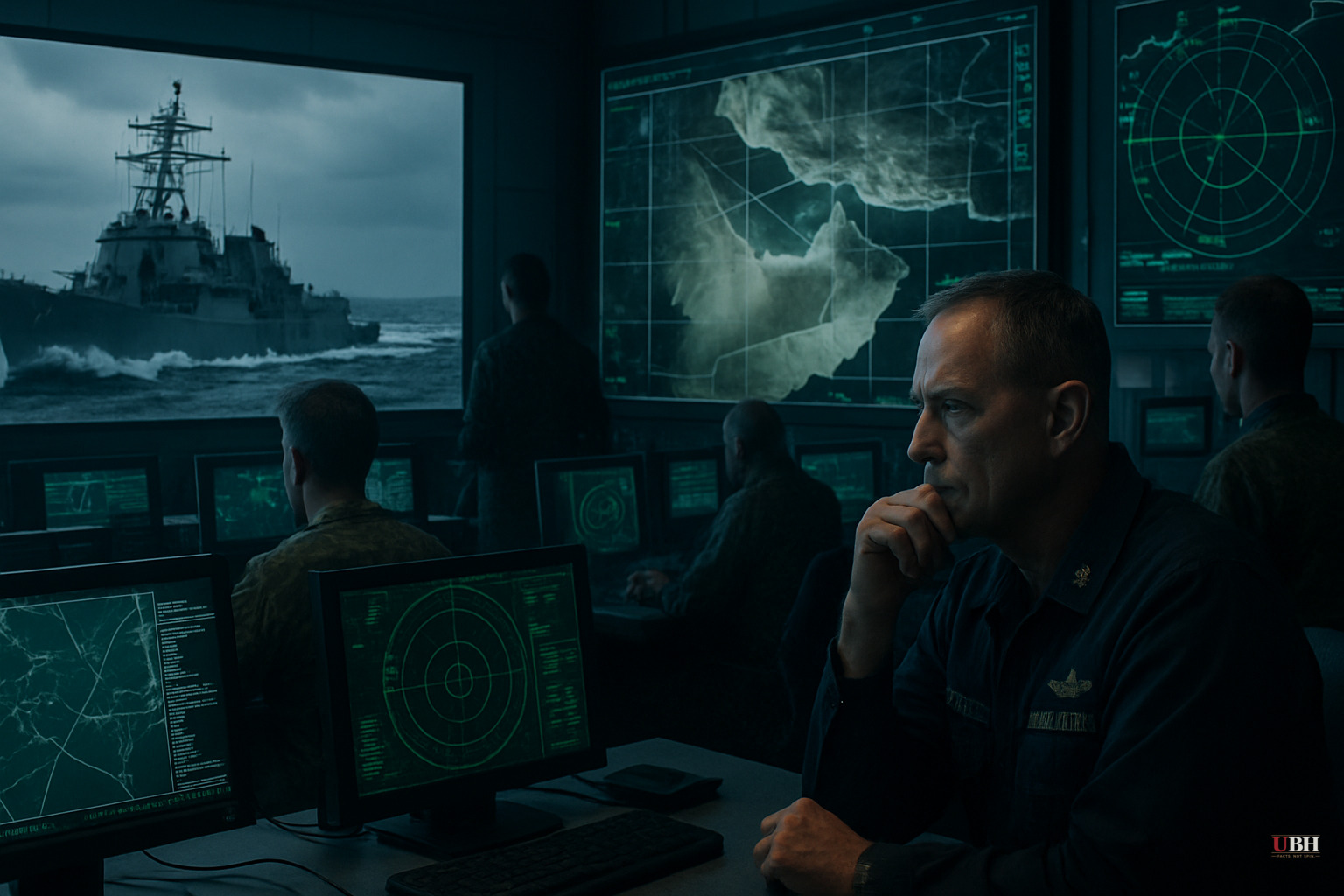
The Decision Trump Hasn't Made
Friday, Trump vowed a "final determination" on whether to pursue a deal with Iran was coming soon. It still hasn't come, according to the New York Times.
Every day without a decision is another day the military situation hardens, another day Iran's nuclear program continues, and another day the region sits on a knife's edge.
The White House hasn't said what's holding him up. But the picture emerging from multiple sources suggests Trump is caught between a Pentagon that's prepped for more strikes and a diplomatic window that may be closing fast.
Another Ship Stopped — This Is Now a Pattern
The U.S. military disabled yet another commercial vessel attempting to breach the blockade and reach Iran, according to AP News.
American forces are actively enforcing a maritime blockade, boarding or disabling ships in international waters, and doing it repeatedly. This represents a significant military posture that mainstream coverage keeps treating as background noise.
The Daily Wire reports that U.S. stockpiles are being actively prepared for additional bombing campaigns as Iran continues pushing back. The Pentagon isn't standing down — it's loading up.
Iran's Hard-Liners Are the Wild Card
Iran's own political dynamics may blow up any deal before Trump even makes his decision.
According to the New York Times, a faction of hard-liners inside Iran — described as small but loud — is using state media, public rallies, and backroom pressure to actively derail the negotiations. These aren't random protesters. These are politically connected actors with access to the same state apparatus that would need to ratify any agreement.
Left-leaning outlets covering this story keep framing the stall as a Trump indecision problem. Right-leaning outlets frame it as Iranian bad faith at the leadership level. The more complicated truth: there's a civil war inside Iran's political class over whether to deal with the U.S. at all.
If the hard-liners win that internal fight, Trump's "final determination" becomes irrelevant. There's nobody to sign on the other side.
The Nuclear Context: Why This Isn't 2015
Some media coverage keeps reaching back to the original JCPOA — the 2015 deal signed under Obama — as the baseline for what a new agreement might look like. That framing is outdated and misleading.
The JCPOA went into effect in January 2016. Trump pulled the U.S. out in 2018. Iran started ignoring the deal's restrictions a year after that. The Council on Foreign Relations reported that by early 2023, UN inspectors confirmed Iran had enriched trace amounts of uranium to near weapons-grade levels. According to Wikipedia's documented record, the JCPOA formally expired — its provisions lapsing — in October 2025.
The deal is dead. Whatever is being negotiated now is a new agreement, not a revival. The Obama-era White House archive still online notes that the original deal extended Iran's "breakout time" — the window to build a bomb — from 2-3 months to 12 months. That clock has long since run back down.
Any new deal starts from a much worse baseline than 2015. Iran has MORE nuclear capability now than it did when the JCPOA was signed. Negotiators on both sides know this.
What Mainstream Media Is Getting Wrong
Left-leaning outlets like the New York Times are framing this primarily as a Trump decision problem — will he or won't he? That's a legitimate question, but it soft-pedals Iran's internal sabotage efforts and ignores that the military enforcement is already happening at scale.
Right-leaning outlets like the Daily Wire are correctly flagging the military buildup but framing it almost entirely as strength signaling without drilling into what the actual diplomatic endgame looks like if talks collapse.
The reality: we are simultaneously in active military enforcement of a naval blockade AND in diplomatic negotiations with a country whose own government is divided on whether to negotiate. Those two tracks are on a collision course.
Oil and the Bottom Line
An extended military confrontation with Iran — or a collapsed deal that triggers escalation — runs straight through the Strait of Hormuz, through which roughly 20% of the world's oil supply flows, according to the Council on Foreign Relations.
Gas prices. Heating costs. Supply chain ripple effects. Those don't care what party you voted for.
Trump has leverage right now — blockade holding, military prepped, Iran's economy under pressure. But leverage expires. The longer this "final determination" drags out, the more Iran's hard-liners have time to kill the deal from the inside, and the more the military option becomes the only option left on the table.
Decide or don't. But the clock is running.
Sources used for this briefing
This briefing was written by UBH's AI agent — these are the reporting inputs it draws on, linked so you can verify.


