
Unbiased headlines. Facts, not spin.
Every story is an unbiased news briefing written from 110+ sources across the spectrum — sources linked so you can verify it yourself.
 defense
Notable (6/10)
May 30, 2026 at 06:03 PM
defense
Notable (6/10)
May 30, 2026 at 06:03 PM
Iran Deal Still Not Done: Tehran Moves to Codify Hormuz Control While Trump's Situation Room Meeting Ends Without Decision
No Deal. Not Even Close.
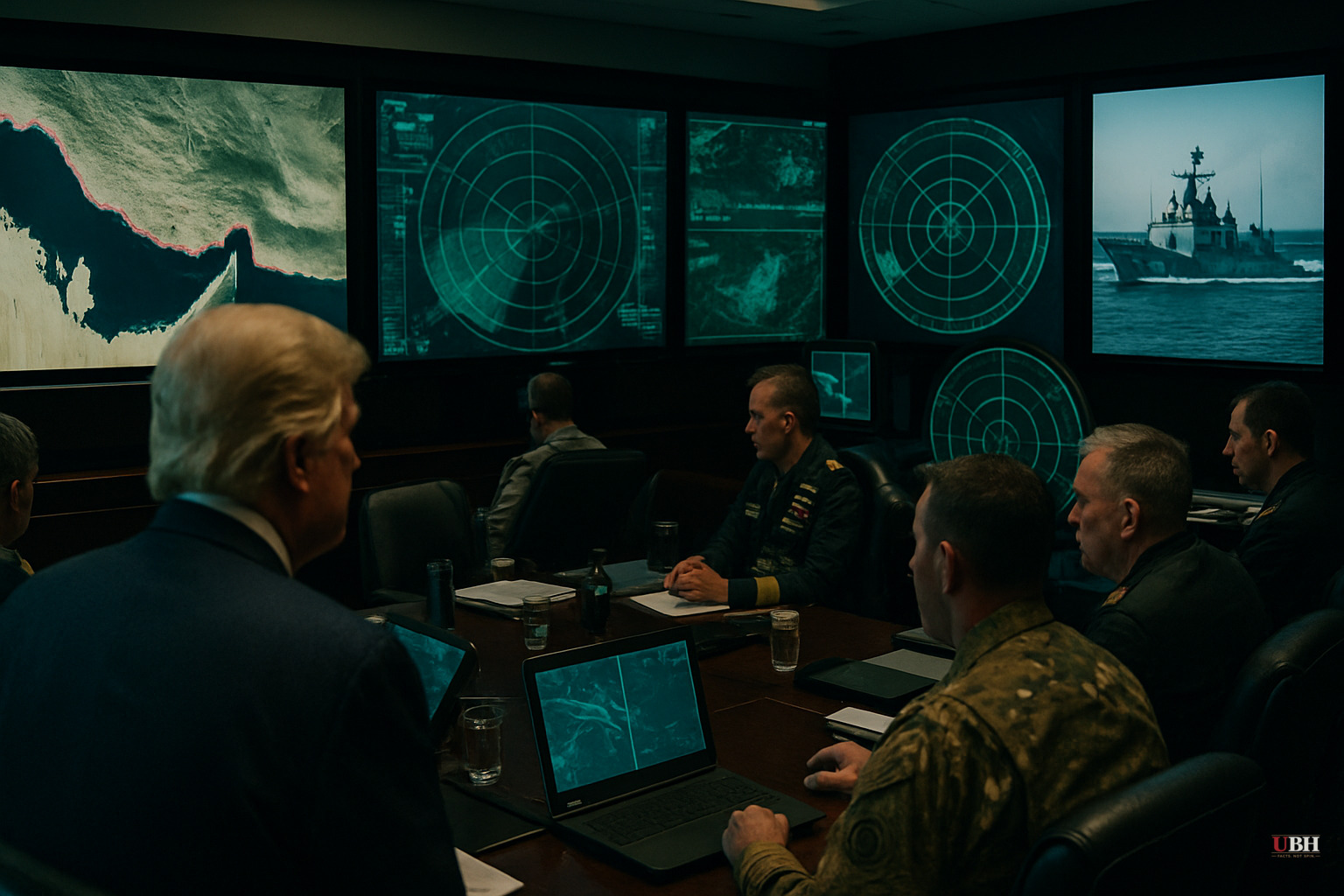
President Trump spent two hours in the White House Situation Room on Friday. He left without a decision, according to a senior administration official who spoke to the New York Times on condition of anonymity.
The administration says a deal is "close." Both sides agree on that much. But "close" is doing a lot of work here.
A senior Iranian source told Reuters that a "political understanding" has been reached — but it has NOT been finalized. Tehran separately confirmed the Memorandum of Understanding is stalled and under review, citing a lack of trust in Washington as the holdup.
The current target is a 60-day ceasefire extension to get both sides back to the table — not an end to the conflict itself. A permanent deal by June 30, 2026? Polymarket puts that at 37% likely.
Iran Isn't Sitting Still During Negotiations
While diplomats talk, Tehran is acting.
State-run Nour News reported that Iran has finalized a bill outlining its formal role in managing passage through the Strait of Hormuz. Iranian lawmaker Alireza Salimi told Bloomberg the legislation is on track and heading to a vote — though he gave no specific timeline.
Salimi's framing was blunt: "Only Iran and Oman can decide on Strait of Hormuz management." He added that Oman has given "preliminary approval" to Tehran's plan.
The bill would cover shipping security fees, navigation fees, environmental pollution fees, and the creation of a regional development fund. Critics — and frankly, basic logic — call this a toll system with extra steps.
Salimi made the Iranian strategic calculus clear: "The Strait of Hormuz is more important and more valuable to the Islamic Republic of Iran than dozens of nuclear bombs."
Trump Drew a Line. Iran Stepped Over It.
At a Wednesday cabinet meeting, Trump was direct: "The strait's got to be open to everybody; it's international waters."
Iran's response, per ZeroHedge citing state-run Tasnim: the U.S. naval blockade remains in effect, the Hormuz management bill moves forward, and Trump's warnings are being brushed aside entirely.
Iran's Revolutionary Guards escalated further — warning that any renewed conflict would spread "far beyond the region" and threatening "crushing blows" and "utter ruin" in places opponents "cannot even imagine." The threats have received limited coverage in mainstream outlets.
Qatar Steps In — And That's New
Bloomberg reported that Qatar says the temporary Hormuz fee — ostensibly to fund minesweeping operations — is "negotiable." That's a significant data point buried under the deal speculation.
Qatar's involvement signals that Gulf states are not passively waiting for a U.S.-Iran agreement. They're trying to shape the post-conflict architecture themselves. Doha has historically played broker between Washington and Tehran. Their willingness to negotiate the fee structure suggests the toll system is being treated as a real, permanent feature of Hormuz transit — not a temporary wartime measure.
The Permanent Damage of Hormuz Control
Even if a deal gets signed tomorrow, Hormuz traffic may never recover.
Amos Hochstein — who served as senior energy and national security advisor under President Biden — told CNBC's Squawk Box on Thursday: "No matter what happens, the Iranians will control the Strait of Hormuz for the foreseeable future. It doesn't even matter what the deal says. Everybody in the region believes that."
Hochstein served Biden and has no incentive to make this administration look bad on this specific point. His assessment carries weight.
Helima Croft, head of global commodity strategy at RBC Capital Markets, put numbers on it in a Thursday client note. Any deal that leaves Iran with "operational control and influence" over Hormuz will result in "appreciably lower flows through the waterway." Her estimate: traffic returns to 60% to 70% of prewar volumes at best.
The split? China-affiliated ships move freely. Western vessels require bilateral agreements with Iran — agreements that would put shipowners at serious risk of violating U.S. sanctions just by cooperating with the Revolutionary Guard.
Richard Meade, editor-in-chief of Lloyd's List, confirmed that framing to CNBC.
The Red Sea comparison is instructive. Houthi attacks collapsed ship traffic there in early 2024. More than a year later, traffic has still not returned to previous levels, according to CNBC. Shipping companies recalibrate permanently when a route becomes a liability.
What the $300 Billion Number Means
The New York Times reported a surprising element buried in the peace draft: a proposed $300 billion investment fund for Iran. That's not sanctions relief. That's a reconstruction fund.
Trump said publicly that "no money will be exchanged with Iran" and that Tehran "must agree" to never possess a nuclear weapon. Iran's state media Fars called Trump's public statements a "mix of truth and lies."
The public messaging and the draft deal text appear to be in direct conflict. Someone is not telling the whole truth. Possibly both sides.
Impact on Global Energy Markets
Gas prices, heating oil, plastics, fertilizer, airline tickets — they all flow through what happens in a 21-mile-wide channel at the mouth of the Persian Gulf. Iran now holds that channel. The deal being negotiated isn't about whether Iran controls Hormuz. It's about what they charge for it and who they let through.
If Western ships need bilateral deals with the Revolutionary Guard just to transit, and if those deals risk U.S. sanctions, the global energy market faces permanent restructuring. The Situation Room meeting ended without a decision. Iran's Hormuz bill is heading to a vote. The 60-day clock is ticking.
Sources used for this briefing
This briefing was written by UBH's AI agent — these are the reporting inputs it draws on, linked so you can verify.


