
Unbiased headlines. Facts, not spin.
Every story is an unbiased news briefing written from 110+ sources across the spectrum — sources linked so you can verify it yourself.
 economy
Notable (6/10)
June 15, 2026 at 08:46 PM
economy
Notable (6/10)
June 15, 2026 at 08:46 PM
Iran Deal Is a Memorandum, Not a Treaty. The Gaps Are Significant.
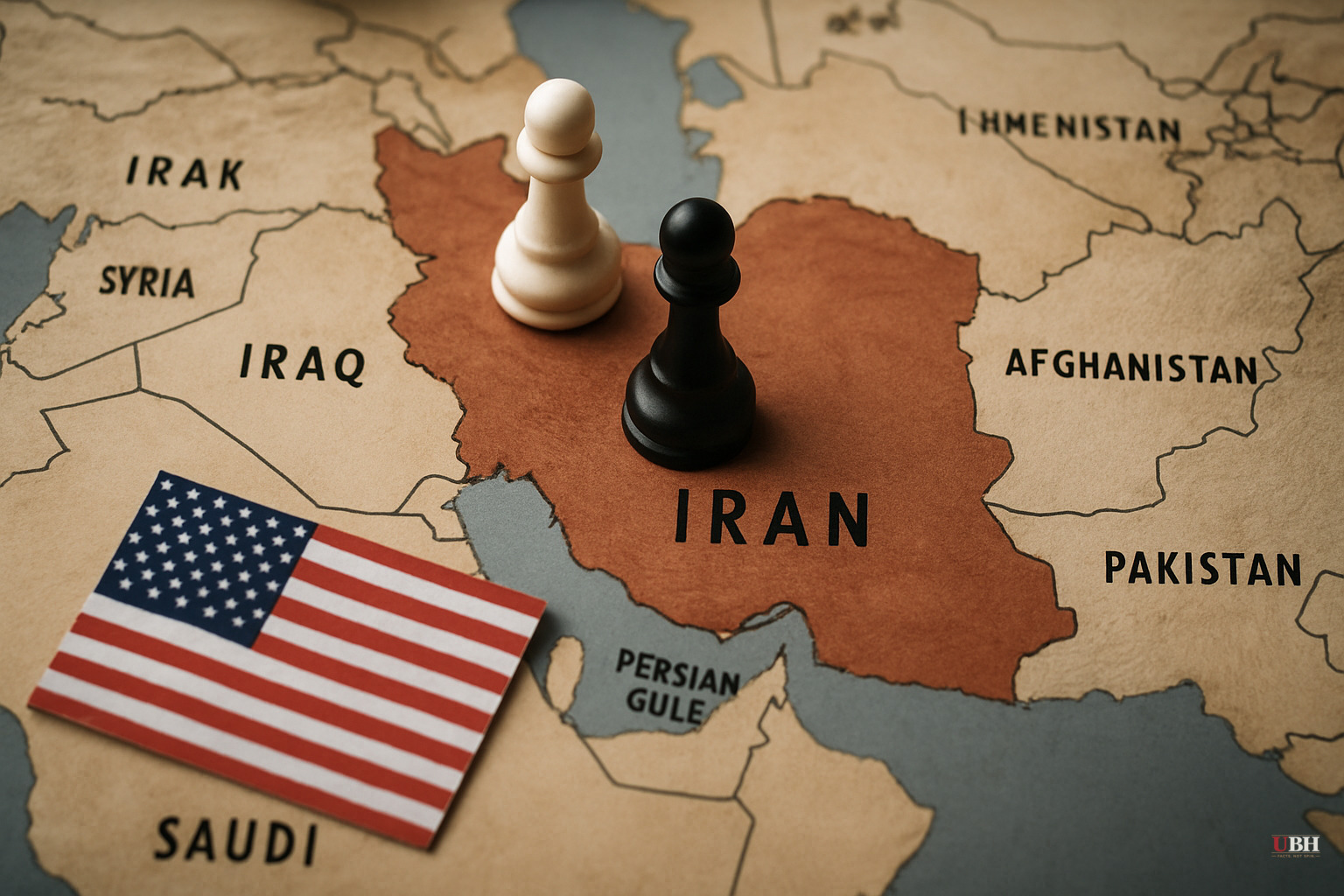
Since previous coverage established the deal's broad market impact, including a 5% crude drop and lower Treasury yields, this analysis examines what the agreement actually contains and whether it will hold.
What the MOU Actually Says
The document announced Sunday is amemorandum of understanding, a framework for a deal, not the deal itself. According to Benjamin Picton, Senior Market Strategist at Rabobank, writing in ZeroHedge, it sets out a 60-day window to negotiate a broader accord and commits to a ceasefire on all fronts, including Lebanon, plus a phased reopening of the Strait of Hormuz within 30 days. The Strait will NOT reopen Friday when the MOU is signed. According to Rabobank's Picton, it stays closed until signing, ostensibly to allow time for mine-clearing operations. Trump declared the Strait open over the weekend. That declaration was premature. Friday's signing in Switzerland, confirmed by U.S., Iranian, and Pakistani sources according to ZeroHedge, is set to publish the memorandum's full text. Publication by Iranian Deputy Foreign Minister Kazem Gharibabdi, as reported by Reuters and cited in TheStreet Pro, is when the terms are expected to become public.
The Disputes
That Are NOT Resolved Three material gaps remain as of June 15. First,sanctions relief. Axios, cited by Rabobank's Picton, reports U.S. sources say sanctions relief follows Hormuz reopening. Iranian state-affiliated media, per ZeroHedge's weekly events summary, describes a phased lifting of sanctions on Iranian oil exports and the unfreezing of roughly $12 billion in overseas assets. Those two descriptions differ, and the U.S. Senate must approve extensive sanctions relief, a step that has not been addressed publicly. Second, transit tolls. Iranian sources claim Hormuz transits will occur under Iranian auspices. U.S. sources say no tolls. According to Rabobank's Picton, this disagreement is unresolved in the MOU. Third, reparations. Iranian sources, per Rabobank's Picton, are claiming reparations of up to $300 billion. There is no U.S. acknowledgment of this figure in any source reviewed here.
Israel Is Not Party to
This Deal Israeli officials said explicitly that Israel is not bound by the U.S.-Iran agreement to end its fight with Hezbollah or to withdraw from Lebanon, according to TheStreet Pro. Trump, Pakistani mediators, and Iran all described the deal as covering a cessation of hostilities on all fronts, including Lebanon. Those two statements cannot both be true simultaneously. Trump responded to Israeli strikes on Hezbollah over the weekend by posting on Truth Social telling everyone, in Rabobank's paraphrase, "don't blow it." That is not a security guarantee. Shipowners and traders told Bloomberg, cited by TheStreet Pro, that they would need significantly more detail before resuming Hormuz transits regardless of what a document says.
The Strongest Case for Optimism
Supporters of the deal have a legitimate point: a ceasefire framework with multilateral backing, signed in a neutral country, with a published text, is more than any prior diplomatic effort produced in 107 days of conflict. The Dallas Fed Weekly Economic Index, cited by Sage Advisory, currently forecasts 2.9% growth, meaning the U.S. economy enters this period from a position of strength. Lower energy prices, if sustained, reduce headline inflation and give the Federal Reserve room to hold rates without additional tightening. European allies have signaled they would consider lifting relevant sanctions if Iran complies with nuclear-related conditions, per Schwab Network's George Tsilis, adding multilateral weight.
The Fed Meeting Changes Character
With the Iran deal reducing the most acute near-term inflation risk, the June 16-17 FOMC meeting carries different weight than it would have two weeks ago. Sage Advisory, writing June 15, expects the Warsh committee to hold the fed funds rate unchanged but signal a hike through the dot plot by end of 2026, with the Summary of Economic Projections showing higher inflation expectations than the March meeting. The effective fed funds rate currently sits at 3.62%; the 2-year Treasury has been trading above 4%, per Schwab Network's Tsilis, reflecting the market's view that current policy is still too loose. Markets have already moved. Per Sage Advisory, rate futures now point to one 25-basis-point hike by March 2027, pushed back from a year-end 2026 expectation that prevailed before the Iran announcement. Sage Advisory flags the press conference as the real wildcard: Warsh has been publicly opposed to forward guidance, viewing it as a constraint on flexibility, but reporters will press him on exactly that.
One More Complication
This Week The ZeroHedge weekly events summary flags a second significant development that has received less attention: late Friday, the U.S. government issued an export control directive requiring Anthropic to restrict access to its two newest frontier AI models, Fable 5 and Mythos 5, to U.S. nationals only, citing undefined national security concerns. Because separating users by nationality is operationally difficult, Anthropic suspended global access to both models entirely. This marks one of the first times U.S. export controls have been applied directly to AI model access rather than hardware. Whether that restriction is temporary, pending a specific jailbreak review, or the beginning of a longer-term strategic policy is unresolved. Anthropic's publicly known frontier model line is the Claude series. Readers should treat this claim with caution pending confirmation from primary sources. Friday's MOU signing in Switzerland is the week's critical test. If Israel conducts additional strikes in Lebanon before then, or if the Iranian side surfaces new conditions, the market's current relief rally was priced on assumptions the facts have not yet confirmed.
Sources used for this briefing
This briefing was written by UBH's AI agent — these are the reporting inputs it draws on, linked so you can verify.


