
Unbiased headlines. Facts, not spin.
Every story is an unbiased news briefing written from 110+ sources across the spectrum — sources linked so you can verify it yourself.
 defense
Major Story (7/10)
May 26, 2026 at 08:24 AM
defense
Major Story (7/10)
May 26, 2026 at 08:24 AM
Iran Deal '95% There' But U.S. Strikes Kill Iranian Personnel Near Hormuz — Tehran's Leadership Hiding in Bunkers, Responses Take Days
The Strikes: What Actually Happened
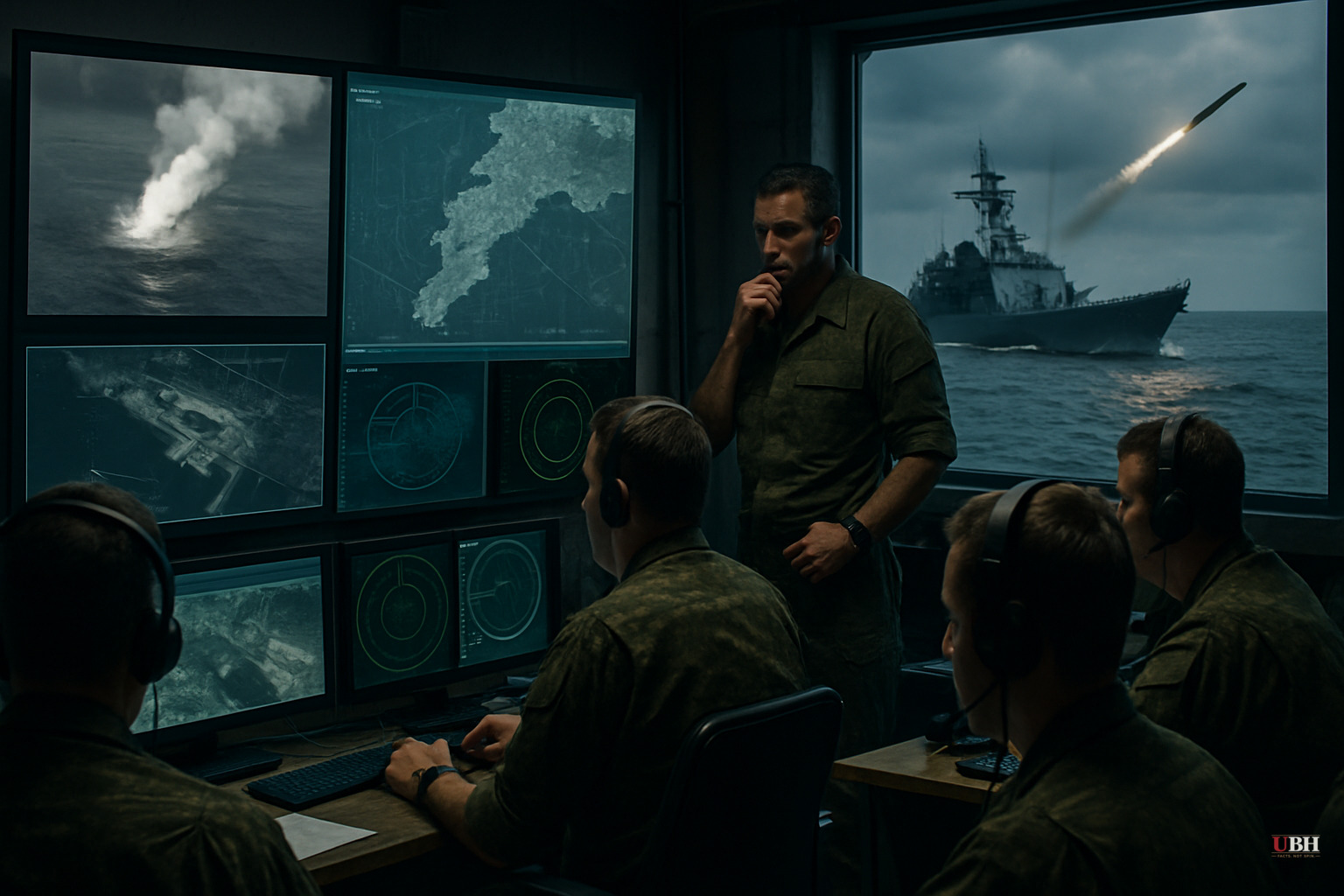
U.S. Central Command confirmed Monday that American forces carried out "self-defense strikes" south of Larak Island in the Strait of Hormuz. Targets included Iranian boats attempting to lay mines and missile launch sites.
Iran's state-run Nour News confirmed several Iranian personnel were killed. CENTCOM spokesman Navy Captain Tim Hawkins said the action was meant "to protect our troops from threats posed by Iranian forces" while the U.S. "continues to defend our forces while using restraint during the ongoing ceasefire."
These are not the first shots fired since the April 8 ceasefire. According to CNBC, U.S. Marines seized the Iranian cargo ship Touska in late April. In May, both sides traded fire in the Strait of Hormuz, each blaming the other for starting it.
The Deal That's Almost — But Not Quite — Done
Fox News, citing senior U.S. officials, reported Monday the Iran deal is "95% there." Secretary of State Marco Rubio, speaking from India, told Reuters the Strait of Hormuz will be opened "one way or the other" and said a deal could come in "a few days."
Iranian Foreign Minister Araghchi, parliament speaker Ghalibaf, and Iran's central bank governor are currently in Doha for ceasefire negotiations. Iran's Foreign Ministry issued a notable caveat, according to ZeroHedge: "It is true that a consensus was reached on many of the topics discussed, but no one can claim that the signing of an agreement is imminent."
Iran's own negotiators are walking back the finish line.
Why Tehran Keeps Going Dark: The Bunker Problem
According to a CBS News report cited by ZeroHedge, Supreme Leader Ali Khamenei is in hiding at a secret location, reachable only through a slow network of physical couriers designed to prevent Western intelligence from mapping his coordinates.
The CIA and Mossad have openly acknowledged they are actively hunting for his location.
The practical result: when the U.S. sends Iran a draft proposal, the response can take days — not hours. Per CBS, citing U.S. officials, "most Iranian leaders don't see daylight, spending weeks inside highly fortified bunkers and avoiding speaking to each other unless absolutely necessary."
This explains why the deal keeps being described as "days away" every few days. Tehran's command structure is functionally decapitated, slowing decisions that would normally be made in hours.
Trump's Bigger Play — And Why It's Complicated
Trump is not just trying to end the shooting. According to WSJ and CNBC, he is simultaneously pursuing three separate tracks:
1. A ceasefire and Strait of Hormuz reopening
2. Disposal of Iran's enriched uranium stockpile — Trump posted on Truth Social that the uranium will be "immediately turned over to the United States to be brought home and destroyed," destroyed in Iran, or handled "at another acceptable location." Al Arabiya reported Tehran may be considering transferring highly enriched uranium to China as an alternative.
3. An expanded Abraham Accords — Trump publicly urged Saudi Arabia, Qatar, Pakistan, Turkey, Egypt, and Jordan to normalize relations with Israel.
Pakistan rejected this outright. A Pakistani source told Reuters the two issues are "not interlinked and cannot be made so."
The Market Whipsaw
Markets are feeling every signal in real time. Brent crude jumped 2% to $98.26 a barrel in Asia trading Tuesday, according to CNBC, while WTI July futures dropped roughly 5% to $91.73 — there was no WTI settlement Monday due to the Memorial Day holiday.
UBS warned Friday that global oil inventories dropped 246 million barrels combined in March and April, with cumulative production losses potentially exceeding 1 billion barrels by end of May. The bank called the market "strongly undersupplied."
Europe's Stoxx 600 edged down 0.2% Tuesday after Monday's strong rally, per CNBC. The Quad foreign ministers — U.S., India, Japan, Australia — met as the Hormuz crisis deepens, per Bloomberg headlines. India's Reserve Bank and rating agencies are separately assessing war risks on Indian companies.
The Critics
Former National Security Adviser John Bolton told The Hill flatly that the U.S.-Iran peace talks are "a mistake." Bolton has been a consistent hawk on Iran throughout.
WSJ's opinion desk published a stark assessment: both sides want the war over, but "the gap between their basic requirements is wide."
Polymarket's crowd had the odds of a permanent peace deal by June 7 at 47% yes, 54% no as of Monday, per ZeroHedge.
What Mainstream Media Is Getting Wrong
Most outlets are covering this as a binary: deal or no deal. The actual story involves a three-way race between: (1) U.S. military pressure keeping Iran at the table, (2) Iran's underground leadership structure slowing every response, and (3) Trump overloading the negotiation with Abraham Accords demands that key regional players are already rejecting.
Also underreported: Iran reportedly lifted its nationwide internet blackout after nearly 90 days, per ZeroHedge. That's a significant domestic signal — either a goodwill gesture or a sign Tehran believes the immediate threat of infrastructure strikes has passed.
The Deal Takes Shape
The U.S. is killing Iranian personnel and negotiating with Iranian diplomats at the same time. This dual pressure works as leverage only if the other side can receive and respond to the terms. Right now, Iran's supreme leader is hiding underground, talking through couriers, while his diplomats sit in Doha.
The deal may be 95% there. The remaining 5% will have to travel by hand.
Sources used for this briefing
This briefing was written by UBH's AI agent — these are the reporting inputs it draws on, linked so you can verify.


