
Unbiased headlines. Facts, not spin.
Every story is an unbiased news briefing written from 110+ sources across the spectrum — sources linked so you can verify it yourself.
 defense
Major Story (7/10)
June 1, 2026 at 04:35 PM
defense
Major Story (7/10)
June 1, 2026 at 04:35 PM
Iran Cuts Off Talks, Threatens Full Hormuz Blockade After U.S.-Iran Strikes Escalate and Trump Hardens Deal Terms
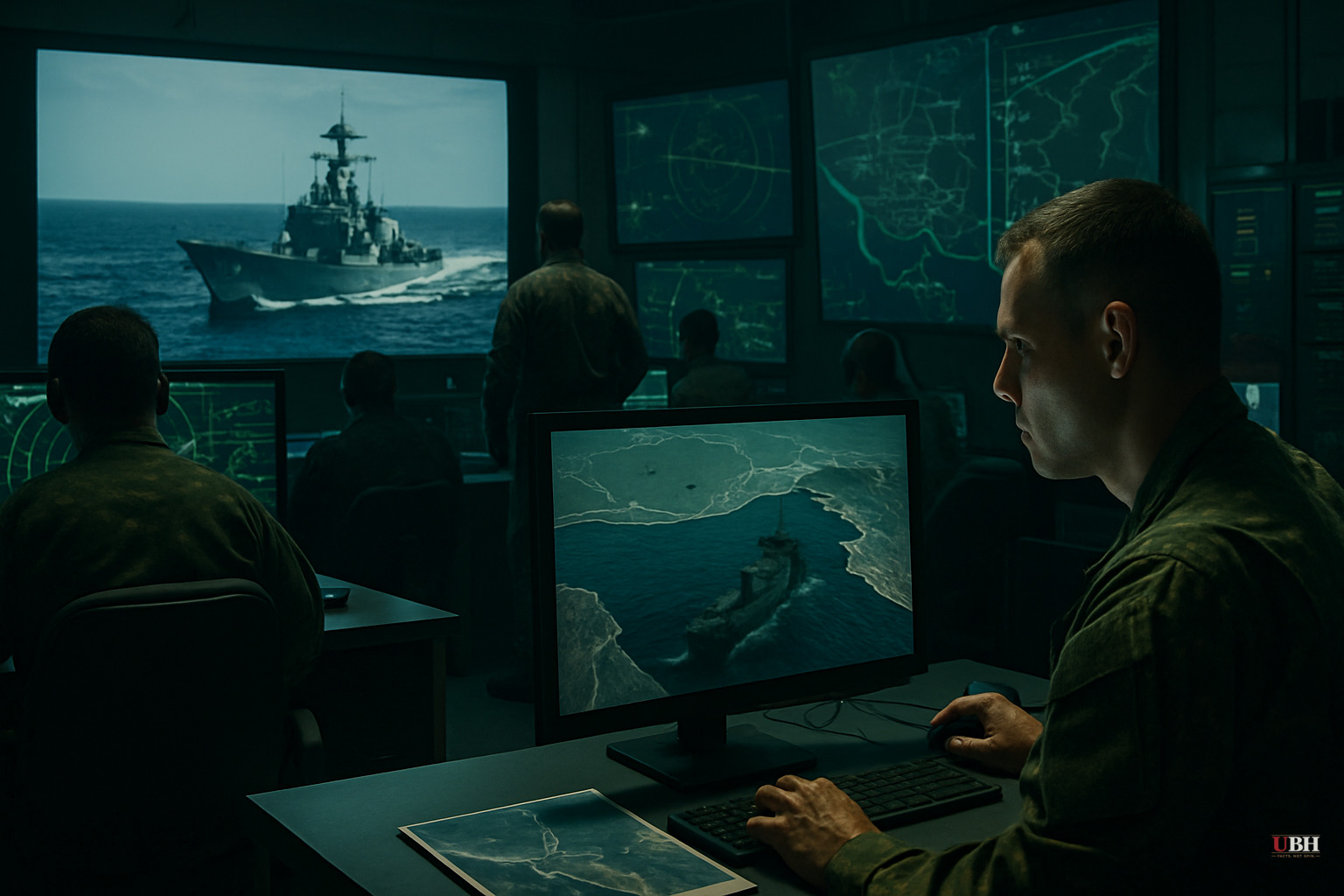
The Diplomatic Collapse Nobody Is Framing Correctly
Here's what happened — fast and in order.
On Saturday and Sunday, the U.S. military struck Iranian radar sites, air defense systems, a ground control station, and two one-way attack drones near the city of Geruk and on Qeshm Island, according to U.S. Central Command. The trigger: Iran shot down an American MQ-9 drone operating over international waters.
Iran hit back. Kuwait reported intercepting incoming drone and missile fire early Monday morning. Iran's Revolutionary Guard confirmed a retaliatory strike in a statement carried by state-run IRNA, claiming U.S. forces had targeted a telecommunications tower. Iranian state television then broadcast footage of a ballistic missile launch — complete with a sticker on the missile body showing a bruised Donald Trump over a "closed" Strait of Hormuz. The caption: "Until the last American soldier leaves the region."
Then Monday, the entire diplomatic track collapsed.
Iran Officially Pulls the Plug
Iran's state-affiliated news outlet Tasnim reported Monday that Iranian negotiators will stop exchanging messages with the U.S. through intermediaries entirely. Tehran also announced it will move to completely block the Strait of Hormuz — the narrow waterway through which roughly a fifth of all globally traded oil and natural gas passes, according to the Times of Israel.
Tasknim went further, according to CNBC: "Also, the resistance front and Iran have resolved to completely block the Strait of Hormuz and activate other fronts including the Bab al-Mandeb Strait, in order to punish the Zionists and their supporters."
The Bab al-Mandeb connects the Red Sea to the Gulf of Aden. Two chokepoints. Simultaneously. That's a significant escalation in stated intent.
Oil futures responded immediately — jumping more than 7%, per CNBC. Energy analysts at Rystad Energy told CNBC's Squawk Box Europe that a full re-escalation scenario could push oil to $180 per barrel by August.
Why Iran Says It's Walking Away
Tehran is not framing this as a reaction to the U.S. military strikes. It's framing this as a reaction to Israeli strikes on Lebanon.
Iranian Foreign Minister Abbas Araghchi posted on X Monday morning: "The ceasefire between Iran and the US is unequivocally a ceasefire on all fronts, including in Lebanon. Its violation on one front is a violation of the ceasefire on all fronts."
Israeli Prime Minister Benjamin Netanyahu ordered fresh strikes on Hezbollah-controlled suburbs in Beirut on Monday, according to the Times of India. Netanyahu and Defense Minister Israel Katz said the strikes were in response to repeated Hezbollah ceasefire violations and attacks on Israeli communities.
Iran is using Israeli strikes on Hezbollah as justification to withdraw from nuclear talks with the U.S. The diplomatic logic centers on Lebanese operations — a detail buried in most mainstream coverage beneath the U.S.-Iran exchange of fire.
Trump Hardened the Deal First
Before all of this blew up, Trump had already rejected an initial framework agreement at a Friday White House Situation Room meeting, according to Axios, CBS News, and the New York Times.
Trump sent a revised, tougher proposal back to Tehran demanding more specific language on three things: how Iran's highly enriched uranium stockpile gets transferred and on what timeline, clearer terms on reopening the Strait of Hormuz, and tighter provisions on sanctions relief and frozen Iranian assets.
A senior administration official told Axios: "It's more specifics about how the U.S. gets the material and the timing."
The proposed memorandum of understanding would have extended the ceasefire for 60 days while broader negotiations continued. Trump didn't sign it. The New York Times reported Saturday night that Trump had grown frustrated by the pace of Tehran's responses.
A White House official stated Trump "will only make a deal that is good for America, satisfies his red lines and makes sure Iran can never possess a nuclear weapon."
Iranian Foreign Minister Araghchi confirmed Sunday that "talks and exchange of messages are ongoing" — but that was before Monday's Tasnim announcement changed everything.
Trump told reporters Monday he had NOT heard from Iran about the reported talks suspension, according to the Times of India.
How Different Outlets Are Reading This
Left-leaning outlets are focusing almost entirely on the U.S.-Iran military exchange as the story. Right-leaning outlets are focusing on Trump's tougher deal terms as strength. Both obscure the core issue: Iran's decision to tie the nuclear negotiations to Israeli operations in Lebanon is a deliberate escalation strategy designed to collapse talks on terms favorable to Tehran.
If Iran can define any Israeli military action — even against Hezbollah attacking Israeli civilians — as a U.S. ceasefire violation, the negotiations were never constructed to succeed. Iran walks away appearing aggrieved while keeping Hormuz closed and the nuclear program intact.
Immediate Implications
Gas prices were already elevated. A full Strait of Hormuz blockade combined with Bab al-Mandeb disruption is an energy crisis scenario, not just a geopolitical one. Analysts are already pricing in $180 oil by late summer if this holds.
Trump posted "Just sit back and relax, it will all work out well in the end" on social media Monday. He also told domestic critics — Democrats and what he called "seemingly unpatriotic Republicans" — to stop "chirping" and let him work, according to The Hill.
Right now, the ceasefire is in shreds, Iran has walked away from the table, two global shipping chokepoints are under threat, and Kuwait just intercepted ballistic missiles.
Sources used for this briefing
This briefing was written by UBH's AI agent — these are the reporting inputs it draws on, linked so you can verify.


