
Unbiased headlines. Facts, not spin.
Every story is an unbiased news briefing written from 110+ sources across the spectrum — sources linked so you can verify it yourself.
 defense
Notable (6/10)
May 24, 2026 at 03:42 AM
defense
Notable (6/10)
May 24, 2026 at 03:42 AM
Iran Agrees to Hand Over Enriched Uranium as Britain Deploys Mine-Hunting Equipment — Deal Still Not Final
The New Development: Uranium on the Table
According to the New York Times, U.S. officials say Iran has agreed to give up its stockpile of enriched uranium as part of any initial agreement. The detail was conspicuously absent from Trump's Saturday Truth Social announcement.
Precise terms remain unclear, per the Times. The U.S. reportedly demanded that commitment upfront, before any final deal is signed.
The uranium handover — if real — represents the most significant reported development in weeks.
Britain Is Already Moving
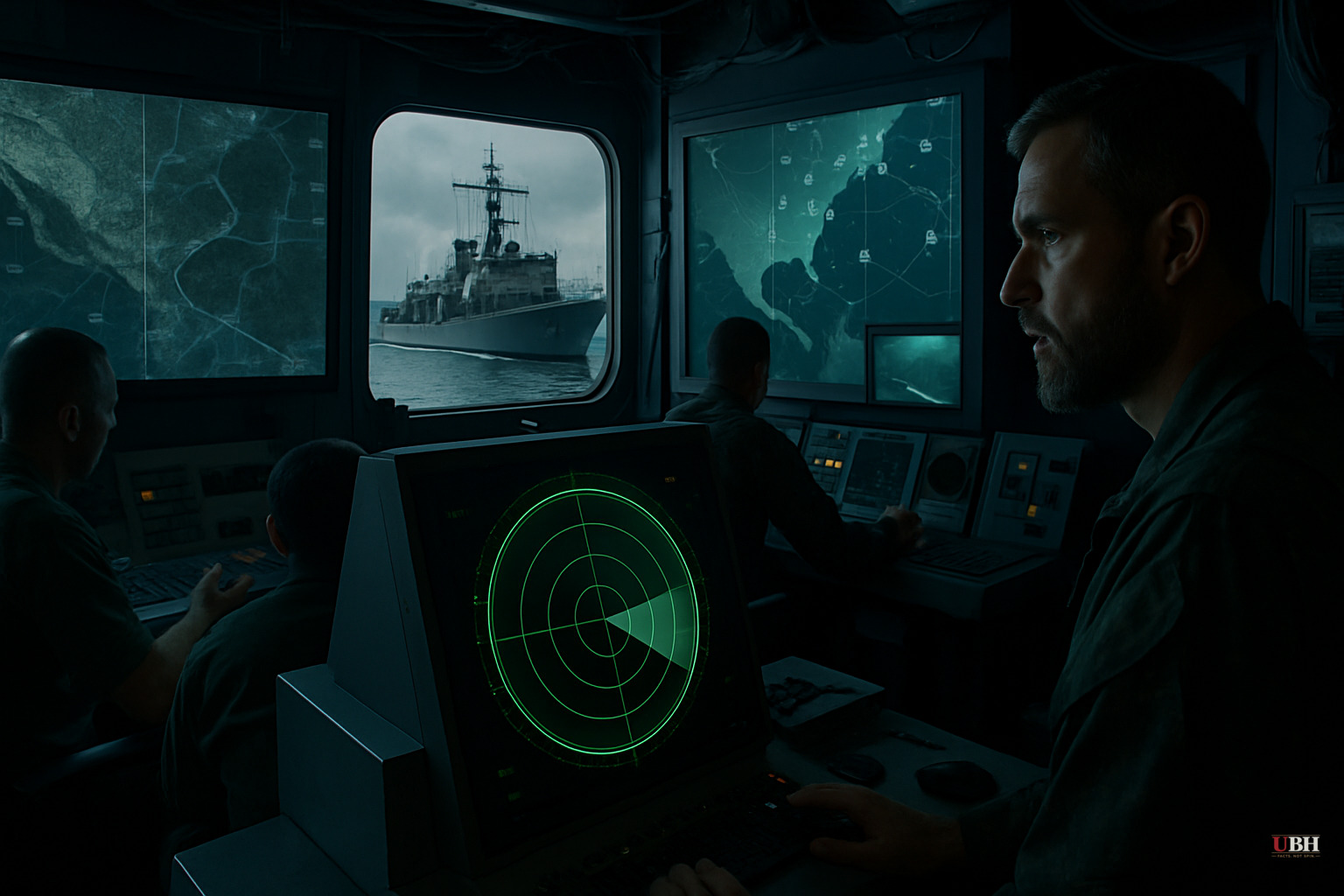
British forces at Gibraltar are staged with autonomous mine-hunting equipment, ready to deploy the moment a peace agreement is achieved, according to the New York Times. The Strait of Hormuz was mined during the conflict. Reopening it requires physical clearing operations.
The UK is positioned and waiting. The deployment suggests either confidence a deal is close or prudent military-logistics preparation.
What CENTCOM Was Doing Saturday Morning
While Trump was announcing the deal on social media, U.S. Central Command was still running the blockade at full strength.
According to Breitbart, CENTCOM Commander Admiral Brad Cooper confirmed Saturday that U.S. forces had redirected 100 commercial vessels away from Iranian ports — allowing, in Cooper's words, "zero trade into and out of Iranian ports." That economic pressure has been squeezing Iran's oil revenues for weeks.
Iran's tankers are backed up at Kharg Island with nowhere to send oil, according to Senator Marsha Blackburn (R-TN), speaking Friday on Fox News's Hannity. She added that Treasury Secretary Scott Bessent placed new sanctions on nine Iranians linked to Hezbollah on the same day Trump made his announcement.
The U.S. was simultaneously choking Iran economically while announcing a peace framework. The deal remains unsigned.
Three Core Aims Still Unresolved
NPR reported the full list of what Trump originally said he was fighting for: Iran abandoning its nuclear program, halting ballistic missile development, and ending support for proxy forces in Gaza, Iraq, Lebanon, and Yemen.
None of those three are confirmed resolved. The uranium handover, if confirmed, addresses the first. The other two have not been publicly discussed in the deal framework.
Iran's military adviser Mohsen Rezaei said on state television: "Our armed forces' fingers are on the trigger, while diplomacy is also continuing." A country that has fully capitulated would not use such language.
The Pakistan Angle Nobody Is Explaining
Pakistani Army Chief Field Marshal Asim Munir has been the quiet backbone of this mediation effort. He held fresh talks in Tehran on Saturday, per NPR. Iran signaled "narrowing differences" after that meeting.
Pakistan brokered the ceasefire framework and is listed in Trump's Memorandum of Understanding. Yet most American coverage treats this as a bilateral U.S.-Iran negotiation. At least nine regional governments are formally party to this framework — Saudi Arabia, UAE, Qatar, Turkey, Egypt, Jordan, Bahrain, Pakistan, and Israel, per Breitbart.
Getting all of them aligned is harder than a two-party deal. "Last-minute disputes" remain a real risk, per a regional official cited by NPR who spoke on condition of anonymity.
Coverage Across Outlets
Left-leaning outlets like NPR and the New York Times are appropriately skeptical. One NYT piece is headlined "Many Questions, Few Details." Some coverage buries the uranium concession, which is the most significant development in weeks.
Right-leaning outlets like Breitbart and Fox are leading with Trump's announcement tone — "largely negotiated," deal incoming — without enough emphasis on what Iran has NOT yet publicly confirmed. Iran's foreign ministry, per BBC, warned of "contradictory statements" from the American side and said key issues are unresolved.
This is further along than it was a week ago. The uranium clause is real progress. But Iran hasn't publicly confirmed the key concession, and three original war aims remain publicly unaddressed.
The Domestic Political Pressure Is Real
House Minority Whip Katherine Clark (D-MA) said on CNBC's Squawk Box that "the fastest thing we can do to lower costs for Americans right now is end this war and get to a resolution of it, open the Strait of Hormuz, and bring those gas prices down."
Fuel costs are hammering working families. The Iran conflict has kept one-fifth of the world's oil and gas supply disrupted since late February — 12 weeks of elevated energy prices.
That pressure is hitting both parties. Per NPR, a War Powers resolution vote was pulled at the last minute Friday because Republicans were going to lose it.
Status Update
If Iran actually hands over enriched uranium and the Strait reopens, that represents a genuine strategic development. But "largely negotiated" is not "signed." Britain deploying mine-hunters is preparation, not celebration. Iran's public statements remain defiant.
The war is 84 days old. The blockade is still active. The uranium deal is reported but unconfirmed by Tehran. Watch what Iran says publicly in the next 48 hours.
Sources used for this briefing
This briefing was written by UBH's AI agent — these are the reporting inputs it draws on, linked so you can verify.


