
Unbiased headlines. Facts, not spin.
Unbiased Headlines is an independently owned news organization. We bring you the facts, not opinions, written fresh from 110+ named sources. Sources linked so you can verify it yourself.
 health
Notable (6/10)
Investigational drug sac-TMT cut endometrial cancer progression risk 41% versus chemotherapy in Phase 3 trial
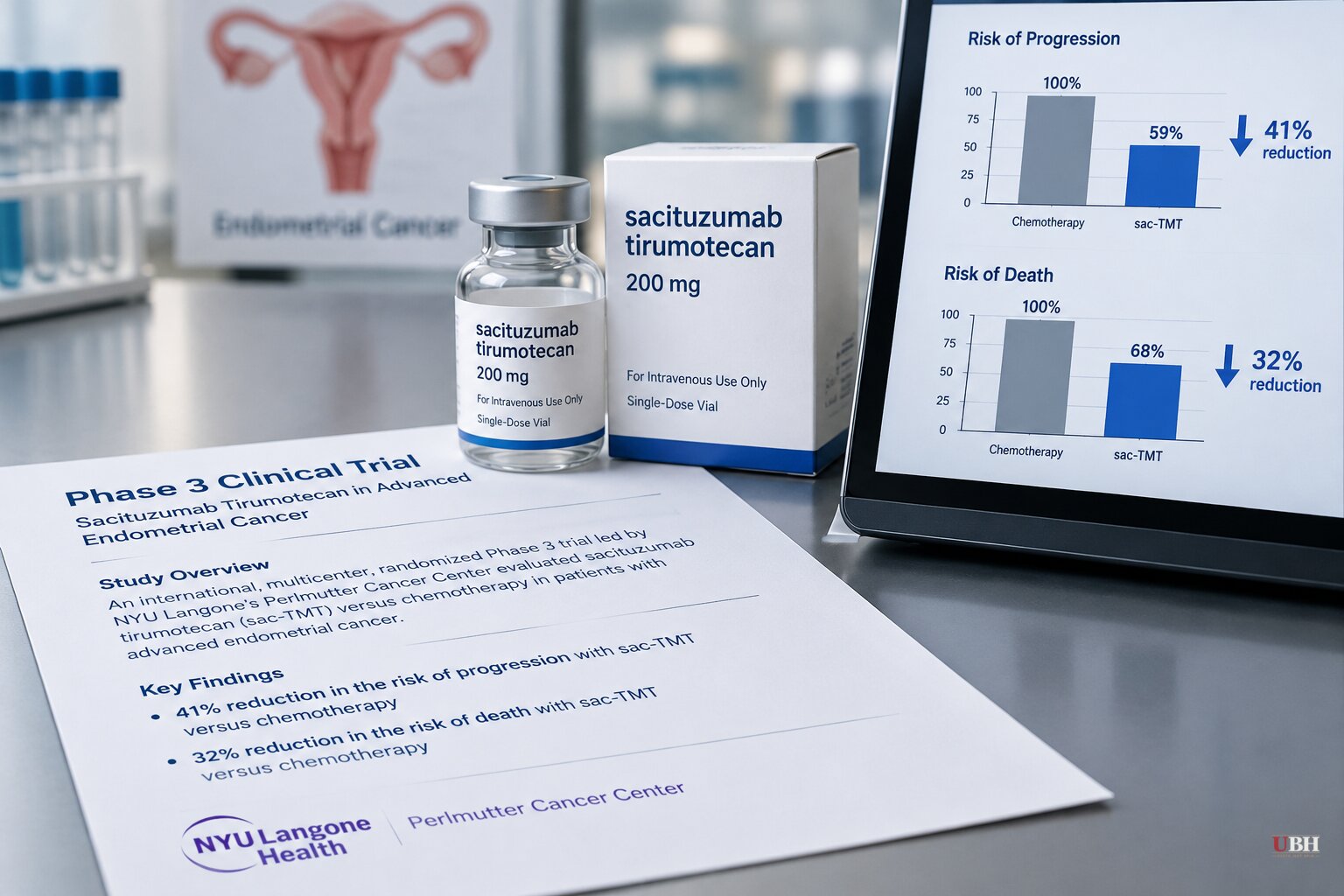
A Phase 3 trial led by NYU Langone Health and its Perlmutter Cancer Center found that an investigational cancer drug beat standard chemotherapy in women with advanced or recurrent endometrial cancer who had already received immunotherapy.
The drug is sacituzumab tirumotecan, or sac-TMT. Researchers report that patients who received it had a 41% lower risk of their cancer progressing or spreading than patients on chemotherapy, and a 32% lower risk of death.
What the trial found
The international study enrolled women whose cancer had advanced or returned after treatment with an established PD-1 inhibitor, a drug that makes cancer cells more visible to the immune system. They received either sac-TMT or standard chemotherapy.
Thirty-five percent of the women on sac-TMT responded to treatment, including tumor shrinkage. That is more than double the response rate in the chemotherapy group, according to the researchers.
Study principal investigator Bhavana Pothuri was direct about what she thinks the results mean. "These positive results from the first phase 3 trial using sacituzumab tirumotecan after immunotherapy establishes this drug as a new standard treatment in recurrent endometrial cancer," she said in a press release.
How the drug works
Sac-TMT is an antibody-drug conjugate. It is built to attach to Trop-2, a protein found on the surface of endometrial cancer cells, and to deliver more of its drug payload to tumor cells while limiting damage to healthy ones.
The researchers say Trop-2 is also present in high amounts in lung, breast, ovarian and intestinal tumors. They say that points to possible use of the drug in those cancers. No results in those cancers were reported.
Side effects
The most frequent side effects were low blood counts, inflammation in the mouth, and dry or itchy eyes. The researchers described all of the adverse effects as manageable.
That is the researchers' own characterization. Detailed rates of serious side effects were not part of the summary released.
The stakes
Endometrial cancer is the most common cancer of the female reproductive system. It kills more than 97,000 people worldwide each year. Cases are rising, and the disease is becoming deadlier. Options are few once it is diagnosed at a later stage or comes back after immunotherapy.
Merck's trial
The NYU-led findings resemble those of a separate Phase 3 trial run by drugmaker Merck, announced in May. That trial, TroFuse-005, enrolled more than 770 patients with endometrial cancer. They received sac-TMT every two weeks or a treatment chosen by their physician, including doxorubicin or paclitaxel chemotherapy.
Merck said TroFuse-005 was the first global trial to "demonstrate statistically significant improvement" from sac-TMT over chemotherapy. The company said patients on sac-TMT showed "clinically meaningful improvement" in their disease compared with the physician's-choice group.
Merck did not disclose exact survival figures, response rates, side-effect rates or other detailed numbers. It said the drug met response-rate benchmarks and showed side effects similar to those seen in earlier studies.
What is still open
The results come from trial summaries and press releases. Pothuri's statement that the drug is a new standard of care is her assessment as lead investigator. The drug is still described as investigational, and no regulatory approval is mentioned. Merck has not released full TroFuse-005 data, so the two trials' results cannot yet be compared number for number.
The next questions are whether Merck publishes the full dataset and whether regulators are asked to review sac-TMT for use after immunotherapy in endometrial cancer. Neither step has been announced.
Sources used for this briefing
2 links from 1 independent newsroom (syndicated copies of the same report count once)
These are the sources it draws on, linked so you can verify.


