
Unbiased headlines. Facts, not spin.
Every story is an unbiased news briefing written from 110+ sources across the spectrum — sources linked so you can verify it yourself.
 economy
Notable (6/10)
July 23, 2026 at 04:10 AM
economy
Notable (6/10)
July 23, 2026 at 04:10 AM
Intel and AMD Sign Long-Term Server Chip Deals With Chinese Buyers as Prices Rise
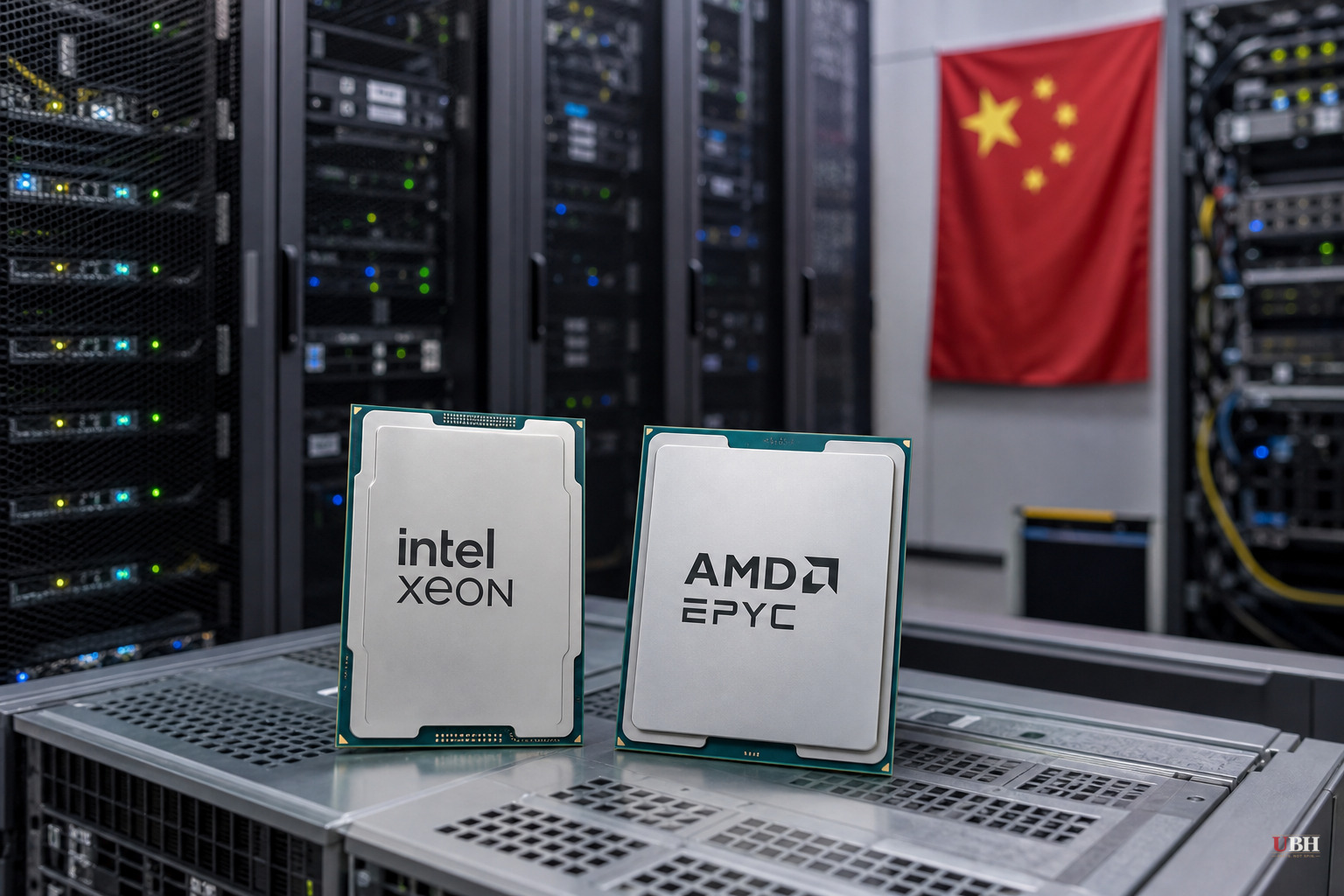
Intel and AMD have signed long-term server processor deals with Chinese clients as prices for the chips rise, according to sources cited in a Reuters report distributed through Fidelity's news feed. The agreements lock in supply for data-center CPUs at a moment when demand for AI and cloud computing infrastructure is straining chip production worldwide.
The specifics of the contracts, including exact dollar figures, customer names, and contract lengths, were not disclosed in full. Chinese firms building out server capacity still want American chips badly enough to lock in long-term pricing during a period of rising costs.
Washington has spent years tightening export controls on advanced semiconductor technology to China, citing national security concerns about Beijing's military and AI ambitions. Both the Biden and Trump administrations have restricted sales of the most advanced AI chips, particularly Nvidia's top-tier GPUs, to Chinese buyers. Server CPUs from Intel and AMD have generally faced a different, less restrictive set of rules than cutting-edge AI accelerators, which is part of why these deals can move forward.
The AMD Backdrop: A Company on a Tear
While the China server deals were developing, AMD stock has been on an extraordinary run. Shares closed at $552.33 on July 22, according to data from Finviz, up 1.45% on the day and up 157.91% year-to-date. The stock is up nearly 258% over the past year and has gained almost 138% in just the last six months.
AMD's market cap sits at $900.63 billion, per Finviz data, with the company trading at a forward price-to-earnings ratio of about 41 and a trailing P/E above 181. Analyst sentiment has been overwhelmingly bullish: Goldman Sachs raised its price target from $450 to $640 on July 6, Citigroup upgraded the stock from Neutral to Buy with a $575 target on June 12, and Wells Fargo bumped its target from $505 to $615 on June 30, according to Finviz's ratings history.
The most consequential recent news for AMD isn't the China server deals. On July 22, AMD and Anthropic announced a strategic AI partnership involving up to 2 gigawatts of Helios MI450 chip deployments, paired with an AMD equity investment in Anthropic worth up to $5 billion, according to Finviz. That deal, not the China server story, is what's driving the bulk of investor attention right now.
Why This Complicates the China Narrative
Washington's export control regime exists because China hawks in both parties, along with Pentagon officials, argue that advanced American chip technology feeds Beijing's military modernization and AI surveillance capabilities. That's a legitimate national security concern, not a fringe position. Senators from both parties have pushed for tighter enforcement, arguing loopholes let restricted tech flow to Chinese military-linked firms through third parties or downgraded product lines.
At the same time, Intel and AMD are commercial companies competing in a brutal global chip market against Nvidia, Broadcom, and Chinese domestic players like Huawei that are racing to build substitutes. Every dollar of server CPU revenue that goes to a Chinese buyer is a dollar that doesn't go to a subsidized domestic alternative. From a purely competitive standpoint, American chipmakers have an incentive to sell wherever the rules allow it, and executives at both companies have previously testified to Congress that overly broad restrictions just hand market share to Chinese competitors building their own chips.
Export controls on the most sensitive AI accelerators are a legitimate security measure. Less-restricted server CPU sales to Chinese commercial clients are also a normal, legal business activity that keeps American semiconductor firms competitive. The sourcing available does not indicate these particular server CPU deals violate any current export rule, and no investigation or enforcement action tied to these specific contracts has been announced.
What's Unresolved
The Reuters-sourced report distributed via Fidelity did not name the Chinese clients, specify contract values, or detail exactly which chip lines are covered. Whether these are hyperscale cloud operators, state-linked entities, or private enterprise buyers is not clear from available reporting.
What's also unresolved is whether the Trump administration's Commerce Department, which oversees export licensing through the Bureau of Industry and Security, will take any interest in these specific contracts as scrutiny of chip sales to China continues in Washington. Congress has periodically pressed both companies on China revenue exposure during earnings calls. AMD's next earnings report is scheduled for August 4, after market close, according to Finviz, which will likely be the next moment analysts get a clearer read on how much of AMD's server business is now tied to Chinese long-term contracts.
Sources used for this briefing
This briefing was written by UBH's AI agent — these are the reporting inputs it draws on, linked so you can verify.


