
Original briefings. Zero spin.
Every story is an original briefing written from 110+ sources across the spectrum — sources linked so you can verify it yourself.
 finance
Notable (6/10)
August 11, 2026 at 06:11 PM
finance
Notable (6/10)
August 11, 2026 at 06:11 PM
Insurers Warn AI Data Center Boom Is Outrunning Their Ability to Cover the Risk
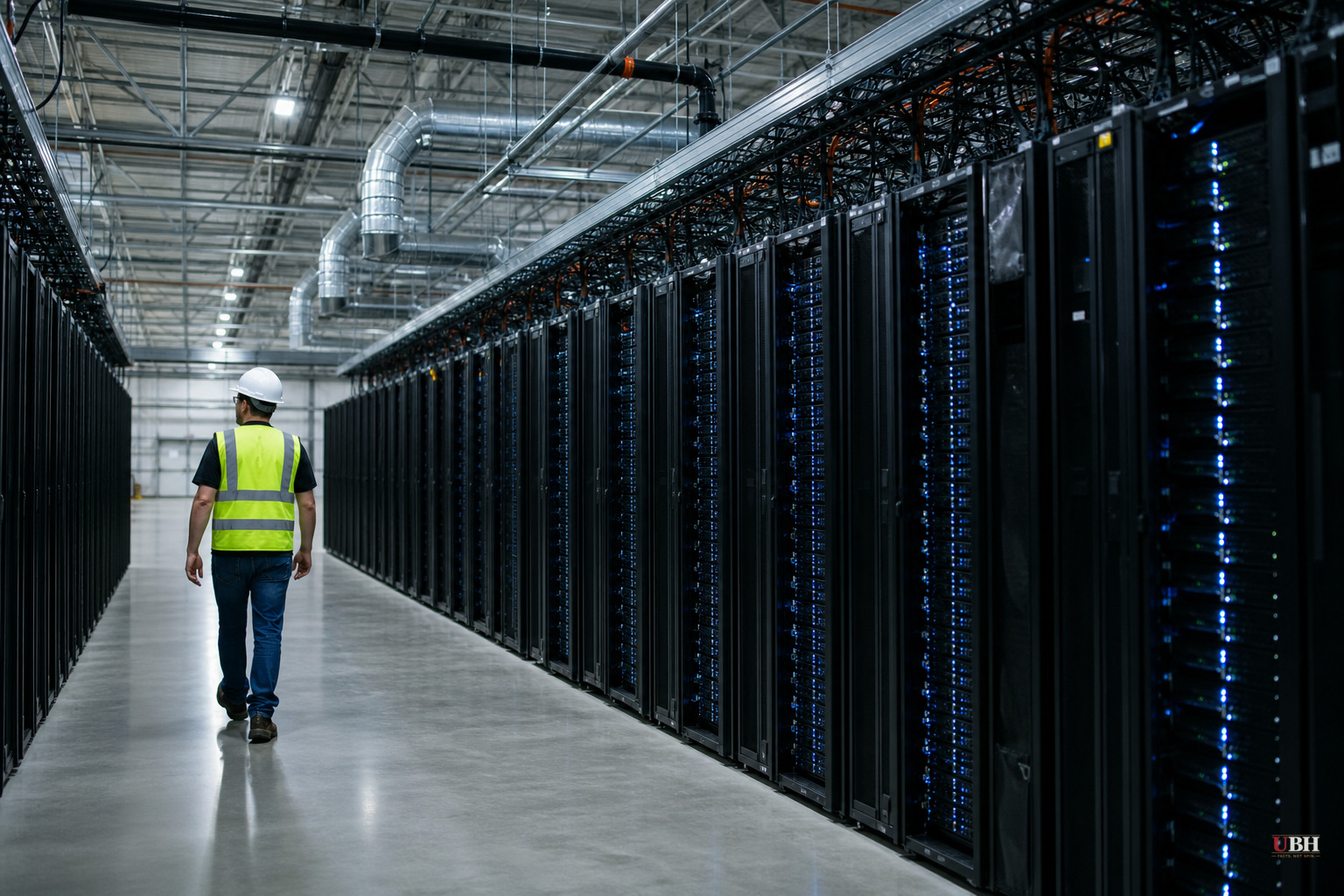
Somebody has to write the check when a billion-dollar data center goes down. Right now, nobody in the insurance industry is fully sure how that's going to work.
AIG's President, Eric Andersen, laid it out plainly at a recent S&P Global Ratings conference. Data centers are, in his words, the largest short-term opportunity for property and casualty insurers. He's already flagging a problem that's bigger than any one company can solve.
The risk isn't just fire or flood. It's construction delays, cyberattacks, liability disputes, and even marine exposure from equipment shipped overseas. Andersen says no single insurer can underwrite all of that alone. His answer: lean harder on alternative capital, things like catastrophe bonds and insurance-linked securities that have historically covered hurricanes and earthquakes, not server farms.
The Money Is Real
According to Swiss Re, global data center insurance premiums total roughly $10.6 billion in 2026. That number is projected to blow past $24.2 billion by 2030, more than doubling in four years. Gallagher Re has separately called the AI data center boom one of the largest new pools of insurable assets created in decades, according to Intelligent Insurer.
That growth is a function of scale most insurers have never dealt with. James Nelson, U.S. leader of Lockton's Data Centers & Digital Infrastructure Practice, told Insurance Business that projects valued between $5 billion and $10 billion are now common. Meanwhile, the entire global insurance market may only have $15 billion to $20 billion of capacity available for these risks "in some way, shape, or form."
Nelson says the truly massive $50 billion hyperscaler campuses are still the exception. But he's blunt about what hasn't happened yet: a catastrophic loss big enough to actually test how policies, contracts, and liability get divided among owners, tenants, contractors, and lenders. "I think what the market has not seen yet, which will tell a lot, will be that big material claim," Nelson said.
The Power Problem Nobody Priced In
While the money side gets sorted out, the physical risk is getting worse in ways that weren't fully understood a few years ago.
The Los Angeles Times reports that AI data centers create power swings unlike anything a normal data center produces. Training runs can spike usage 50% above design capacity in a split second, according to Drew Baglino, a former Tesla executive who now runs Heron Power Electronics. Batteries, generators, and cooling systems built for steady loads are wearing out faster than engineers expected.
Amber Villegas-Williamson of the Uptime Institute compared it to "over-revving your car." Shannon Miller, founder of Mainspring Energy, said a single gigawatt data center can flicker on and off like a city the size of Boston blinking every few seconds. Some planned Texas and Midwest campuses are five times bigger than that.
This isn't an abstract engineering footnote. Insurers price coverage based on how long equipment is supposed to last and how it's supposed to behave under load. If AI training runs are shredding batteries and generators years ahead of schedule, that changes the math on every policy written against them.
Terence Williams, head of commercial risk for Asia-Pacific at Aon, said AI-driven demand could push global data center power consumption up 165% by 2030. Aon has already raised its Data Centre Lifecycle Insurance Program capacity from $3.5 billion to $5 billion in response, according to Insurance Asia. HDI Global has flagged separate climate exposure in Asia, warning that Tokyo faces earthquake and typhoon risk, while Mumbai and Singapore could see more than 200 days a year above 95 degrees Fahrenheit by the century's end.
Water Is the Other Fight
The strain isn't limited to electricity. In Virginia, where much of the state is under a drought warning from Governor Abigail Spanberger, the Sierra Club Virginia Chapter says a single data center uses about four million gallons of water a day, according to reporting cited by Sedgwick's Ron Murchek. The average person uses roughly 90 gallons.
Some developers are shifting to reclaimed water and rainwater capture. Older facilities built for municipal water supply face real retrofit costs to make that switch, Murchek noted.
What's Actually Unresolved
There's a fair case to be made that this is standard growing-pain stuff for a hot new asset class, not a crisis. Insurers adapted to covering offshore oil rigs, commercial satellites, and cyber risk before this. Andersen himself framed data centers as an opportunity first, a challenge second. AIG is already building tools like Underwriting by AIG Assist to handle faster, AI-driven risk assessment.
But Nelson's point stands unanswered: the market hasn't had its first true catastrophic claim on a hyperscale campus. Policy language, contractual liability between builders and tenants, and phased-construction gaps between builders'-risk and operational coverage are all still being worked out in real time, not in advance.
Smaller insurers, meanwhile, don't have AIG's or Aon's balance sheet to build proprietary underwriting tools or absorb a mega-claim. Andersen's own comments suggest that gap is widening, not closing. Whether alternative capital providers actually show up in size to fill that hole by 2030, or whether a major claim exposes holes in coverage first, is still an open question nobody in the industry can answer yet.
Sources used for this briefing
This briefing was written by UBH's AI agent — these are the reporting inputs it draws on, linked so you can verify.


