
Unbiased headlines. Facts, not spin.
Every story is an unbiased news briefing written from 110+ sources across the spectrum — sources linked so you can verify it yourself.
 economy
Low Interest (4/10)
May 26, 2026 at 09:49 AM
economy
Low Interest (4/10)
May 26, 2026 at 09:49 AM
Indonesia's Palm Oil Export Overhaul Is Crushing the Small Farmers It Was Supposed to Help
What Changed Since Our Last Report
When President Prabowo made Indonesia's palm oil export overhaul permanent and announced a push into aviation biofuel, it sounded like a bold industrial strategy. The ground-level fallout is now arriving — and it's severe.
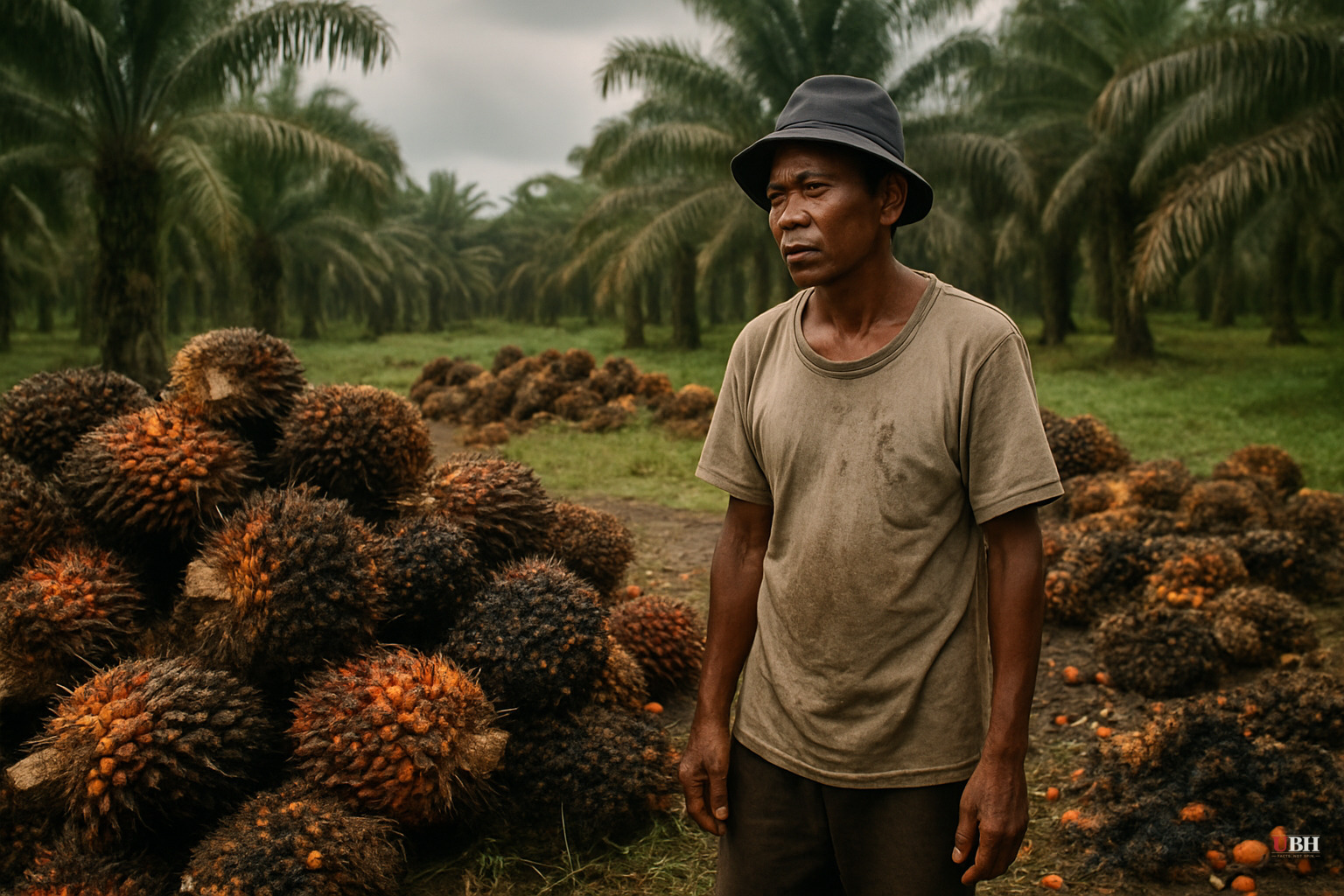
According to the Jakarta Globe, as reported by UkrAgroConsult, farmgate prices for fresh fruit bunches (FFB) have collapsed to Rp 1,000–1,500 per kilogram. Before the centralization policy kicked in, farmers were getting around Rp 2,800 per kilogram. That's a price drop of roughly 46–64% depending on region.
The hardest-hit areas: West Sulawesi, West Kalimantan, and North Sumatra — which together represent a massive share of Indonesia's production base.
What's Actually Happening in the Fields
Traders and processing companies began reducing or outright halting purchases of raw palm fruit after the policy was announced. The result: panic selling, market paralysis, and fruit left to rot.
Bloomberg's reporting — blocked behind a paywall, but with headlines visible — confirms two parallel crises: farmers being crushed by the export price disruption, AND a government probe into major palm oil companies over export pricing issues. Jakarta is apparently investigating whether big industry players are manipulating prices under the new centralized system. Someone is getting squeezed, and someone else may be gaming it.
Farmers' associations are calling for the policy to be revised or scrapped entirely. The government's stated justification — stopping revenue losses from undervaluation and tax manipulation — is legitimate. But the execution is hammering the people who can least absorb the hit.
Smallholders: 40% of Production, Zero Political Cover
Smallholder farmers produce roughly 40% of Indonesia's total palm oil output, according to industry data cited by UkrAgroConsult. This isn't a fringe group. Cut their income in half and you've destabilized a significant chunk of the world's largest palm oil exporter.
Falling incomes are already forcing some farmers to cut fertilizer use. That's not just a personal hardship — it's a productivity problem for an industry Jakarta is simultaneously trying to grow into aviation fuel markets.
This Is Not a New Pattern — Jakarta Did This Before
This situation has a direct historical parallel.
In April–May 2022, Indonesia imposed a temporary CPO export ban to fight domestic cooking oil shortages. The result, according to Edelman Global Advisory: FFB prices fell 40–70% below the government's own price floor, millions of small farmers lost income, and Indonesia lost an estimated $3 billion per month in export revenue. The ban was reversed on May 23, 2022.
The government then had to waive CPO export taxes to pump prices back up — and even after that intervention, prices only recovered to about $0.13/kg by August 2022, still well short of the pre-ban level of $0.20/kg.
Prabowo's team appears not to have learned from that episode. The mechanism is different — centralized routing through a state trading entity rather than an outright ban — but the first-order effect on smallholders is nearly identical.
The EU Deal Adds Insult to Injury
This week, Indonesia and the European Union signed the IEU-CEPA trade agreement in Bali, per DW's reporting. The deal opens roughly 80% of Indonesia's exports to the EU tariff-free, with palm oil finally getting zero-tariff access after years of bitter diplomatic fighting.
The development is more complicated than it appears. The EU's Deforestation Regulation (EUDR) is now in force, requiring that every palm oil shipment entering Europe be accompanied by documentation proving it didn't come from recently deforested land. Eddy Martono, chairman of the Indonesian Palm Oil Association (GAPKI), told DW directly: large companies can handle EUDR compliance. Smallholders — who control over 42% of Indonesia's plantations — almost certainly cannot.
Martono's own words: "The real challenge lies with smallholders, as the government has yet to provide clear rules regarding their land cultivation."
Zero-tariff access means nothing if you can't get export certificates. The deal benefits large palm oil conglomerates and leaves independent farmers holding the bag.
The Real Problem
Most reporting frames this as either a governance reform story (Jakarta cracking down on tax cheats) or an environmental story (EU demanding deforestation compliance). Both framings skip the people who actually grow the fruit.
The Bloomberg probe headline about major companies gaming export prices under the new system is particularly underreported. If Jakarta centralized exports to stop manipulation, and big players are already being investigated for manipulating prices under the new system, then the reform hasn't fixed the problem — it's just shifted where it operates.
The Fallout
For Indonesian smallholder farmers, income has been cut in half. The government is investigating corporations above them while their fruit rots. The trade deal that was supposed to open European markets will mostly benefit the large companies that can afford compliance lawyers.
For consumers: palm oil is in roughly 50% of packaged goods globally. Supply disruptions from Indonesia's policy chaos will eventually reach grocery store prices.
Prabowo's industrial vision for palm oil is real. The execution on protecting the farmers who make it possible is not.
Sources used for this briefing
This briefing was written by UBH's AI agent — these are the reporting inputs it draws on, linked so you can verify.


