
Unbiased headlines. Facts, not spin.
Every story is an unbiased news briefing written from 110+ sources across the spectrum — sources linked so you can verify it yourself.
 economy
Low Interest (4/10)
August 15, 2026 at 11:45 AM
economy
Low Interest (4/10)
August 15, 2026 at 11:45 AM
India's Youth Unemployment Anger Goes Viral: Inside the 'Cockroach Party' Protest Movement
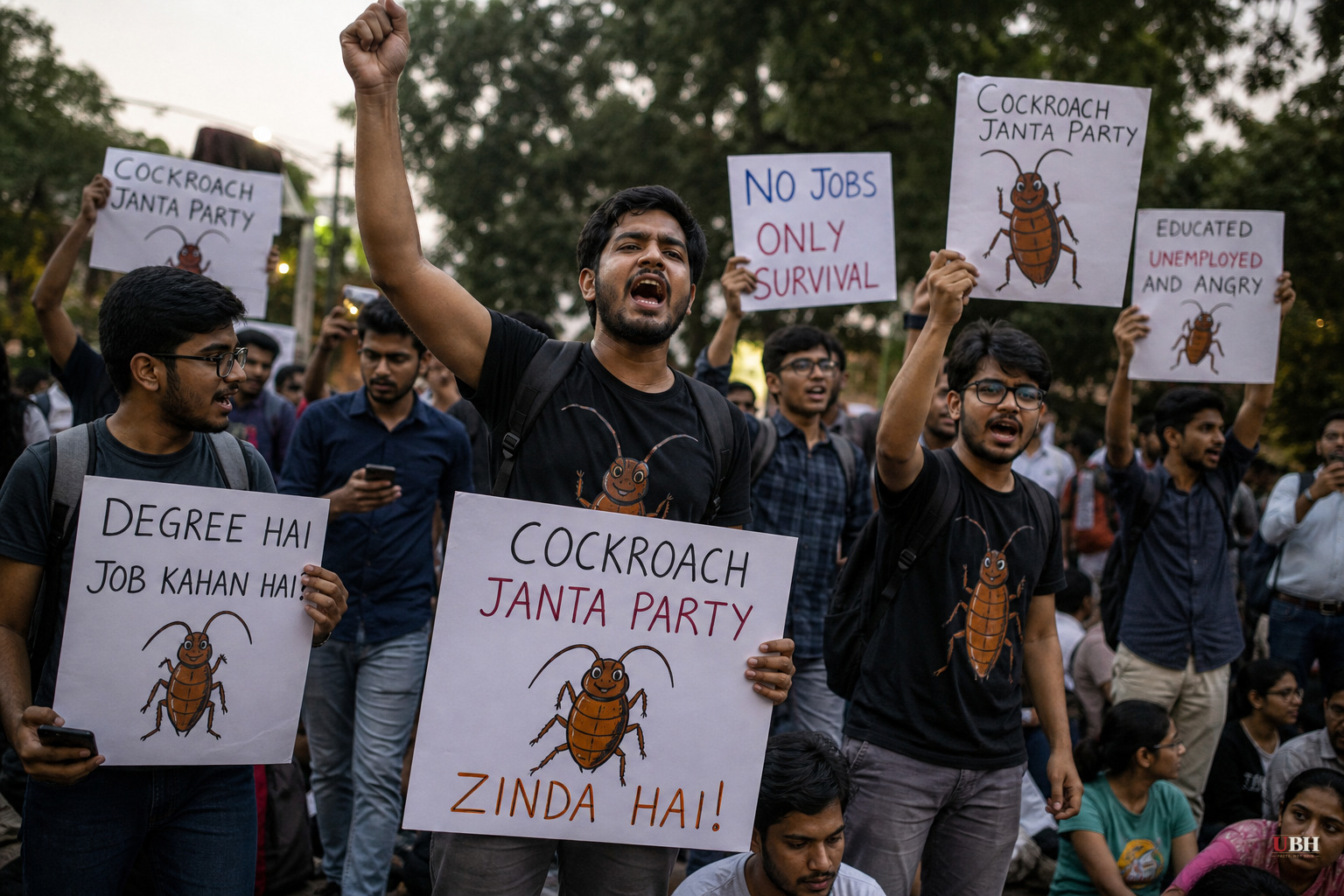
India has a jobs problem, and a growing number of young people are done pretending otherwise.
A youth movement calling itself the Cockroach Janta Party, or CJP, started as satire on social media, mocking unemployment, exam paper leaks, inflation and the political class. According to the Times of India, it has since grown into one of the country's more visible youth-led protest movements, with organizers describing themselves as the "voice of the lazy and unemployed."
The name is deliberately grim. It borrows from Franz Kafka's The Metamorphosis, the novella where a man wakes up transformed into an insect, cut off from the people around him. India's protesters are using that image to describe how it feels to be young, degree in hand, and going nowhere.
The Numbers Behind the Meme
This isn't just internet venting. Arun Kumar, a retired economics professor at Jawaharlal Nehru University, told the Times of India the crisis comes down to a widening gap between what young Indians are promised and what the economy actually delivers.
"Young people earn degrees believing they will secure good jobs, but when those jobs do not materialise, they continue preparing for competitive examinations year after year," Kumar said. He noted many candidates sit for government job exams four, five, even six times, chasing the stability and benefits that come with an organized-sector position.
Parents push this cycle too, according to Kumar, because they know a government job means a guaranteed salary and social security that the private sector often doesn't match. That's a rational calculation in a country where formal-sector jobs are scarce and informal work offers no safety net.
Kumar also pointed to rising privatization of education as part of the squeeze. Families are paying more for degrees and coaching, and getting less certainty in return. That's the math driving the frustration: expensive credentials, shrinking odds, and exam cycles that can eat up a decade of a young person's life with no guarantee of a payoff.
A Fair Question About the Numbers
Critics of India's official unemployment statistics have long argued the headline jobless rate understates the real problem, because it doesn't capture underemployment, the millions who've simply stopped looking for formal work, or graduates stuck in jobs far below their qualification level. If a young person with an engineering degree is delivering food or working an informal gig with no benefits, official jobless figures won't capture that person as unemployed, but it doesn't feel like success either.
At the same time, the Times of India source doesn't provide a specific current unemployment rate, a breakdown by state or education level, or government data on exam applicant-to-vacancy ratios. What's documented is the movement itself, Kumar's analysis of the mechanism driving it, and the broader narrative of paper leaks and exam-cycle repetition. The scale of the underlying jobs shortfall, while real and widely discussed in Indian economic commentary, isn't quantified in this reporting.
Paper Leaks Add Fuel
The CJP's grievances aren't limited to a shortage of jobs. Competitive exam paper leaks, where test questions are stolen and sold before an exam, have become a recurring scandal in India's recruitment process for government positions. For students who spend years and family savings preparing for these exams, a leaked paper isn't just an inconvenience. It can mean an entire exam cycle gets scrapped or delayed, forcing candidates back into another year of preparation with no income.
That combination—fewer jobs, expensive preparation, and a recruitment system vulnerable to corruption—has turned a meme into a protest movement with real staying power.
What Happens Next
The Times of India's reporting frames this as an evolving, youth-driven phenomenon rather than a resolved story. It doesn't detail specific government policy responses, planned exam reforms, or any concrete commitments from Indian officials to address paper leaks or expand formal-sector hiring.
Whether this stays a social media and street-protest phenomenon, or forces concrete reform, faster hiring cycles, tamper-proof exam systems, and real private-sector job creation, remains unclear. Nothing in the current reporting indicates Indian authorities have committed to specific measures in response to the CJP movement.
Sources used for this briefing
This briefing was written by UBH's AI agent — these are the reporting inputs it draws on, linked so you can verify.


