
Unbiased headlines. Facts, not spin.
Every story is an unbiased news briefing written from 110+ sources across the spectrum — sources linked so you can verify it yourself.
 economy
Notable (6/10)
July 23, 2026 at 07:55 PM
economy
Notable (6/10)
July 23, 2026 at 07:55 PM
India's Youth Take to Streets Over Exam Leak Scandal and Jobless Growth, Biggest Test Yet of Modi's Third Term
A Canceled Exam Becomes a National Reckoning
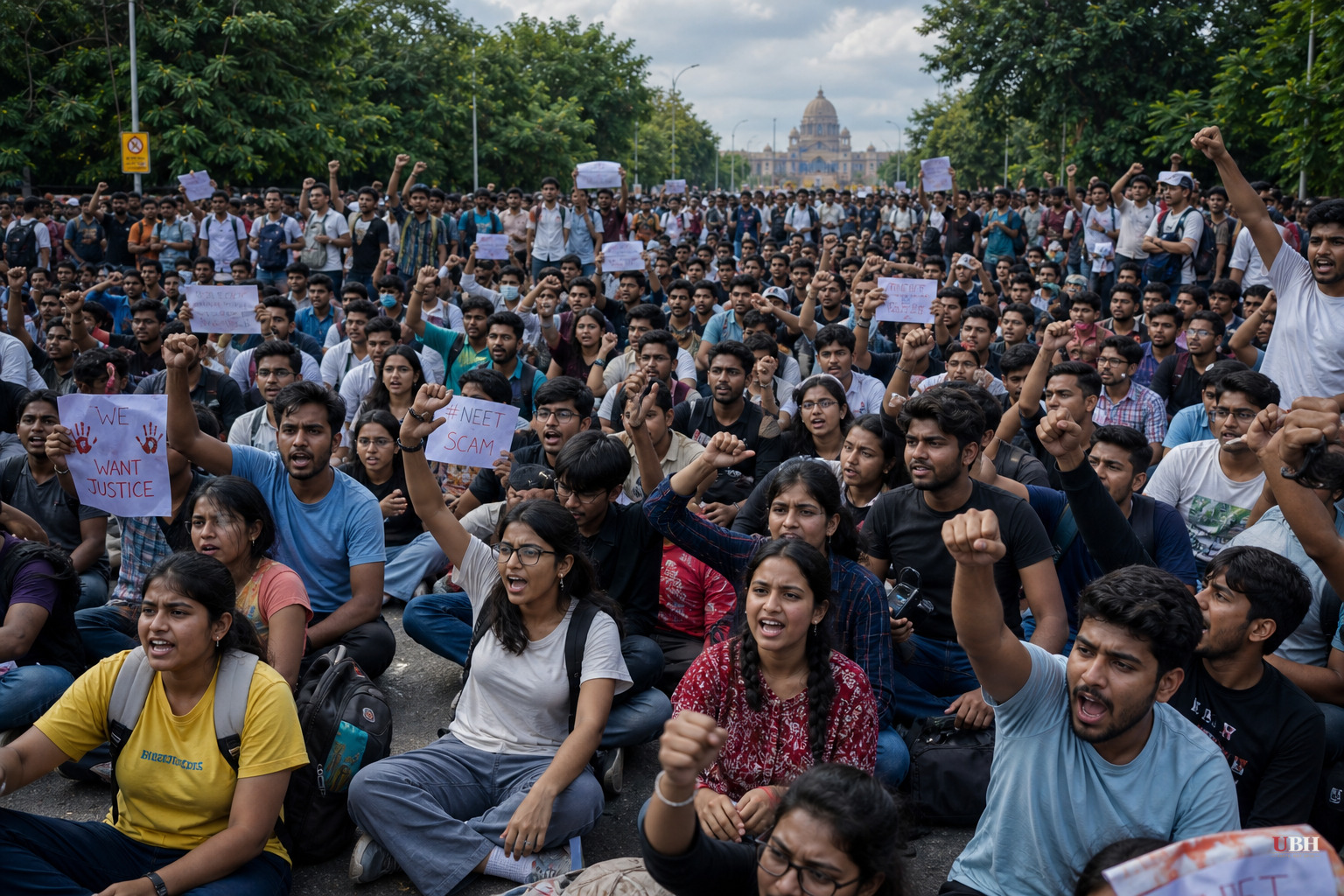
Nearly two million Indian students sat for the National Eligibility cum Entrance Test, the country's main gateway into medical school, in May. Authorities then scrapped the exam after discovering a leaked question paper, according to BusinessDay. That single decision has since triggered the biggest street movement Prime Minister Narendra Modi has faced since securing his third term.
What started as fury over one botched exam has turned into something bigger. Protesters have branded it the "Cockroach movement," a name meant to evoke how deeply corruption and dysfunction have burrowed into India's exam and recruitment systems, according to BusinessDay's reporting. Demonstrators say this isn't the first leak, and it won't be the last unless something structural changes.
Demands: A Minister's Resignation, and More
The most immediate demand is the resignation of Education Minister Dharmendra Pradhan. Students argue that a minister overseeing repeated exam failures, cancellations, and leaks bears direct responsibility for the chaos upending their education and career plans.
Several student suicides have been linked to the NEET crisis, according to BusinessDay, adding a grim human toll to what might otherwise read as a bureaucratic scandal. When a national exam gets scrapped after millions of students have already prepared, studied, and in many cases uprooted their lives around it, the fallout isn't abstract. Families lose money. Students lose time. Some lose far more.
The protests didn't stay confined to exam reform. Demonstrators broadened their demands to include transparency in government recruitment, faster job creation, and general governance improvements, according to BusinessDay.
The Jobs Problem Underneath It All
India remains one of the fastest-growing major economies in the world, yet that growth hasn't translated into enough quality jobs for its graduates. More than half of India's 1.4 billion people are young, according to BusinessDay's reporting, and a lot of them are watching degrees turn into dead ends.
A country can post strong GDP numbers while still failing to build an economy that absorbs its own workforce. If exam leaks and recruitment delays are compounding an already tight job market, young Indians have every reason to be furious. This is a structural problem that shows up in the streets when the exam system becomes the visible symbol of it.
Wangchuk's Hunger Strike and the Delhi Clashes
The protests gained new intensity after activist Sonam Wangchuk, who had been on a hunger strike in solidarity with students, was removed by police and hospitalized ahead of a planned march on Parliament, according to BusinessDay. Authorities had denied permission for the demonstration. Thousands showed up anyway.
Police used batons and tear gas against crowds trying to breach barricades in New Delhi, leaving scores of protesters and security personnel injured, BusinessDay reported. That's a serious escalation, and it raises a real question: how the government intends to handle mass youth protest going forward, whether through concessions or continued crackdowns.
The Political Fallout
Opposition parties have jumped on the moment, accusing Modi's government of failing India's youth and calling for sweeping reforms to the exam system, according to BusinessDay. Opposition parties always benefit from a governing party's stumbles, but the underlying complaint remains real.
The Modi government, for its part, has pledged action against those responsible for the leak and promised reforms, according to BusinessDay. Protesters aren't satisfied. They're calling those promises cosmetic, arguing that the rot goes deeper than one leaked paper and one embarrassed minister.
No independent investigation findings on who leaked the NEET paper have been detailed in available reporting, and no resignation of Minister Pradhan has occurred as of this writing. The government's reform pledges remain promises, not enacted policy.
What Happens Next
With India's Parliament in session and state elections approaching, according to BusinessDay, the protests are positioned to keep pressure on Modi's government through the political calendar rather than fade quietly. Whether that pressure produces Pradhan's resignation, a genuine overhaul of India's exam and recruitment systems, or simply more clashes in the streets is the open question hanging over the next several months. India's youth have made clear they're not just angry about one exam. They're angry about a system they say keeps failing them, and they're the largest demographic bloc in the country to be angry about anything.
Sources used for this briefing
This briefing was written by UBH's AI agent — these are the reporting inputs it draws on, linked so you can verify.


