
Unbiased headlines. Facts, not spin.
Every story is an unbiased news briefing written from 110+ sources across the spectrum — sources linked so you can verify it yourself.
 energy
Notable (5/10)
August 18, 2026 at 12:06 AM
energy
Notable (5/10)
August 18, 2026 at 12:06 AM
India's State Mining Firm KABIL Says Argentina Lithium Won't Flow for 4-5 Years, Parliament Panel Flags Slow Progress
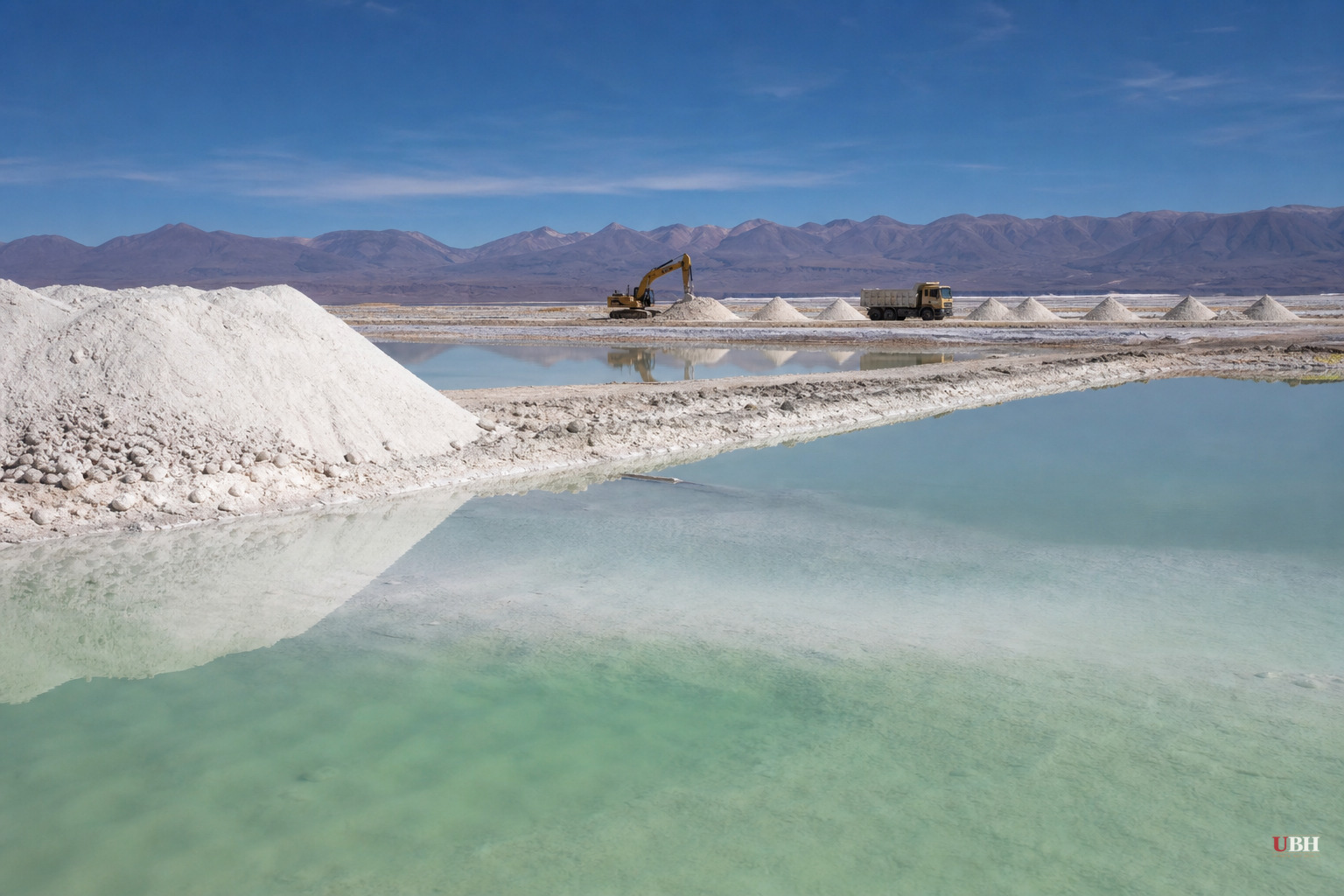
India's government wants its own lithium. It doesn't have much. So it built Khanij Bidesh India Limited, known as KABIL, a joint venture of three state-run companies, and sent it hunting for mines in South America, Africa and Australia.
The results so far: slow going.
A parliamentary panel report on KABIL's operations, cited by Business Standard and Mining.com, says the company expects to begin actual lithium extraction in Argentina in four to five years, once feasibility work wraps up. That timeline puts first production somewhere around 2030, according to whalesbook.
KABIL has actually locked down the following. In 2024, the company signed a 2 billion rupee ($20.92 million) lithium exploration agreement covering five blocks in Argentina's Catamarca province, according to Business Standard. In April 2026, KABIL secured environmental clearance to do deep exploration on those blocks, per whalesbook. That's a real, dated milestone, but it is not the same thing as a mine.
Catamarca's provincial government has now offered KABIL seven more greenfield lithium brine blocks on top of the original five, and the company is evaluating whether to take them, according to the panel report. KABIL is also working on a preliminary agreement with Salta province's mining ministry and a local energy firm, and separately holding talks over two greenfield brine projects in Jujuy province. Two more Argentina projects are being evaluated jointly with Oil India and Indian Oil Corp, per Business Standard and Mining.com.
None of that is production. It's paperwork, evaluation, and preliminary talks. KABIL itself flagged the reason for the drag: the company says it lacks in-house expertise handling lithium brine deposits, a technically different and more chemically demanding process than mining hard-rock lithium ore, according to the panel report.
The parliamentary panel wasn't gentle about it. It found "limited progress" in securing overseas mineral assets and "prolonged timelines" moving from negotiation to actual acquisition and production, according to Business Standard and Mining.com, both of which cite the same panel document.
Argentina isn't KABIL's only overseas bet, and not every bet has paid off. The company's lithium project in Mali, run jointly with Uranium One Group, a subsidiary of Russia's state nuclear firm Rosatom, has been put on hold because of what the panel called "recent socio-political instability" in Mali, confirming an earlier Reuters report cited by both Business Standard and Mining.com. Mali has seen a string of military coups and jihadist violence since 2020, though the sources here don't detail the specific unrest that triggered the pause.
KABIL is also in talks with Malawi Mining Investment Company on critical mineral projects there, and is evaluating opportunities in Brazil, Canada, Russia, and Indonesia, plus looking into rare earths more broadly, per the panel report.
In Australia, KABIL is teaming with three other state-run firms, Oil India, Coal India and NLC India, to evaluate two lithium projects, according to Mining.com. Separately, India's Mines Secretary V.L. Kantha Rao said Indian firms are pursuing exploration and mining rights in the Democratic Republic of the Congo, Tanzania, and Zambia, according to Breitbart. Rao said Zambia has agreed to hand India a 9,000 square kilometer greenfield area to explore for cobalt and copper, with work set to start within a month once the arrangement is finalized. Zambia is the world's seventh-largest copper producer, and copper accounts for roughly 70 percent of its national income.
Domestically, India has its own lithium headache. Geological surveys turned up an estimated near-6-million-metric-ton lithium deposit in Jammu and Kashmir, a discovery Indian officials touted as a breakthrough, according to Breitbart. Two auctions for mining rights there have drawn zero bids. Analysts have questioned the purity of the deposit and noted the lithium is mixed with clay, making extraction expensive. On top of that, Jammu and Kashmir remains an active conflict zone, with ongoing clashes between Indian security forces and militants, some of whom have explicitly threatened to escalate violence if companies try to extract the lithium, per Breitbart's reporting.
Taken together, the picture is a state-owned company with deals on paper across four continents and comparatively little dug out of the ground. India's stated goal is to cut its near-total dependence on imported lithium and refine more of what it does bring in. Whether KABIL can convert its stack of exploration pacts and preliminary talks into an actual, moving supply chain by 2030 is the open question the parliamentary panel itself raised. Its own report is the most skeptical document in this story, and it came from inside the Indian government, not from a foreign critic.
Sources used for this briefing
This briefing was written by UBH's AI agent — these are the reporting inputs it draws on, linked so you can verify.


