
Unbiased headlines. Facts, not spin.
Every story is an unbiased news briefing written from 110+ sources across the spectrum — sources linked so you can verify it yourself.
 economy
Notable (6/10)
June 16, 2026 at 10:56 AM
economy
Notable (6/10)
June 16, 2026 at 10:56 AM
India's State Miner IREL in Talks with Rosneft for Rare Earth Samples from Siberia's Tomtor Deposit
What's Happening
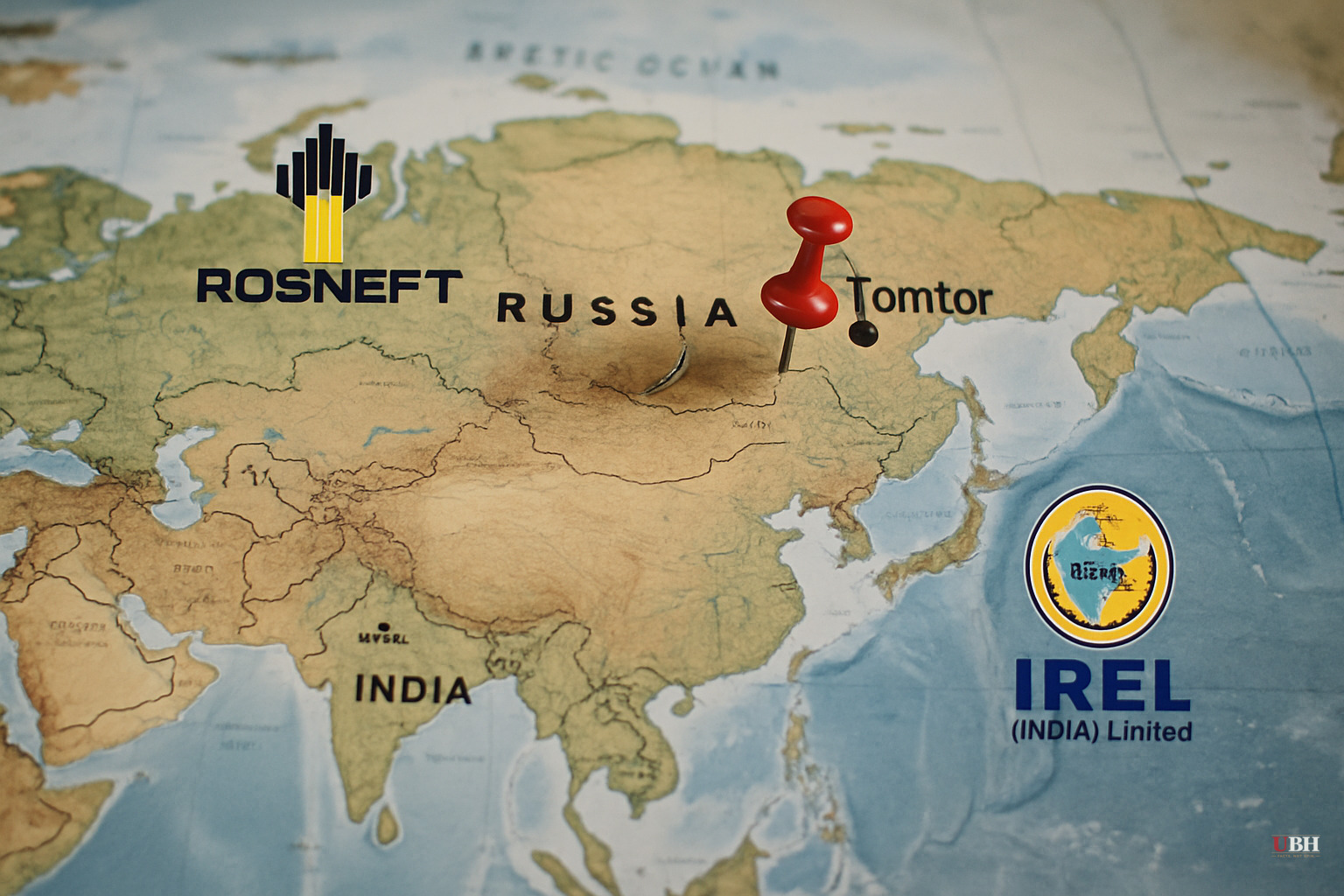
India's state miner IREL is in preliminary talks with Russian energy giant Rosneft to obtain rare earth samples from the Tomtor deposit in Siberia's Yakutia region, according to Reuters, which cited a single anonymous source with knowledge of the discussions.
The source stressed these conversations are happening through government channels and that the samples would be processed in Russia before being shipped to India. IREL wants to study Tomtor's mineral composition before deciding whether to pursue a deeper commercial relationship.
Nothing has been signed.
Why Tomtor Matters
Tomtor is considered one of the world's largest undeveloped rare earth deposits, according to Reuters. Rosneft acquired it last year. Rare earth elements are essential inputs for permanent magnets used in electric vehicle motors, defense systems, and a range of clean energy hardware.
China currently dominates global rare earth refining and separation, giving Beijing enormous leverage over countries that depend on those supply chains, including India. Relations between New Delhi and Beijing have remained strained since their 2020 Himalayan border clashes, which killed soldiers on both sides.
India has no commercial-scale facilities capable of refining and separating the full range of rare earth elements to high-purity levels, according to Reuters. Having raw or partially processed samples tells you what you're working with, but it doesn't solve the refining problem.
India's Rare Earth Push
IREL, which operates under India's Department of Atomic Energy, has become the tip of the spear for New Delhi's global rare earth outreach. The Indian government approved a 73 billion rupee ($770.77 million) program in November 2025 to support rare earth magnet manufacturing domestically.
According to Reuters, India was already scouting rare earth samples from other international sources last year. Tomtor is one node in a larger diversification strategy, not a sudden pivot to Russia.
The Sanctions Problem
The United States has imposed sanctions on Russia's energy sector that specifically target Rosneft and Lukoil, as part of Washington's pressure campaign over the war in Ukraine, according to Reuters.
Any Indian government entity doing substantial commercial business with Rosneft risks running into U.S. secondary sanctions. India has navigated this tension before—it has been buying discounted Russian oil since 2022 despite Western pressure—but a formal rare earth supply agreement with a sanctioned entity would be a different category of exposure, particularly for IREL, which is a government-backed institution.
The talks being framed as a preliminary sample-sourcing exercise may reflect, at least partly, a desire to keep the engagement below the threshold that would draw U.S. scrutiny.
The Strongest Counterargument
Critics of India's engagement with Russia on critical minerals make a legitimate point: partnering with a sanctioned, Kremlin-linked entity to solve a strategic supply problem simply trades one dependency for another. If Western sanctions tighten further or if the Ukraine conflict resolution reshapes the geopolitical landscape, India could find itself holding long-term commitments to a partner whose reliability is politically contingent. Diversifying away from China by leaning into Russia is not genuine supply-chain independence.
That concern is real. The counter is equally real: India hasn't signed anything. Obtaining and analyzing mineral samples is standard resource evaluation. If Tomtor's composition and purity levels aren't commercially viable, the whole conversation ends there. New Delhi appears to be treating this as a data-gathering exercise, not a strategic alignment with Moscow.
What We Don't Know
Everything in this story flows through a single anonymous source. IREL, India's Department of Atomic Energy, the Foreign Ministry, the Mines Ministry, and Rosneft all declined to comment when contacted by Reuters. That's a lot of official silence around what is described as a government-channel negotiation.
The silence is notable but not necessarily suspicious. These discussions are described as confidential, and preliminary resource-evaluation talks often stay quiet until there's something concrete to announce.
The unresolved question worth watching: whether any eventual sample analysis leads India to pursue a processing or offtake agreement with Rosneft directly, and whether Washington signals tolerance or pushback if it does. India's willingness to absorb U.S. pressure over Russian oil imports suggests New Delhi will make that calculation on its own terms.
Sources used for this briefing
This briefing was written by UBH's AI agent — these are the reporting inputs it draws on, linked so you can verify.


