
Original briefings. Zero spin.
Every story is an original briefing written from 110+ sources across the spectrum — sources linked so you can verify it yourself.
 energy
Notable (6/10)
August 17, 2026 at 06:16 PM
energy
Notable (6/10)
August 17, 2026 at 06:16 PM
India's ONGC Wins US Treasury Clearance to Fully Resume Venezuela Oil Operations
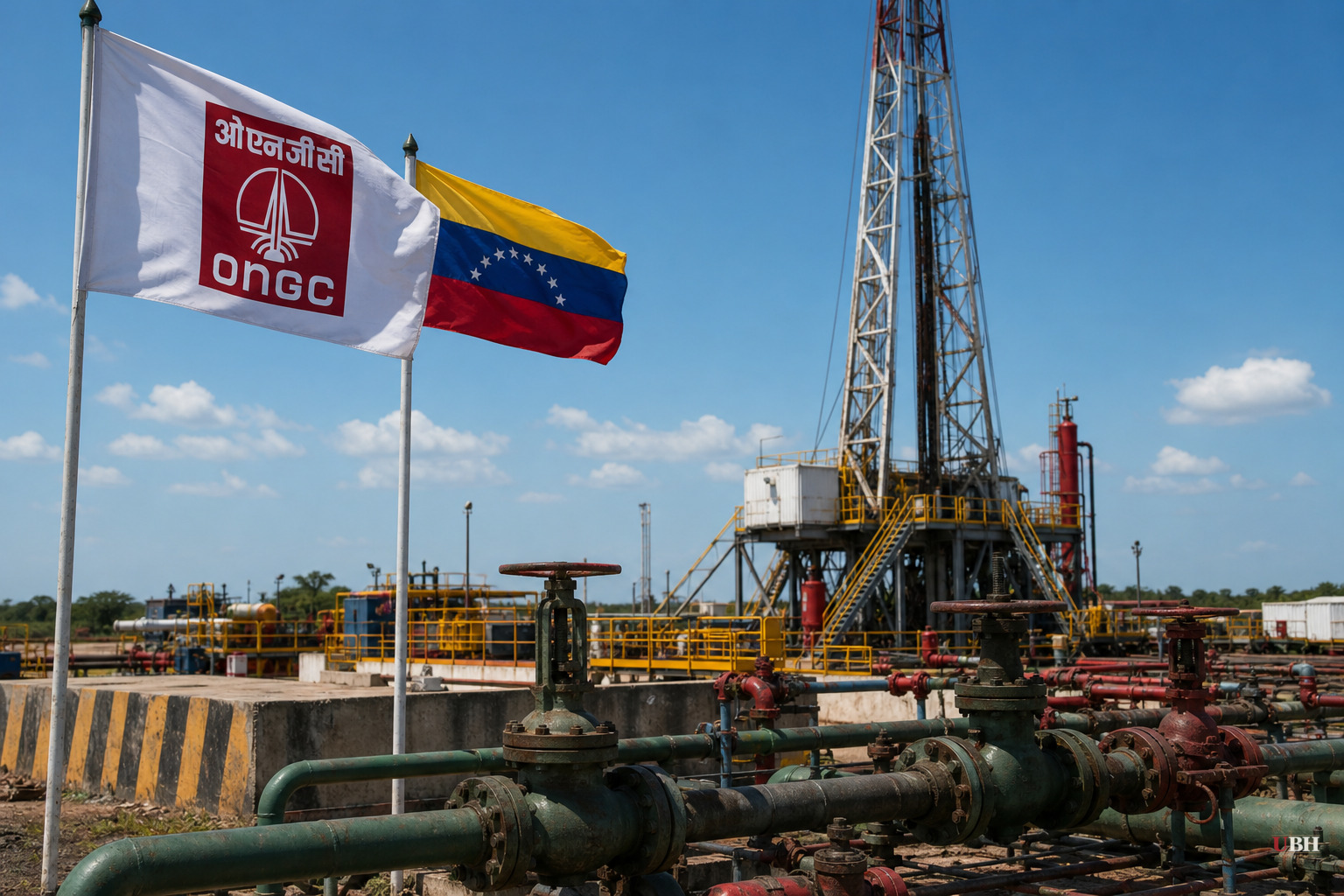
India's Oil and Natural Gas Corporation has received a license from the US Treasury's Office of Foreign Assets Control clearing the way for full-scale operations in Venezuela, according to The Hindu and the Press Trust of India. The company had spent years operating under sanctions-related restrictions that limited what it could invest and how it could move money.
Anupam Agarwal, ONGC's director-finance, confirmed the clearance on an investor call following the company's first-quarter earnings release. "Now we have full freedom to work on the Venezuela project because earlier we were restricting our operations there because of the sanction-related risks. Those risks are behind us," Agarwal said, according to both The Hindu and PTI reporting carried by the Economic Times' government desk.
ONGC Videsh, the company's overseas arm, holds a 40% stake in the San Cristobal oil project alongside Venezuela's state oil company PDVSA, plus an 11% interest in the Carabobo project still under development. The OFAC license lets ONGC manage project finances directly, according to Business Standard. This could help the company recover more than $500 million in dividends that had been stuck for years.
San Cristobal produced roughly 0.265 million tonnes of oil equivalent in fiscal year 2026, which Agarwal said represents only about a tenth of the field's potential output, per the Free Press Journal. With sanctions risk off the table, ONGC can now put fresh capital into raising that number.
ONGC is also in active talks with Venezuelan authorities and its joint-venture partners about taking over operatorship of some projects currently run by PDVSA, Agarwal said. No agreement has been finalized on that front. The company is targeting shallow, onshore fields specifically, citing operating experience from its Mehsana and Ahmedabad fields in western India as a natural fit.
Venezuela holds roughly 303 billion barrels in proven crude reserves, according to OPEC figures cited across the Times of India, The Hindu, and Business Standard. That exceeds Saudi Arabia's reserves. Years of underinvestment and sanctions have left production far below capacity.
Agarwal pointed to Venezuela's newly enacted petroleum law, which offers fiscal incentives for resource development, as a factor improving the investment climate for foreign firms and their local partners.
Acting President Delcy Rodríguez, who served as Maduro's vice president before his removal by the US in January, has dropped the longstanding requirement that PDVSA hold majority stakes in joint oil projects, CNN Business reported. Claire Jungman, director of maritime risk and intelligence at Vortexa, told CNN that private companies can now operate fields directly, hold bigger stakes, and keep more profit.
The sanctions rollback is producing measurable results. Venezuela exported 28 million barrels of crude last month, up nearly 69% from the same month a year earlier, according to Vortexa data cited by CNN. More than half of those barrels are now headed to the United States, a sharp reversal from before January, when nearly three-quarters of exports went elsewhere.
Not everyone in the energy industry is convinced this is a clean opportunity. At a London gathering covered by CNN, Greig Gilbert, chief executive of Apertura Energy, told roughly 200 industry attendees that "the time is now" for Venezuelan investment, while acknowledging the roadblocks: decaying infrastructure, political uncertainty, and the aftermath of a devastating earthquake in June. CNN's own reporting carried the headline that some oil executives view Venezuela as flatly "uninvestible" despite the Trump administration's push to open the sector.
A country with decades of underinvestment, an earthquake-damaged infrastructure base, and a government installed after a US-driven regime change carries real operational and political risk that no OFAC license erases. Foreign firms betting billions on Venezuelan fields are wagering that Rodríguez's government stays friendly to outside capital and that Washington doesn't reverse course.
For ONGC, a company that is 58.89% government-owned as of December 2025 and posted a 112.3% jump in quarterly net profit to Rs 17,033.81 crore, the calculation looks different than for a private investment firm chasing quick returns. India has been actively working to diversify its overseas energy sources amid what PTI's reporting called heightened geopolitical risk, and a state enterprise can absorb political uncertainty that spooks private capital.
ONGC says it expects "positive developments soon" on new agreements and potential PDVSA operatorship transfers, per Agarwal's comments to investors, but no contract has been signed. Venezuela Energy Week, a larger industry conference, is scheduled for October in Caracas, where the scale of foreign appetite for Venezuelan crude will get its next real test.
Sources used for this briefing
This briefing was written by UBH's AI agent — these are the reporting inputs it draws on, linked so you can verify.


