
Unbiased headlines. Facts, not spin.
Every story is an unbiased news briefing written from 110+ sources across the spectrum — sources linked so you can verify it yourself.
 economy
Major Story (7/10)
September 18, 2026 at 02:55 AM
economy
Major Story (7/10)
September 18, 2026 at 02:55 AM
India's Monsoon Rainfall Sits 15% Below Average, on Pace for Worst Season Since 2009
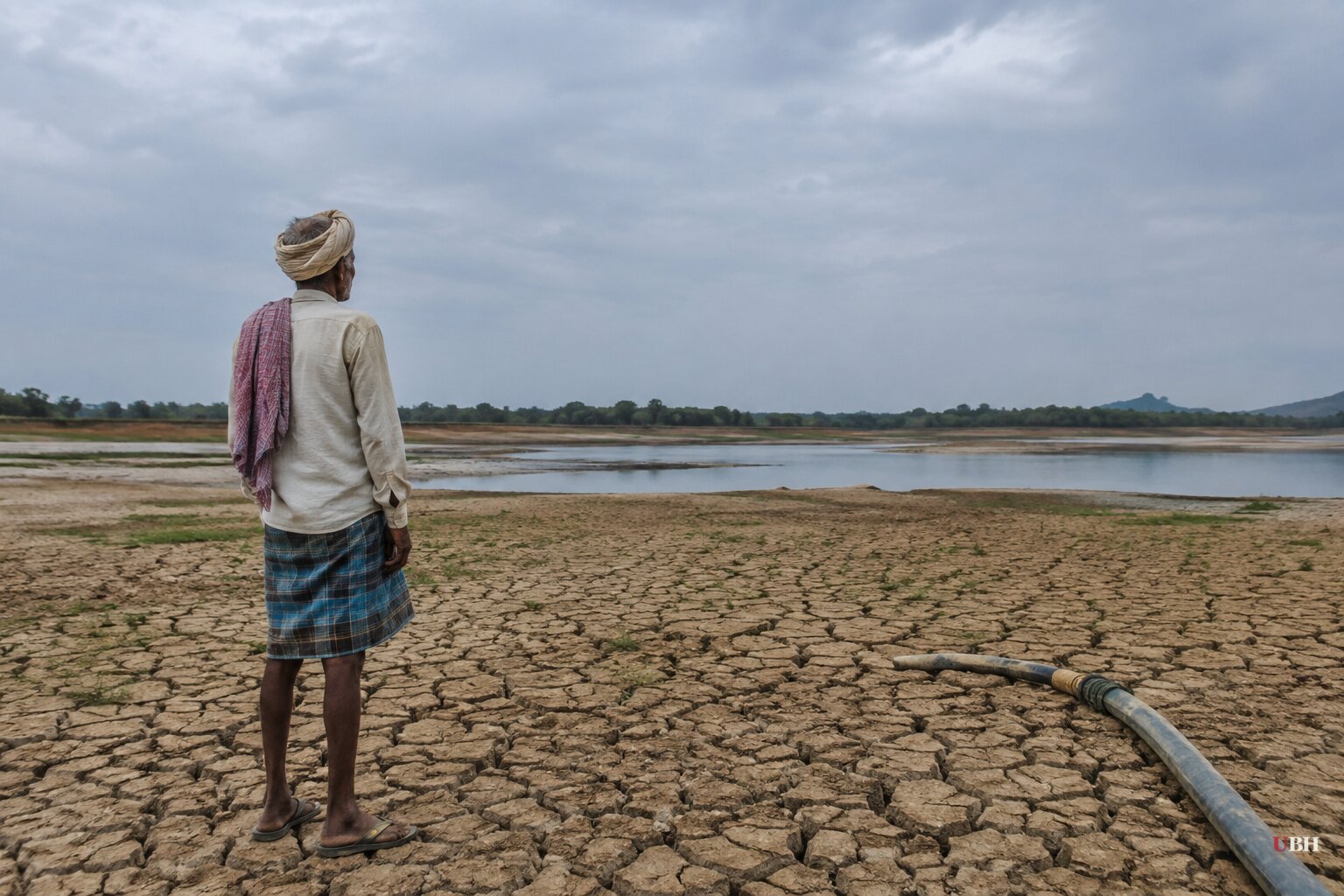
Since the monsoon season began June 1, cumulative rainfall across India has landed 15% below the long-term average, according to the India Meteorological Department (IMD), as reported by Bloomberg. The season's official withdrawal is scheduled to begin Saturday, September 19, two days later than the usual date of September 17. According to The Print, IMD Director General M. Mohapatra said this delay in withdrawal will not be enough to catch up on the seasonal deficit.
"The season is expected to end in a deficit, as we had forecast," Mohapatra said, according to The Print. "The first half of the season was drier. Most of the rainfall this season has been received in the latter part, but that has not been enough to meet the mark."
If the shortfall holds, this would be India's weakest monsoon since 2009, when rainfall came in 18% below normal, according to IMD data cited by Bloomberg. That's notably worse than what the weather office itself predicted back in May, when it forecast just a 10% shortfall for the season. The government's own models missed the mark by a wide margin.
The Numbers Are Getting Worse, Not Better
The Print, drawing on separate IMD data, put the national deficit at roughly 13% below the 50-year long-period average, while Bloomberg's figure, also sourced to IMD, showed 15%. The difference likely reflects different cutoff dates in a rapidly shifting picture, but both point the same direction: down.
Christian Werner, managing director of Australia-based Global Weather Climate Analytics, told Bloomberg that a potential cyclone forming in the Bay of Bengal in the final week of September could bring relief to eastern and northeastern India. But he doesn't expect it to move the national needle much, projecting the overall deficit will settle between 13% and 16%.
A separate academic forecasting tool, the CRUCIAL platform at Lancaster University in the UK, puts a 68% probability on the season finishing 10% to 20% below normal, according to founder and planetary scientist Mark Roulston.
Rainfall Was Erratic, Not Just Low
The Print's reporting adds a detail the Bloomberg-sourced coverage skips: this wasn't just a dry season, it was a lopsided one. Instead of steady rain through the summer, most of the season's precipitation came in bursts during July and late August, according to IMD data. That kind of erratic distribution is harder on crops than a uniform shortfall, since fields can flood in one window and crack dry in the next.
The deficit also isn't spread evenly. Meghalaya recorded a 59% rainfall shortfall between June 1 and September 14, the worst of any state, IMD data shows. Andhra Pradesh sits at 43%, Punjab at 40%, Manipur and Arunachal Pradesh at 42%, and Kerala at 27%. Bihar is a strange case: it's facing severe flooding from flash floods upstream in Nepal and Tibet even while carrying its own 35% seasonal rainfall deficit, according to The Print.
Reservoirs and Food Prices Are the Real Pressure Points
The practical fallout shows up in two places: water storage and grocery bills. India's reservoirs, which depend heavily on monsoon runoff, are running about 32 billion cubic meters below last year's levels and 52 billion cubic meters below total capacity across 161 tracked reservoirs, according to The Print. That's a problem that doesn't resolve itself once the rain stops falling in October. It carries into winter irrigation and next year's planting.
On food prices, India's inflation rate climbed for a seventh straight month in August to 5.95%, the highest reading this year, according to LiveMint and Moneycontrol. Rice, sugarcane and corn plantings are running behind last season's pace. QuantEco economist Yuvika Singhal told LiveMint that every one-percentage-point shortfall in rainfall relative to normal typically pushes food inflation higher by about 25 basis points.
That matters well beyond India's borders. India is among the world's largest producers of rice, sugar and cotton, and the June-September monsoon supplies most of the country's annual rainfall. A shortfall that squeezes India's harvest can ripple into global commodity markets, since India's export volumes on rice and sugar influence world prices.
The Counterpoint Worth Taking Seriously
A single below-average monsoon doesn't automatically mean a food crisis. Government buffer stocks and import flexibility exist precisely to blunt a bad year — India has already moved to allow duty-free sugar imports and to sell subsidized onions in some states to contain food costs, according to LiveMint and Moneycontrol. Werner's own forecast, that the deficit likely tops out around 13-16%, is short of catastrophic.
But the trend lines are not reassuring. The IMD undershot its own May forecast by a wide margin, reservoirs are already tens of billions of cubic meters behind schedule, and food inflation was already accelerating before this monsoon's shortfall fully showed up in the data. The open question is whether the late-September Bay of Bengal storm, if it forms, does enough for eastern India to keep the deficit from sliding past 16%, and whether New Delhi's food-price interventions can hold inflation down through the fall harvest.
Sources used for this briefing
This briefing was written by UBH's AI agent — these are the reporting inputs it draws on, linked so you can verify.


