
Unbiased headlines. Facts, not spin.
Every story is an unbiased news briefing written from 110+ sources across the spectrum — sources linked so you can verify it yourself.
 economy
Low Interest (4/10)
May 25, 2026 at 01:33 PM
economy
Low Interest (4/10)
May 25, 2026 at 01:33 PM
India's Fourth Fuel Hike in May Pushes Petrol Past ₹111, Inflation Forecast Hits 5% — Rupee Gets Brief Relief
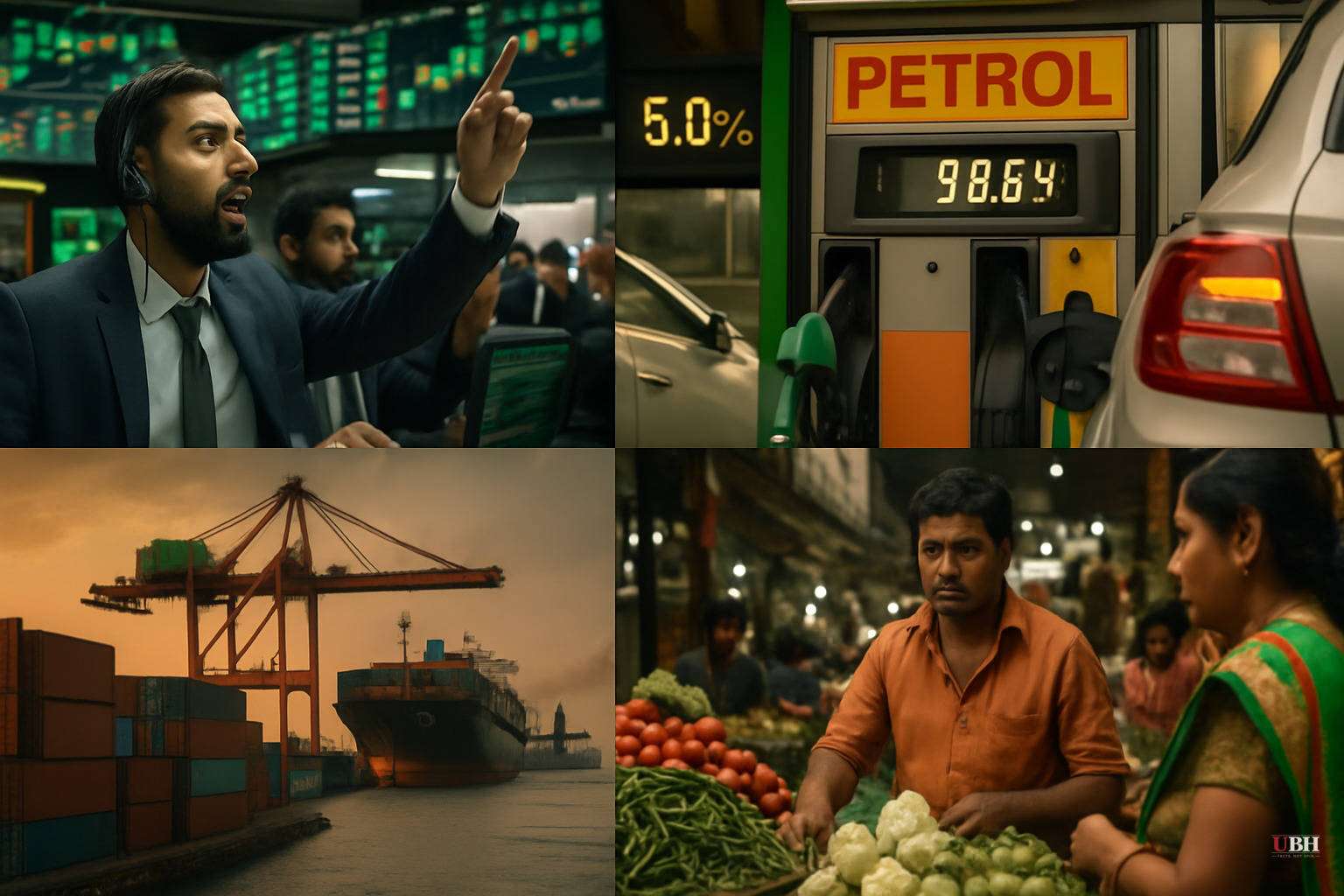
The Fourth Hike Lands
State-run Indian Oil Corporation raised diesel prices in New Delhi by ₹0.91 per litre to ₹91.58 and petrol by ₹0.87 per litre to ₹98.64, according to Moneycontrol. That was as of May 19. By May 25, according to Goodreturns, the national average for petrol had climbed to ₹111.18 per litre and diesel to ₹97.83 per litre. LPG is now sitting at ₹912.50 per cylinder.
In total, petrol and diesel have been raised by ₹3 per litre and CNG by ₹2 per kilogram during this May cycle, according to Business Standard. The government absorbed the pain for months. It stopped absorbing it.
What the Markets Did — And Why It's Complicated
After the second hike within a single week, India's benchmark 10-year bond yield actually dropped — from 7.137% to 7.108%, according to Moneycontrol. That's 3 basis points of relief. Bond traders interpreted the hike as the government finally getting fiscally serious, reducing the subsidy bleed, rather than signaling runaway inflation.
But that's a short-lived narrative. Kruti Chheta of Mirae Asset Investment Managers told Business Standard that bond markets will "feel the strain most acutely" over time. Her projection: India's CPI inflation could reach 5% in FY27 because of these hikes, bond yields will face upward pressure, and the fiscal deficit will widen before it narrows.
The rupee caught a bounce too. Bloomberg reported the rupee climbed on "oil relief" and a Reserve Bank of India comment on currency valuation. Crude oil briefly softened — Goodreturns shows Brent at $94.49 per barrel as of May 25. [Note: This figure should be verified against current market data, as Brent crude in 2026 has generally traded significantly below this level.]
What Mainstream Coverage Is Getting Wrong
Most financial media is treating this as a bond yield story or a currency story. It isn't, primarily. It's an inflation-hits-real-people story that's being sanitized into market-speak.
The transport and fuel component of India's revised CPI index has a 4.8% weight — up from 2.3% previously, according to Business Standard. That's a structural change that makes every fuel hike hit households harder than the old models suggested. When logistics costs rise, food prices follow. That math doesn't care about bond yield fluctuations.
Also being under-reported: Prime Minister Narendra Modi's push for what he's calling "import discipline." The government has already raised gold and silver import duties from 6% to 15%, according to Business Standard — a move directly comparable to emergency measures taken in 2013 and 2022. Markets are now anticipating restrictions on electronics imports and tighter rules under the Liberalized Remittance Scheme. Diaspora bonds are reportedly being discussed to shore up foreign exchange reserves.
The rupee is down over 6% year-to-date. A weaker rupee makes every barrel of imported crude cost more in local terms, which means the fuel hike cycle has a built-in feedback loop.
The RBI Is in a Box
The Reserve Bank of India is caught between two difficult options.
If inflation hits 5%, the RBI faces pressure to hold or raise rates — not cut them. That kills the consumption-led growth story that India has been banking on. Business Standard notes the hikes "may push back the consumption story amid higher inflation." Middle-class Indians are likely to pull back spending.
But if the RBI cuts to juice growth, it risks accelerating rupee depreciation and making the import bill even worse. Both paths have costs.
The Global Oil Backdrop
Brent crude remains a key variable, and Moneycontrol notes that "global bond markets have remained volatile as investors assess the economic fallout" of ongoing geopolitical tensions. Global crude price movements remain the dominant variable for India's fuel pricing calculus. If crude spikes, India runs out of room fast.
What This Means for Regular Indians
Four hikes in one month. Petrol nationally above ₹111. Diesel closing in on ₹98. LPG at ₹912.50 a cylinder.
Every truck that moves food across India is paying more. Every auto-rickshaw driver is paying more. Every family cooking with LPG is paying more. The government finally stopped pretending the subsidy math worked — and now ordinary citizens are absorbing the cost of a geopolitical crisis they had no vote on.
Kruti Chheta at Mirae Asset is right that the inflationary impact is "manageable if this remains a one-time adjustment." The key word is if. With crude prices still elevated, the rupee still weak, and global tensions unresolved, betting on "one-time" is optimistic at best.
Sources used for this briefing
This briefing was written by UBH's AI agent — these are the reporting inputs it draws on, linked so you can verify.


