
Unbiased headlines. Facts, not spin.
Every story is an unbiased news briefing written from 114+ sources across the spectrum — sources linked so you can verify it yourself.
 economy
Notable (6/10)
Event date: September 29, 2026
economy
Notable (6/10)
Event date: September 29, 2026
India's Draft Steel Policy Targets 604 Million Tonnes of Capacity by 2047, Nearly Triple Today's
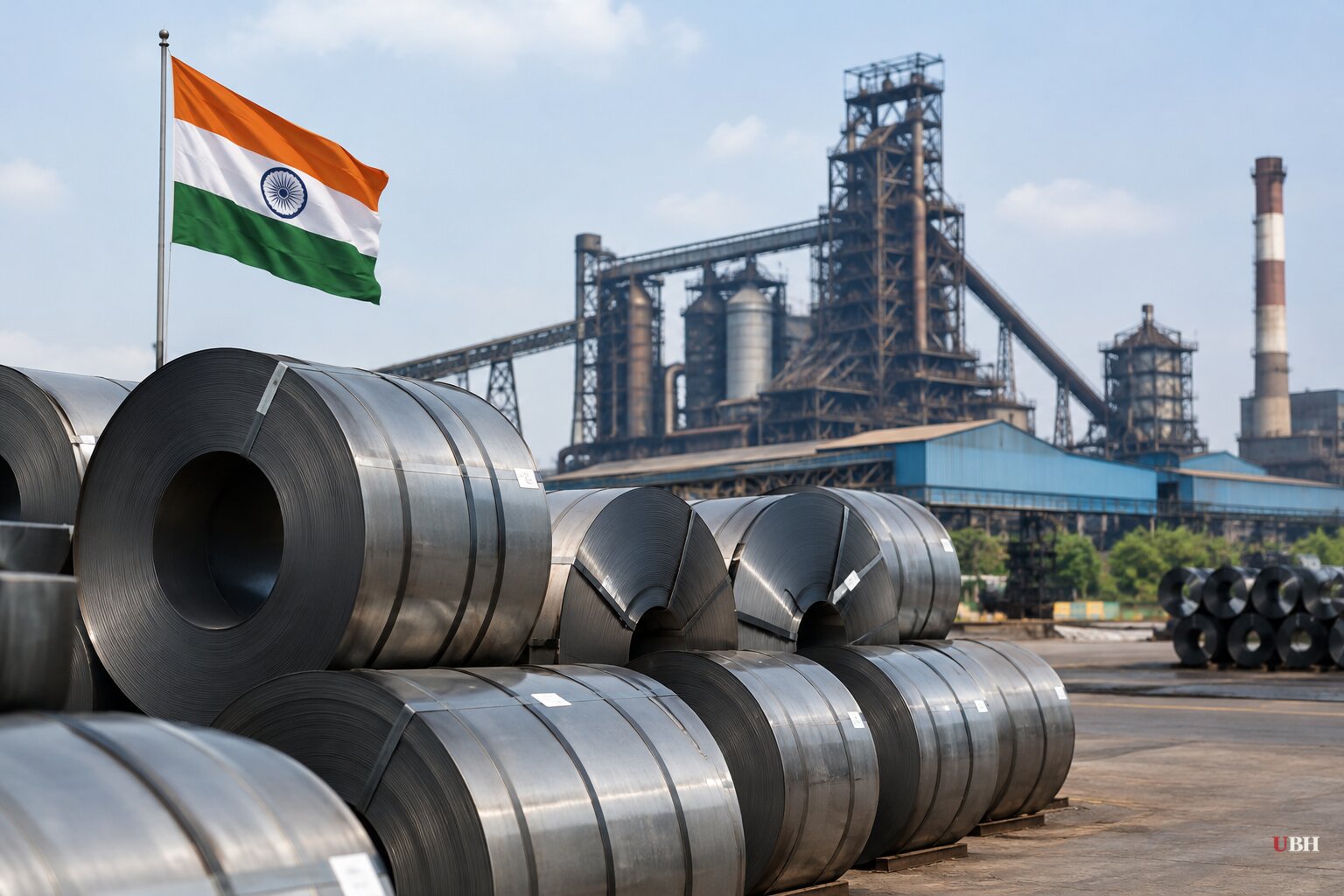
India wants to nearly triple its steelmaking capacity. A draft National Steel Policy released for public consultation late Saturday, Oct. 10, sets a target of 604 million tonnes by 2047, up from about 220 million tonnes today.
The draft would replace the 2017 policy, which aimed for 300 million tonnes by 2030.
The numbers in the draft
The draft also targets emissions. It aims to cut the sector's average carbon intensity from 2.54 tonnes of CO2 per tonne of crude steel to about 1.54 by 2047. That is a drop of roughly 39%, tied to India's goal of net-zero emissions by 2070.
The raw-material bill is large. The ministry projects iron ore demand of 772 million tonnes by 2047. It expects coking coal demand to reach 236 million tonnes, according to the draft as reported by Times of India and The Hindu BusinessLine. GMK Center's report, citing Reuters, puts the coking coal figure at 214 million tonnes, so the number varies by outlet.
To cover that, the draft calls for acquiring high-grade iron ore reserves abroad and forming joint ventures with foreign partners. For coking coal, it describes "strategic global outreach" and the purchase of overseas assets.
What the Steel Secretary said earlier
Steel Secretary Sandeep Poundrik previewed the policy on Sept. 29 at a Confederation of Indian Industry event in New Delhi. He said it would go public "in about a week," and suggested it could appear as early as Monday, Oct. 5. It landed about five days after that.
Poundrik said the policy would target more than 600 million tonnes of capacity and over 500 million tonnes of consumption by 2047. Roughly 45 million tonnes of that would be exports, either as steel or embedded in manufactured goods. "These are conservative numbers," he said.
He also said India's crude steel capacity, which stood at 220 million tonnes in FY25, is projected to reach 294 million tonnes by FY31. That puts the near-term path just short of the 300 million tonnes by 2030 the old policy promised.
Money and imports
Poundrik said the government is formulating a ₹5,000 crore scheme, "Viksit Bharat Ispat," for small steel producers. Incentives would be tied to output and to lower emissions. For larger producers, he said the Carbon Credit Trading Scheme is expected to be notified "very soon."
The policy also includes measures against what Poundrik called cheap and substandard imports, including safeguard duties and anti-dumping duties. He said the aim is to make Indian producers, especially small ones, competitive on technology and price. He added that the 2017 policy "needed a relook" because artificial intelligence, machine learning, technology upgrades and decarbonisation have become bigger priorities since.
The import problem is real. Between April and August, India remained a net importer of rolled steel, bringing in 3.5 million tonnes, a 29.5% rise from a year earlier, according to figures reported by GMK Center. China supplied 31.8% of it.
The government is also pushing into higher-value products. Poundrik said 175 speciality-steel projects worth ₹55,000 crore are underway, aimed at grades used in automobiles, defence and aerospace.
The obstacles
Poundrik named the main barriers himself: raw-material availability and tightening trade restrictions worldwide. "Raw material availability will become a major challenge. We will have to work on that," he said. The raw-material side is especially exposed. Coal-based production dominates Indian steelmaking, and cutting carbon intensity by 39% while nearly tripling output will take heavy investment in new facilities and cleaner processes.
There are signs of movement on the supply side. In April to June, regulators approved new steel projects with combined capacity of 11.6 million tonnes a year, all with environmental clearance and construction permits, according to GMK Center's tally.
The draft is a consultation document, not final policy, and the 604-million-tonne target may change after public consultation. The carbon-trading notification for large producers and the approval of the ₹5,000 crore scheme are the next concrete pieces to watch.
Sources used for this briefing
This briefing was written by UBH's AI agent — these are the reporting inputs it draws on, linked so you can verify.


