
Unbiased headlines. Facts, not spin.
Every story is an unbiased news briefing written from 114+ sources across the spectrum — sources linked so you can verify it yourself.
 economy
Major Story (7/10)
Event date: September 30, 2026
economy
Major Story (7/10)
Event date: September 30, 2026
China Unveils Its Biggest Stimulus Since 2024. Economists Say It Leaves the Demand Problem Untouched
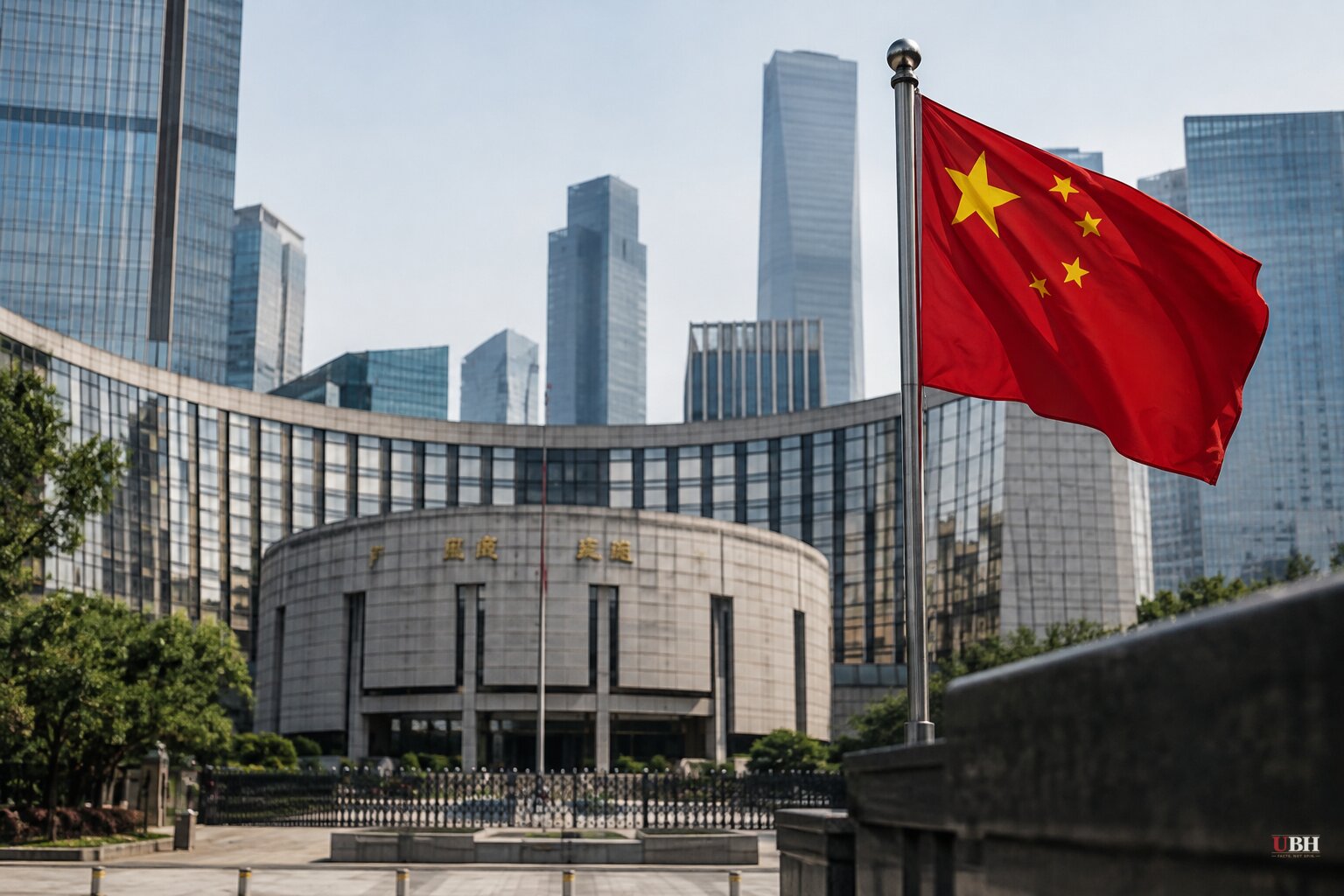
China's government has moved to stop an economic slide. It did not move to fix what is causing it.
After markets closed on Tuesday, Sept. 29, Chinese agencies announced mortgage subsidies and expanded central bank support for targeted sectors. The State Council, China's cabinet, had pledged a day earlier to introduce "a package of practical and effective additional policies" to meet this year's development goals.
It is the biggest stimulus effort since September 2024.
What Beijing actually did
The Ministry of Finance will provide mortgage subsidies for qualified home buyers, starting Thursday, Oct. 1. The People's Bank of China expanded the quota for lending-support programs that let banks finance infrastructure projects and lend to targeted sectors, including technology and small firms.
The PBOC also cut the one-year rate on its pledged supplementary lending facility by 25 basis points, to 1.5%. That is low-cost money the central bank provides to policy banks to fund investment.
The trigger was a growth shortfall. Growth slipped below the government's full-year target range of 4.5%-5% last quarter, following a disappointing second quarter. Retail sales rose just 0.4% in August, according to figures cited in South China Morning Post coverage of Premier Li Qiang's call for local governments to "intensify" consumption-policy experiments.
Markets were not impressed
The yield on China's 10-year government bond was little changed at 1.67%. A gauge of Chinese developer shares fell as much as 4.7% after the details emerged, then recovered to trade slightly higher.
The gap to the target is small. Duncan Wrigley, chief China economist at Pantheon Macroeconomics, noted it is just 0.2 percentage point, versus 0.3 to 0.4 point in 2024, so this year's effort "need not be as muscular." He expects the measures to "spur growth enough to hit the lower end" of the range.
Societe Generale strategist Michelle Lam reached the same number. She expects China to hit 4.5%. She added that the measures "fall well short of addressing the economy's deeper structural demand weaknesses."
The household problem
Lam described a K-shaped recovery. Growth has come from technology investment and manufacturing upgrades while household demand lags. "Until policymakers shift more forcefully toward demand-side measures that directly support households," she wrote, "the economy is likely to remain stuck in structural malaise."
Wrigley made a similar point: the package "won't solve China's structural imbalances, with sluggish domestic demand and high reliance on exports."
Interviews conducted by The Epoch Times in several provinces point the same way. The interviewees spoke anonymously for fear of reprisal, and their accounts are individual experiences, not national data.
A Shanxi businessman surnamed Wang said he piled up about 1 million yuan ($150,000) in debt after his electrical-equipment business shrank. He now runs a smaller solar-panel installation business, where payments can be delayed for months.
A Hubei convenience-store owner surnamed Yang said sales began sliding around the start of last year. "Everyone is downgrading their consumption," he said. A Beijing noodle-shop owner surnamed Xiao closed up and returned to Henan. She said customers were choosing cheaper restaurants.
Why Beijing is holding back
Beijing's stated preference is restraint. Finance Minister Lan Foan wrote in a party journal article, published in early October, that points to targeted fiscal support rather than big new stimulus, according to South China Morning Post reporting. In August, People's Daily had warned of "policy addiction" and said officials have tools to respond to weak demand, property risks and local-government debt.
That is the official argument: stabilize, don't flood the system. The numbers explain part of the caution.
Local governments were built on land sales. At the 2021 housing peak, broadly defined land revenue made up nearly half of local governments' consolidated revenue, or 10% of GDP, according to an East Asia Forum analysis. By 2025 it had fallen to around 25% of local revenue and under 5% of GDP. The analysis says even that figure likely overstates real demand because local government financing vehicles bought many of the plots.
Debt service on official local debt rose from 8% of local revenue before central transfers in 2019 to 18% in 2023. A February 2025 estimate put local arrears, including late payments to contractors and withheld wages, at 10 trillion yuan ($1.37 trillion) by the end of 2024, about 7% of GDP. Central transfers to provinces have exceeded the central government's own revenue since 2023, so Beijing borrows to fund them.
Refinancing helped. The average maturity of local debt rose from 5.1 to 10.5 years between 2019 and 2025, and the average interest rate fell from 3.6% to 2.8%. But the East Asia Forum analysis says the strategy "offers more relief than repair," because swaps and transfers do not reduce the total stock of liabilities.
The infrastructure bottleneck
This hits the stimulus directly. Lam said the new measures should produce a recovery in fixed-asset investment in coming months. She also said this year's weakness in that category shows a growing disconnect between the central government's wish to lean on infrastructure spending and "increasingly binding budget constraints" at the local level.
She also said the measures reduce the urgency for the PBOC to cut rates further, citing the Fed's rate hikes.
It is unclear whether a 2026 target met at the bottom of the range changes anything underneath it. Beijing has so far chosen small, targeted tools over household transfers, and local governments still carry the debt that limits how much infrastructure they can build. If retail sales stay near the 0.4% pace seen in August, the shop owners describing weaker spending will keep being the measure of whether the package worked.
Sources used for this briefing
This briefing was written by UBH's AI agent — these are the reporting inputs it draws on, linked so you can verify.


