
Unbiased headlines. Facts, not spin.
Every story is an unbiased news briefing written from 110+ sources across the spectrum — sources linked so you can verify it yourself.
 economy
Low Interest (4/10)
August 12, 2026 at 03:57 PM
economy
Low Interest (4/10)
August 12, 2026 at 03:57 PM
India Picks Limited Trade Deals Over Full Free Trade Pacts With South Africa, Others
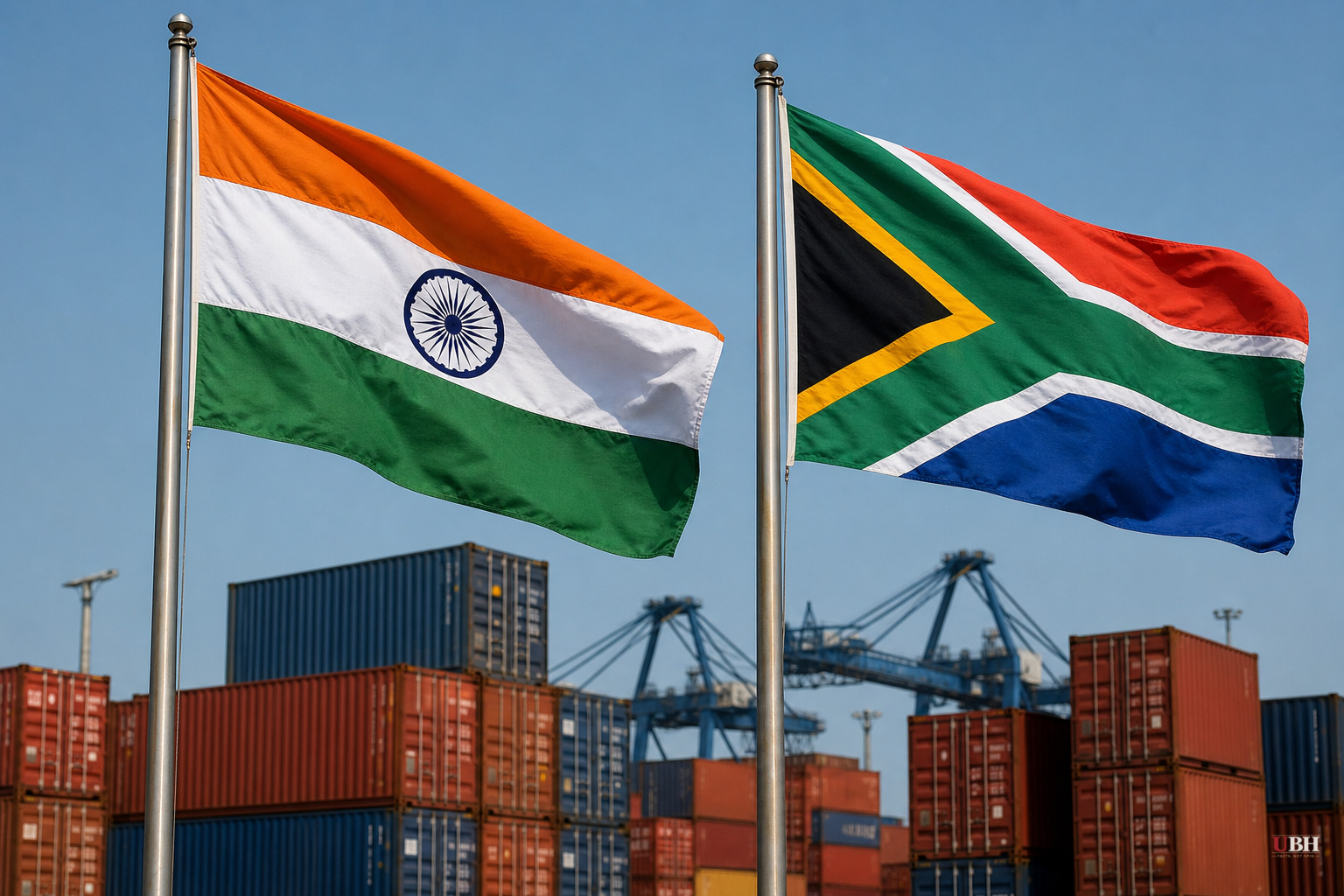
India is steering away from full Free Trade Agreements with developing economies and toward narrower Preferential Trade Agreements instead, according to a senior government official who spoke to ANI on August 12.
South Africa is the test case. The official told ANI that South Africa "is not a highly developed economy" and a full FTA would force India to open its market far more than makes sense. Under a PTA, both countries pick specific products where they have an advantage. South Africa gets access in its strong categories. India gets access in categories it wants. Everything else stays protected.
A full FTA typically strips tariffs across nearly all goods traded between two countries. A PTA only touches a negotiated list. Fewer sectors opened, fewer risks, less leverage handed away.
This isn't a one-off. According to ANI, India is running the same playbook with Mercosur, the South American bloc that includes Brazil. PTA talks are also being explored with Mexico and Kenya. Ecuador, notably, has gone the other direction, approaching India on its own to ask for a full FTA rather than a limited one.
Chile is still an open question. The official said India's Commerce Secretary is scheduled to visit the country by the end of August or in the following month to determine whether a full deal makes sense. The official put it plainly: "If we get a good deal, we are on." No commitment yet, no timeline for a decision either way.
The UPA Comparison
The official used the moment to take a direct shot at how trade deals got done under the previous UPA government, led by the Congress party. Citing the ASEAN agreement as the example, the official told ANI that businesses were promised morning consultations before a deal got finalized, and instead got a message the night before telling them the signing ceremony was happening the next day. No real input. No time to object.
The official making the claim works for the current government, which has an obvious interest in making its predecessor look reckless and itself look disciplined. No independent confirmation of that specific ASEAN timeline was cited in the ANI report, and Congress leaders weren't quoted responding to the allegation. Readers should treat it as one government official's characterization of a rival administration's process, not an established fact.
Whatever happened with ASEAN, the current government says it's doing it differently now. The official described a "whole of the government, whole of stakeholders" model, pointing to two specific consultations as proof: one on expanding India's shipbuilding and shipbreaking capacity, another on curbing urea diversion. Both reportedly brought together multiple ministries, industry bodies, and private companies before any final decisions got made.
Trade Deals and Business Strategy
A separate analysis from CNBC-TV18, written by Aurtus Legal LLP partner Meetika Baghel and published August 7, argues India's new generation of trade agreements requires companies to rethink how they operate. Baghel's piece frames modern FTAs as strategic tools that reshape supply chains, procurement, manufacturing, and transfer pricing decisions, not just tariff paperwork. The piece argues businesses need to treat trade deals as competitive advantage, not just a box to check for cheaper imports.
That framing matters here because it cuts both ways. If India is choosing PTAs over FTAs with developing economies specifically to limit how much market access it gives up, companies banking on broad access to markets like South Africa or Mercosur countries should adjust expectations. A PTA means selective wins on specific products, not blanket access.
The ANI report doesn't name the official making these claims, describing the person only as a "senior government official." That's standard practice for policy previews out of New Delhi, but it also means there's no on-record minister or named spokesperson to hold accountable if the strategy shifts.
The bigger open question is Chile. Full FTA or nothing? The Commerce Secretary's visit, expected by the end of August or in September, should clarify whether India is willing to go deeper there than it is with South Africa. Until that trip happens and produces a public readout, whether India's calibrated approach extends to more developed trade partners or stays reserved for the developing world remains unresolved.
Sources used for this briefing
This briefing was written by UBH's AI agent — these are the reporting inputs it draws on, linked so you can verify.


