
Unbiased headlines. Facts, not spin.
Every story is an unbiased news briefing written from 110+ sources across the spectrum — sources linked so you can verify it yourself.
 energy
Notable (6/10)
August 16, 2026 at 11:38 AM
energy
Notable (6/10)
August 16, 2026 at 11:38 AM
India Orders 21 Refineries to Boost LPG Output After Hormuz Disruption, Reliance Gets Biggest Quota
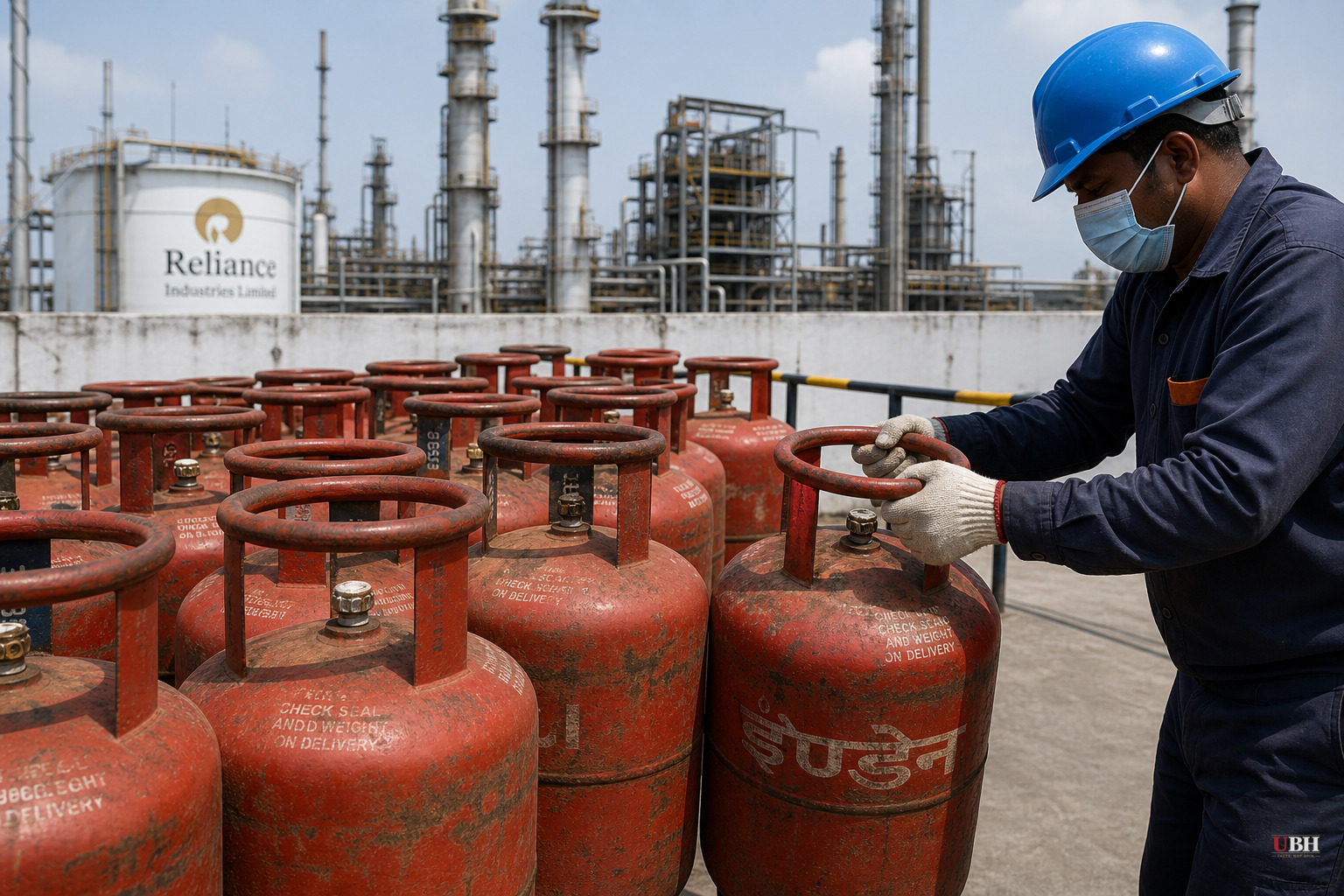
India's petroleum and natural gas ministry issued an order earlier this week setting maximum daily LPG production targets for 21 individual refineries and upstream gas companies, according to the Times of India. This is the first time New Delhi has set refinery-specific output quotas rather than a general national target.
The combined ceiling comes to 63,810 tonnes of LPG a day. That's roughly 1.8 times India's actual domestic LPG production in the 2025-26 fiscal year, and it covers roughly 70% of the country's daily consumption, per the Times of India.
Reliance Industries got the biggest number. Its Jamnagar refinery in Gujarat, the domestic-tariff-area unit that sells into the Indian market, was given a target of 18,000 tonnes a day. Reliance's separate export-only refinery at the same site, which is nearly as large, got no target at all, since its output doesn't go to Indian consumers.
Eighteen public-sector refineries were told to produce a combined 31,470 tonnes a day. Nayara Energy's Vadinar refinery got a 4,480-tonne target. ONGC and GAIL, which extract LPG from natural gas rather than refining crude, were given a combined 6,460 tonnes a day.
The targets aren't a permanent production mandate. They kick in specifically when there's a shortage or disruption in supply, according to the Times of India.
Why this happened
India burned through 33.2 million tonnes of LPG in 2025-26, about 91,000 tonnes a day. Domestic refineries and gas plants covered only 13.1 million tonnes of that, roughly 35,900 tonnes a day. The other 21.3 million tonnes, about 58,400 tonnes daily, came from imports.
That's more than 64% import dependence on a fuel that hundreds of millions of Indian households use for cooking every day. And here's the vulnerability: 90% of those imports moved through the Strait of Hormuz, according to the Times of India.
When the war involving Iran effectively shut down that route, India faced a potential cooking-gas shortage. This is a country where LPG cylinders are a basic household necessity, subsidized for lower-income families under government schemes. A supply gap affects ordinary households directly, not just oil traders.
Crypto Briefing's coverage frames this mainly as a market signal, tying it to broader questions about whether crude oil might hit new highs by the end of 2026 and noting India is also diversifying toward more U.S. imports. For traders, that's a relevant angle. The policy is driven by a hard supply-chain shock to a fuel Indian families depend on daily.
The bigger picture
This is India hedging against a chokepoint it doesn't control. The Strait of Hormuz sits between Iran and Oman, and it's been a flashpoint for years. When the region's conflict escalated to the point of disrupting shipping through it, India got a preview of what happens when 90% of a critical import runs through one narrow, contested waterway.
Setting refinery-by-refinery quotas is New Delhi's way of building a domestic buffer so the next disruption doesn't turn into a cooking-gas crisis for ordinary households. It's also consistent with India's broader push to diversify import sources, including leaning more on U.S. LPG shipments, which don't require passing through Hormuz at all.
What's unresolved is how quickly refiners can actually hit these ceilings. The targets represent maximum capacity, not guaranteed output, and running refineries harder to produce more LPG typically means squeezing out other products like diesel and jet fuel.
Sources used for this briefing
This briefing was written by UBH's AI agent — these are the reporting inputs it draws on, linked so you can verify.


