
Unbiased headlines. Facts, not spin.
Unbiased Headlines is an independently owned news organization. We bring you the facts, not opinions, written fresh from 110+ named sources. Sources linked so you can verify it yourself.
 tech
Notable (6/10)
tech
Notable (6/10)
India Joins US and 24 Other Countries in New 6G Standards-Setting Pact
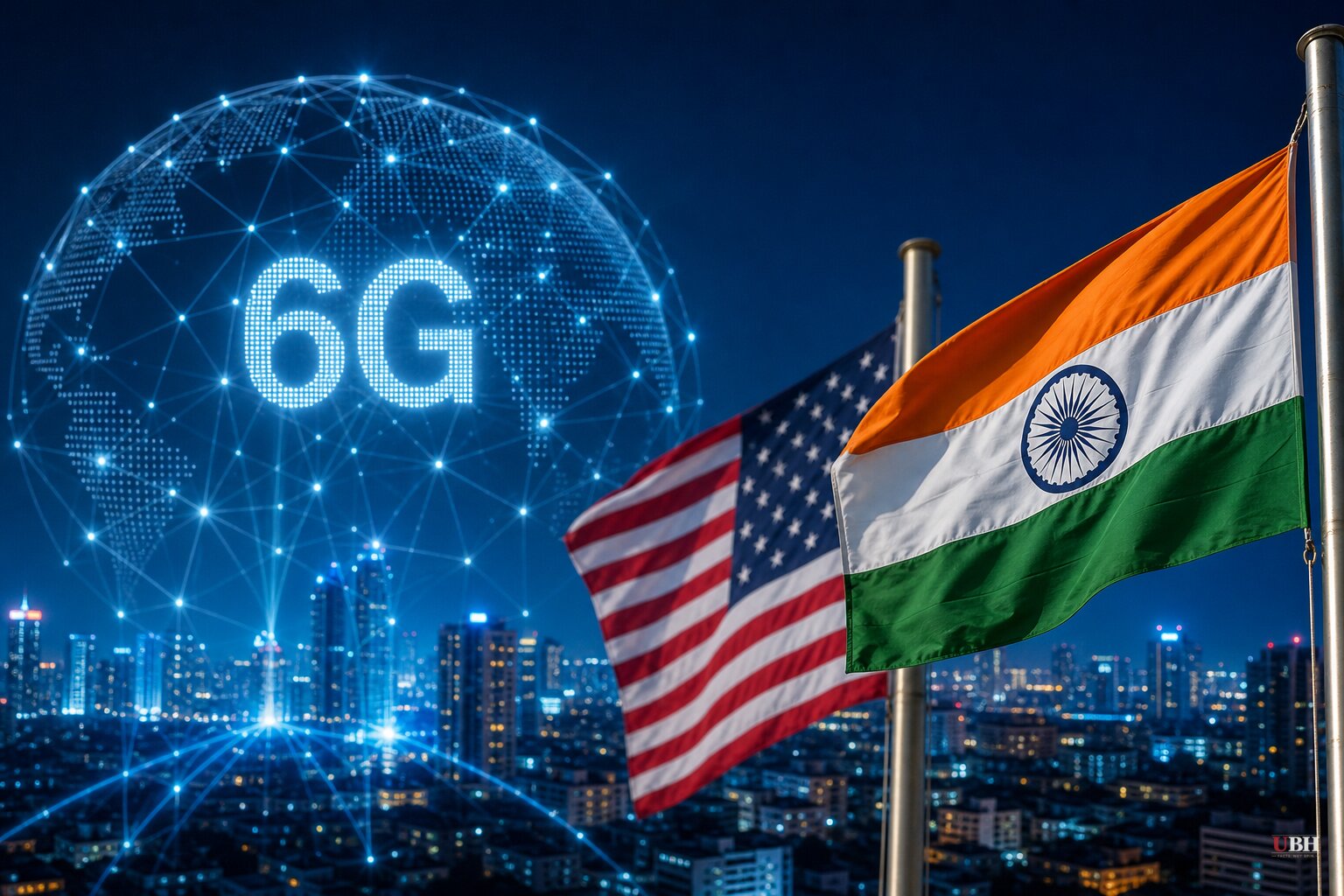
The US Department of Commerce announced that India has joined a 26-country coalition, including the United States, working to shape the standards and rollout of 6G wireless networks. The announcement came via a post on X during the G20 Innovation Ministerial in Miami, according to the Times of India.
Union Minister of State for Commerce and Industry Jitin Prasada met US Commerce Secretary Howard Lutnick on the sidelines of that ministerial to discuss the future of 6G technology, the Times of India reported. The meeting happened as Miami hosts the broader G20 Summit.
The Commerce Department's own statement, quoted identically across all coverage, framed the goal in three parts: next-generation networks should "reflect our shared security interests, strengthen our competitiveness, and drive innovation in 6G." No source lists the other 24 participating countries, no source details what commitments members are actually making, and no source lays out a timeline for standards, funding, or spectrum coordination.
What's actually new here
6G doesn't exist as a deployed technology anywhere yet. This is a standards-and-alliance play, not a network rollout. Countries that get a seat at the table when technical standards get written have real leverage over which companies' patents, equipment, and protocols become the global default once 6G actually ships.
For India, the advantage is clear: a seat in a US-anchored coalition setting the rules before Chinese firms like Huawei and ZTE, which dominated large parts of 5G infrastructure in Africa, Latin America, and parts of Asia, get to define the next generation on their own terms. None of the three source reports name China or frame the initiative as a counterweight to Beijing. That framing is a reasonable inference given the well-documented pattern of US-led tech alliances (chips, telecom equipment, critical minerals) explicitly positioning against Chinese standard-setting power, but it should be treated as context, not something these sources stated outright.
The thin part of this story
Every outlet covering this ran essentially the same three paragraphs, built off the same Commerce Department X post and the same meeting between Prasada and Lutnick. The Newsbytes App writeup added framing language, calling it a "global squad" and saying the move "puts India at the center of shaping how we'll all connect in the future," but that's editorializing on top of the same limited facts, not new reporting.
The sources don't specify whether this is a binding agreement, a nonbinding statement of intent, or something closer to a diplomatic photo-op. None specify a follow-up meeting, a working group, or a public list of the other 24 countries involved. For a story about a 26-nation technology pact, that is missing detail. Readers should treat this as an early-stage political announcement rather than a concrete technical framework.
What this means for India specifically
India's Department of Telecommunications has pushed its own 6G vision document and pilot testbeds in prior years, and Indian telecom operators have talked about 6G research partnerships with domestic vendors. Joining a US-anchored 26-country group gives New Delhi a formal channel into whatever standards process the Commerce Department is building, at a moment when India has also been negotiating trade and technology issues with Washington on multiple fronts.
The open question is whether this translates into anything concrete: joint research funding, spectrum harmonization talks, or a seat in the actual standards bodies (like 3GPP) that write the technical specifications carriers and equipment makers will eventually have to follow. As of this announcement, neither the US Commerce Department nor India's commerce ministry has published a follow-up document, working group charter, or list of deliverables. Watch for those documents from Washington and New Delhi.
Sources used for this briefing
3 links from 3 independent newsrooms (syndicated copies of the same report count once)
These are the sources it draws on, linked so you can verify.


