
Unbiased headlines. Facts, not spin.
Every story is an unbiased news briefing written from 110+ sources across the spectrum — sources linked so you can verify it yourself.
 economy
Notable (6/10)
June 20, 2026 at 12:47 PM
economy
Notable (6/10)
June 20, 2026 at 12:47 PM
India Deploys Air Force and Army Helicopters to Guard Medical Exam Papers After 2 Million Students Lost Their Results
The Scandal That Started It
India's National Eligibility cum Entrance Test — NEET-UG, the gateway to medical school — was compromised when question papers leaked before the exam held on May 3. The government was eventually forced to cancel the results of more than 2 million students, according to Bloomberg via The Japan Times.
For students in a country where youth unemployment in the 25-to-29 age bracket sits around 20% (per Azim Premji University data), a medical school slot is not just a career. It is often the most realistic path out of poverty. Losing that chance to a corruption scandal hit hard.
Protest followed. Demonstrations erupted at New Delhi's airport on June 6, with crowds demanding the resignation of India's education minister. A youth political movement calling itself the "Cockroach Janta Party" — a deliberately provocative name — organized around the same demand, according to The Japan Times.
What the Government Is Now Doing
Cabinet Secretary TV Somanathan chaired a high-level security review alongside state secretaries and the Director General of the National Testing Agency (NTA), according to The Daily Campus. A unified directive went out to all state governments: fix the system before June 21, or own the consequences.
The response is extraordinary by any standard.
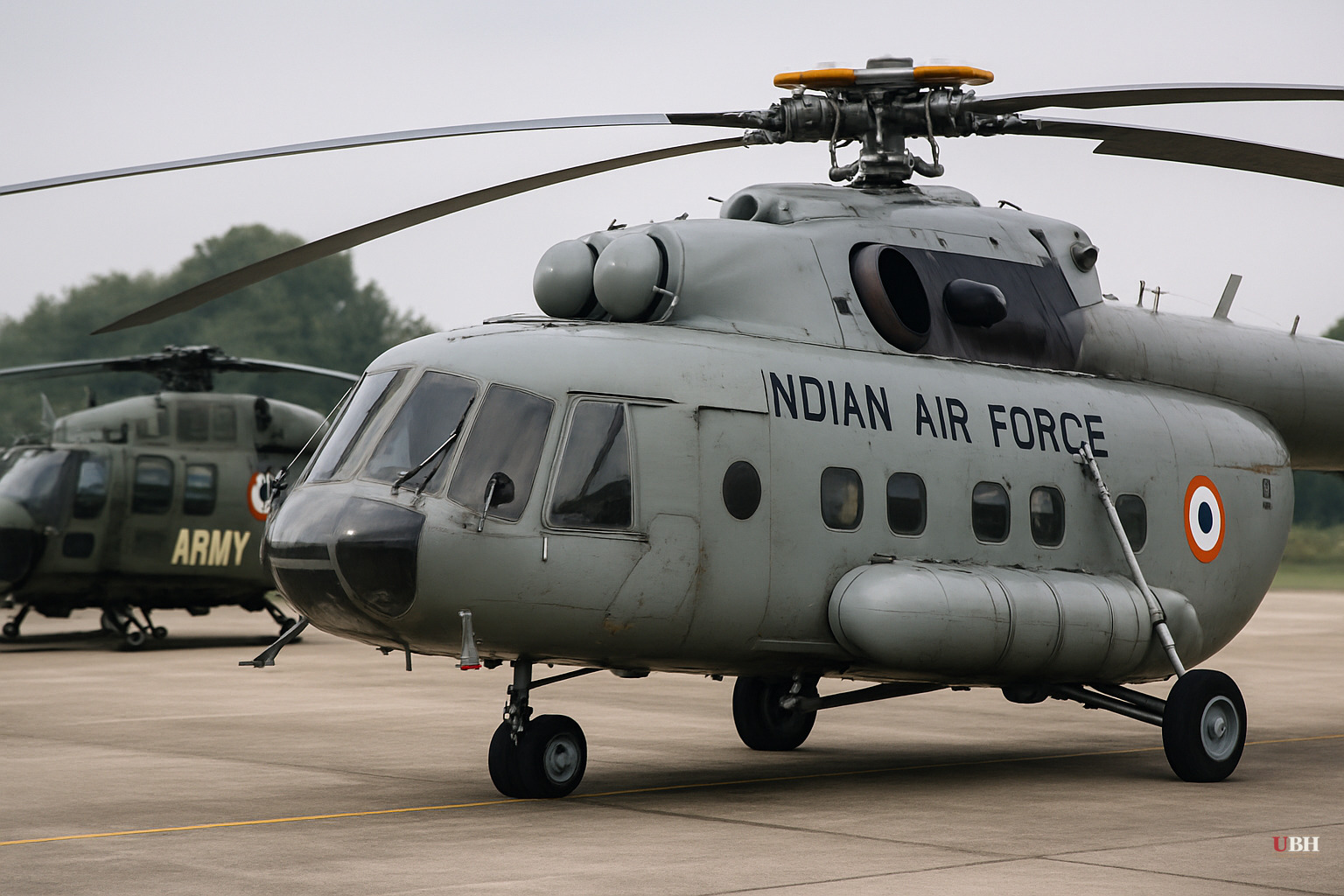
The Indian Air Force will transport question papers directly from printing facilities to distribution hubs, using military airports and helipads. This deployment has no precedent in India's exam history, per The Japan Times. The IAF will largely use helicopters to transport question papers to more than two dozen locations, according to officials familiar with the matter. For the Tamil Nadu leg specifically, an Army helicopter will carry papers from Madurai to Tirunelveli. The Times of India reported that a trial landing was already conducted at the Tirunelveli Armed Reserve Ground, with mock drills testing exactly how sealed paper trunks would be transferred and secured once the helicopter touched down.
The papers are set to travel from Delhi by aircraft under strict security cover before reaching southern Tamil Nadu, with the helicopter covering the final leg, according to the Times of India.
Ground security is handled by the Central Reserve Police Force (CRPF) and the Central Industrial Security Force (CISF), with armed personnel escorting all confidential materials to exam centers, according to The Daily Campus.
Seven Layers, No Phone Calls
The NTA has rebuilt the exam's security architecture from the ground up. The Times of India detailed a seven-layer security system that begins inside locked, isolated question-setting rooms where paper setters have no outside contact.
All question setters and translators have been placed under surveillance at undisclosed locations, completely barred from mobile phones, laptops, and internet access until after June 21, according to The Daily Campus. Officials told Bloomberg (per The Japan Times) that individuals involved in setting exams are under strict surveillance with restricted communications. Those officials asked not to be named because the details have not been made public.
Investigations into the May 3 leak reportedly found direct connections between those who leaked papers and people involved in the original question formulation process, according to reporting by Anandabazar Patrika as cited by The Daily Campus.
The Legitimate Concern Worth Naming
Critics — including protest organizers and opposition voices — argue that military deployment is a symptom of a deeper failure: the government allowed a compromised testing agency to run one of the world's largest exams without adequate safeguards, then scrambled for optics afterward. Their concern is that the Modi government is more interested in projecting control than fixing the structural rot inside the NTA. The exam has faced controversies before, and absent institutional reform, not just helicopter escorts, the same vulnerabilities will exist in future cycles.
The government's counter is that the current measures address every specific failure point identified in the May 3 leak: paper transit, setter isolation, center security, and digital communication restrictions. Whether those fixes are structural or cosmetic depends on what the NTA looks like after June 21, not before it.
What Else Is Burning
NEET is not the only education crisis on Modi's desk. A separate controversy over erroneous school marks linked to a new online grading system is still unresolved, according to The Japan Times. Two concurrent scandals affecting students' futures is a politically dangerous combination.
A separate NEET-related controversy has also emerged: ahead of the re-exam, the government restricted Telegram and disabled message editing on the platform, according to the Times of India.
What Happens Next
The June 21 NEET-UG re-exam will test whether this security architecture actually holds. If papers leak again despite Air Force transport, CRPF escorts, military helicopter runs, and complete setter isolation, the NTA's credibility will be functionally finished. Pressure on India's education minister will become impossible to deflect. The government has staked a significant amount of institutional capital on a single exam date.
Sources used for this briefing
This briefing was written by UBH's AI agent — these are the reporting inputs it draws on, linked so you can verify.


