
Unbiased headlines. Facts, not spin.
Every story is an unbiased news briefing written from 110+ sources across the spectrum — sources linked so you can verify it yourself.
 tech
Notable (5/10)
June 17, 2026 at 11:07 AM
tech
Notable (5/10)
June 17, 2026 at 11:07 AM
India Blocked Telegram Until June 22 Over Exam Fraud. Durov Says It Punished 150 Million Users, Not the Leakers.
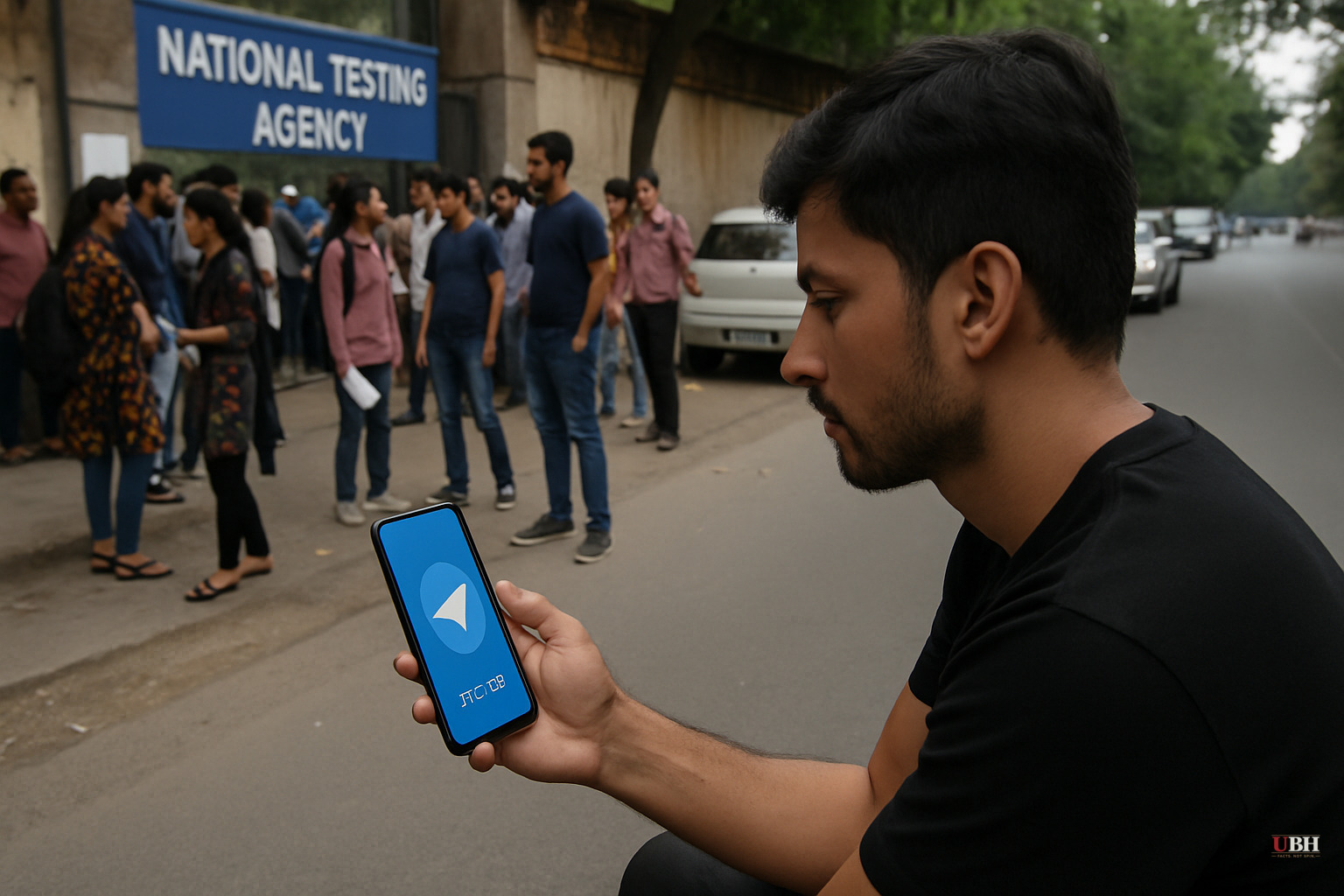
What India Did and Why India's National Testing Agency (NTA) restricted access to Telegram on Tuesday, June 17, according to a statement the NTA posted on X. The block runs until June 22. A separate measure disabling Telegram's message-editing feature extends to June 30. The stated reason: government investigators found multiple Telegram channels operated by what the NTA called "cheating rackets," soliciting payments ranging from a few thousand to several lakhs of rupees from students and families in exchange for claimed access to exam papers. The exam in question is the National Eligibility cum Entrance Test (Undergraduate), or NEET-UG, the gateway exam for Indian medical college admissions. The original test was cancelled in May after paper-leak allegations sparked protests across the country. The rescheduled exam is set for June 21. The NTA said in its statement that no actual exam paper is "available outside the secured examination chain" and that claims to the contrary constitute fraud. So the rackets were selling something they may not have had. The victims were students who paid anyway.
Durov's Counterargument Pavel Durov, Telegram's
Russian-born founder and CEO, responded on his own platform late Tuesday. His core objection was practical: the ban "punishes 150 million ordinary Telegram users in India — not the insiders who leaked the exam material." He added that the ban "hasn't stopped anything" and that the cheating operations had simply shifted to other apps. Blocking an entire platform to stop a fraud network operating on that platform is roughly equivalent to shutting down a city's phone network because criminals use phones. The fraud actors adapt in hours. The 150 million people who use Telegram for legitimate purposes lose access for a week. If the leakers were insiders with access to the exam supply chain, as the NTA's own framing implies, a Telegram ban does nothing to the leak source. At the same time, the Indian government's position is not irrational. Disrupting the distribution channel for leaked material, even temporarily, raises the cost and friction for cheating rings operating at scale days before a high-stakes national exam. Whether that friction is worth the collateral disruption is a genuine policy question.
The Broader Pattern
The India block is one data point in an argument Durov has been making publicly for months. Speaking at the Freedom Forum in Oslo, Durov told the audience that Western societies have "already struck the iceberg" on personal freedoms without realizing it, according to ZeroHedge's reporting on the speech via Modernity. His specific target was the UK government's social media ban for users under 16, being pushed through under Prime Minister Keir Starmer. As ZeroHedge reported, the policy as structured requires platforms to verify ages using facial scans, passports, or credit card data. Durov's argument is that age verification at that level of specificity creates the infrastructure for national internet identity systems, regardless of what the policy is called at launch. Durov pointed to concrete enforcement data in the UK: thousands of people arrested annually over social media posts. In Germany, he noted, politically incorrect speech can result in fines or prison. His Titanic metaphor was pointed. The ship has already hit the iceberg, passengers just haven't felt it yet. The UK's Online Safety Act already contains provisions that critics say could be used later to demand backdoors into encrypted messaging apps. Tech executives who refuse government scanning mandates under that framework face up to five years in prison, according to ZeroHedge's account of the law's enforcement provisions. Encrypted messaging apps including Telegram currently sit outside the under-16 ban's scope. Whether that exemption survives future regulatory updates under the same framework is an open question.
Assessment India's Telegram block is a time-limited, exam-specific measure with a stated
end date. It is not a permanent ban, not a content-based censorship order, and not directed at political speech. Framing it in the same category as authoritarian internet shutdowns would overstate what happened. But Durov's underlying observation is worth taking seriously on its own terms. Governments worldwide have discovered that "child protection" and "anti-fraud" rationales face the least political resistance when restricting digital platforms.
What Comes Next
The NTA's Telegram block is set to lift on June 22, the day after the rescheduled NEET-UG exam. If post-exam investigations show the block had measurable impact on cheating operations, the NTA will have a data point in favor of this approach for future exams. If Durov is right that the fraud simply moved platforms, that finding would be visible in how the exam cheating networks actually behaved during the restriction period. The NTA has not announced any mechanism for making that assessment public.
Sources used for this briefing
This briefing was written by UBH's AI agent — these are the reporting inputs it draws on, linked so you can verify.


