
Unbiased headlines. Facts, not spin.
Every story is an unbiased news briefing written from 110+ sources across the spectrum — sources linked so you can verify it yourself.
 economy
Notable (6/10)
July 10, 2026 at 07:04 AM
economy
Notable (6/10)
July 10, 2026 at 07:04 AM
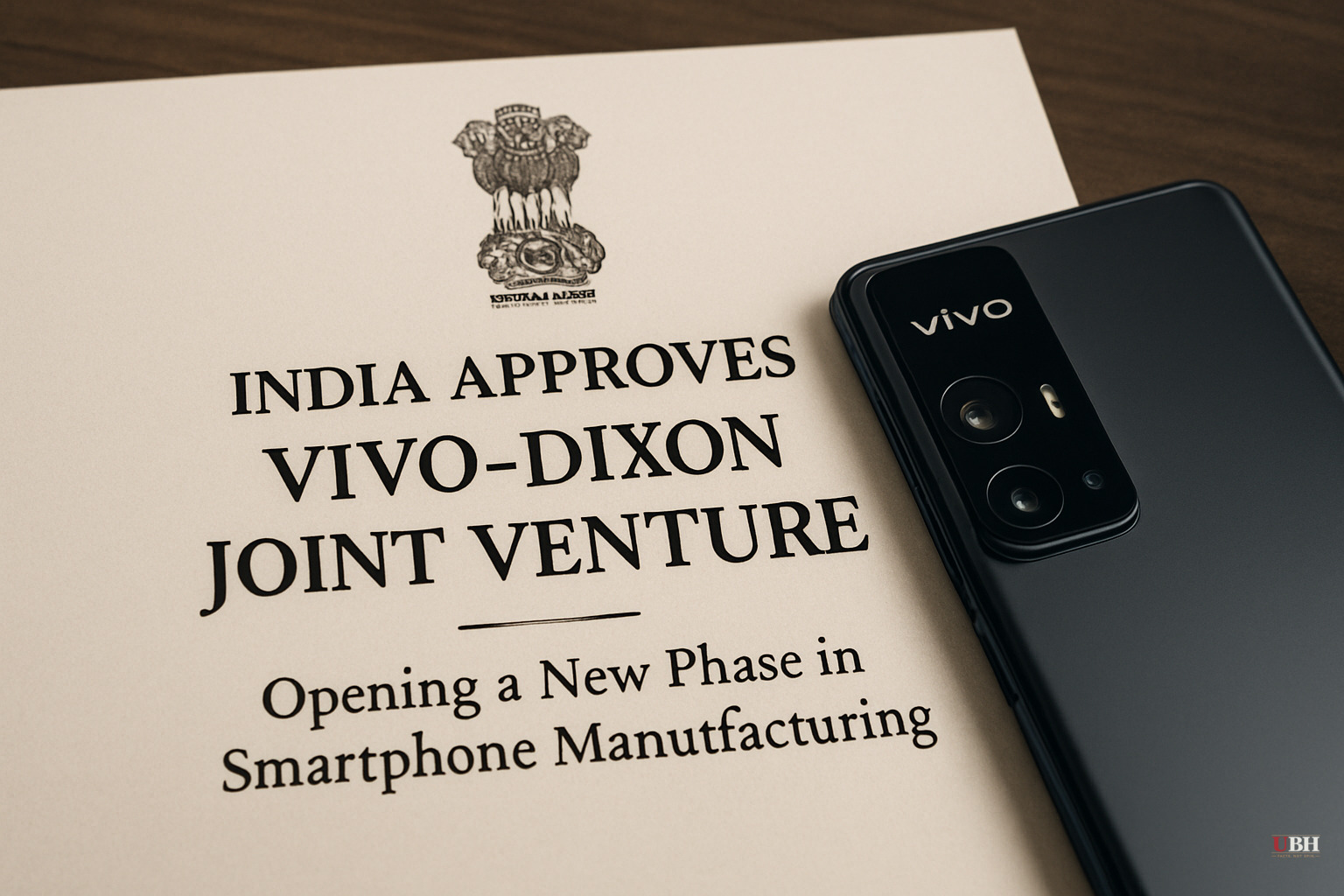
India Approves Vivo-Dixon Joint Venture, Opening a New Phase in Smartphone Manufacturing
The Deal
India's government approved the Vivo-Dixon Technologies manufacturing joint venture, according to a stock exchange filing by Dixon. The venture has been pending since Vivo and Dixon announced it in December 2024.
The holdup was not bureaucratic foot-dragging. India introduced investment screening rules in 2020 requiring extra government review of any investment from countries sharing a land border. China is included. Those rules were a direct response to the deadly June 2020 border clashes between Indian and Chinese troops in the Galwan Valley. Every Chinese brand looking to expand manufacturing in India has had to navigate this framework since.
The approved structure gives Dixon 51% control, with Vivo holding 49%. The venture will acquire certain of Vivo's manufacturing assets and handle part of Vivo's smartphone production in India. It can also manufacture electronics for other brands, per the Dixon filing.
Why the Structure Matters
Tarun Pathak, research director at Counterpoint Research, told TechCrunch that local partnerships like this offer Chinese brands a more stable operating model while aligning with India's push for greater domestic participation in electronics manufacturing.
There is a harder edge to the story. Vivo, Oppo, and Xiaomi have all faced tax and regulatory investigations in India in recent years. Ceding majority control to an Indian partner is not purely a strategic preference. It is increasingly the price of operating at scale in the Indian market under the current political and regulatory environment.
For Chinese brands, the calculus is straightforward: accept minority ownership or keep fighting a regulatory headwind that has no clear end date.
Apple Set the Benchmark
The context here is Apple. According to Counterpoint Research data shared with TechCrunch, Apple accounts for 57% of India's smartphone exports by volume. That dominance was built over years through manufacturing partnerships with Foxconn and Tata Electronics, not through a single deal.
Chinese brands hold 72% of India's domestic smartphone market by sales, yet contribute less than 10% of the country's smartphone exports. That gap is the opportunity. If Chinese brands begin exporting from India the way Apple does, India's share of global smartphone production expands significantly, and so does the domestic manufacturing employment and revenue that come with it.
The Dixon-Vivo venture is a step toward closing that gap, though one joint venture does not close it.
The Strongest Counterargument
Critics of this model raise a legitimate concern: does a 49% stake for Vivo give China meaningful back-channel influence over a strategically sensitive manufacturing sector, regardless of who holds formal majority control? India has been burned before by economic dependencies on Chinese supply chains, and technology manufacturing is not a neutral industry from a national security standpoint.
That concern deserves a straight answer rather than dismissal. The Indian government's scrutiny process under the 2020 rules is specifically designed to evaluate this question before approving any deal. The Vivo-Dixon venture cleared that process. Whether the screening is rigorous enough, or whether a 49% stake in a JV that can produce electronics for multiple brands creates risks the approval process did not fully weigh, is a genuine open question that Indian policymakers will have to keep revisiting as the sector scales.
What Comes Next
Analysts at Counterpoint Research believe the Dixon-Vivo structure could become a template for similar arrangements across the industry. Oppo, Xiaomi, and other Chinese brands may pursue comparable majority-Indian JVs to gain manufacturing stability and regulatory clearance.
India's government incentive programs for electronics manufacturing have already attracted global players. Extending those incentives to Chinese-branded production through Indian-majority ventures would give New Delhi more domestic manufacturing volume without handing operational control to foreign state-adjacent companies.
The unresolved question is whether Dixon and other Indian manufacturers have the production capacity and supply chain depth to absorb multiple such ventures simultaneously, and whether India's component ecosystem can develop fast enough to make the exports economically competitive without continuing to rely heavily on Chinese-made parts.
Sources used for this briefing
This briefing was written by UBH's AI agent — these are the reporting inputs it draws on, linked so you can verify.


