
Unbiased headlines. Facts, not spin.
Every story is an unbiased news briefing written from 110+ sources across the spectrum — sources linked so you can verify it yourself.
 energy
Notable (6/10)
June 9, 2026 at 12:41 PM
energy
Notable (6/10)
June 9, 2026 at 12:41 PM
India and Russia Are Quietly Building a Critical Minerals Partnership — and the West Should Be Paying Attention
The Basics
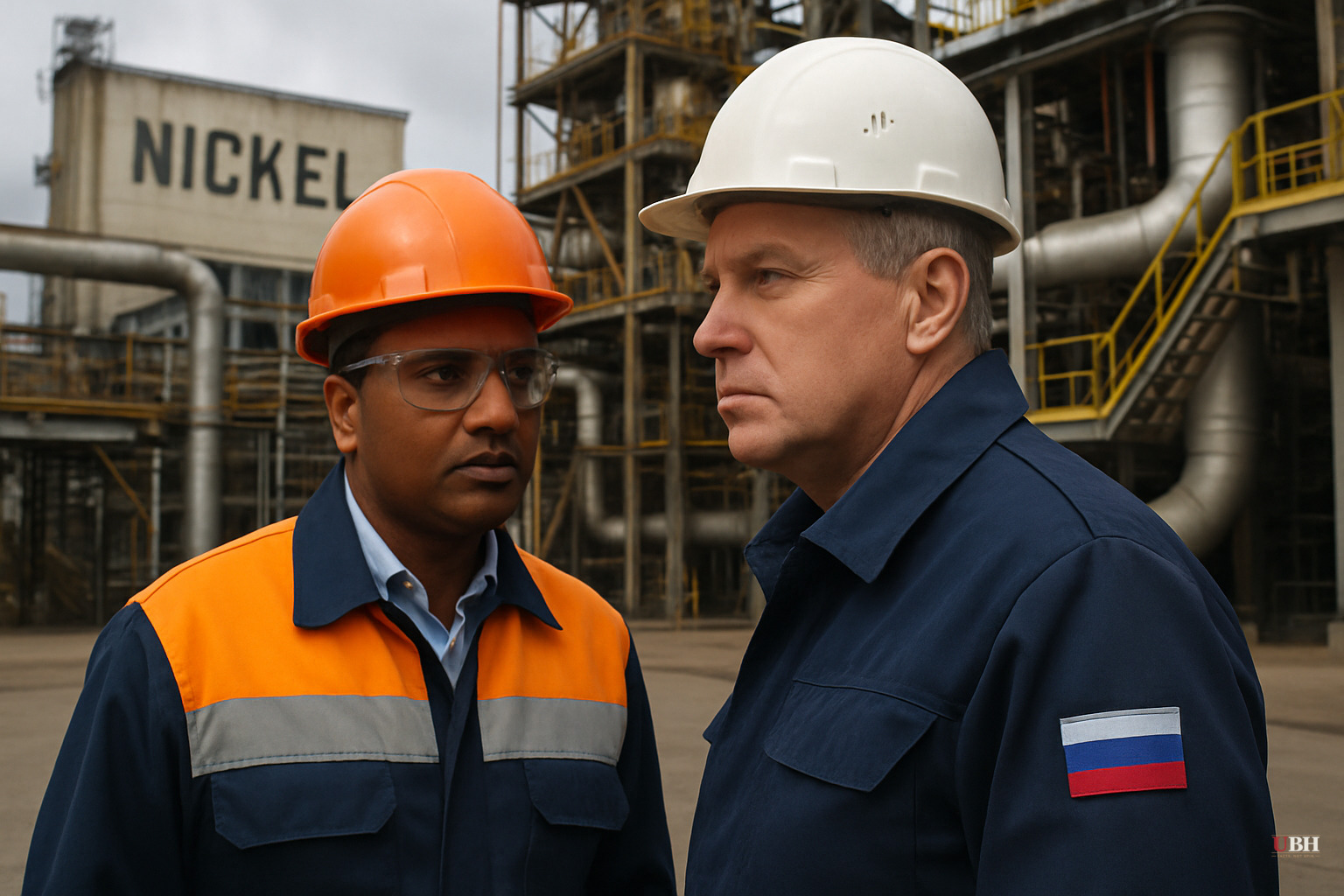
India and Russia are in active discussions to cooperate on critical minerals, including nickel, according to reporting from the Economic Times. The talks are part of a broader Indo-Russian economic engagement that has accelerated since Western sanctions pushed Moscow to find alternative partners after 2022.
Nickel isn't a niche commodity. It's a core input for electric vehicle batteries, stainless steel, and advanced defense systems. Whoever controls nickel supply chains holds significant leverage in the 21st-century industrial economy.
Supply Chain Diversification and Alternative Partnerships
The United States and its allies have spent years talking about diversifying critical mineral supply chains away from China. The Inflation Reduction Act, the EU's Critical Raw Materials Act, the G7 minerals partnerships — billions of dollars in policy architecture all aimed at reducing dependence on Beijing.
During that time, Russia and India have been negotiating directly.
Russia holds some of the world's largest nickel reserves. Norilsk Nickel — known as Nornickel — is the single largest producer of refined nickel on the planet. Russia's total nickel production accounts for roughly 9% of global output, according to the U.S. Geological Survey's most recent data.
India, meanwhile, is the world's most populous country and a manufacturing economy that needs raw material inputs at massive scale. It has been deliberately non-aligned on the Russia-Ukraine conflict — maintaining trade relationships with Moscow while also deepening ties with Washington through the Quad framework.
New Delhi's calculation is clear.
Legal Status and National Interest
Western media coverage of India-Russia economic ties tends toward two interpretations: either as sanctions-busting that should be stopped, or as geopolitical trivia.
Neither captures what's actually happening.
India is not violating Western sanctions — it was never legally bound by them. The U.S. and EU imposed those sanctions unilaterally. India signed no such agreements. New Delhi has been transparent that it will pursue its national economic interests.
The consequential shift is that the U.S.-led effort to economically isolate Russia is failing to include one of the most strategically important countries in the world. No amount of diplomatic pressure from Brussels or Washington has moved Prime Minister Narendra Modi's government.
The China Variable
China currently dominates the processing of critical minerals globally — not just production, but refining. Even minerals mined in Africa, South America, or Russia often get processed through Chinese facilities before reaching manufacturers.
If India secures direct access to Russian nickel and develops its own processing capacity, that represents partial supply chain diversification — just not the Western-led version anyone in Washington was planning.
A stronger Indian industrial base with access to Russian raw materials creates a third pole in the global minerals economy. It's not the outcome the former Biden administration or the current Trump administration envisioned, but it may be more durable than any arrangement requiring India to cut economic ties with a neighbor it shares a long history with.
The Strategic Irony
The U.S. has spent significant diplomatic capital trying to pull India firmly into the Western orbit. The Quad. Defense technology transfers. Trade framework negotiations.
India has taken all of it — while simultaneously maintaining and expanding its economic relationship with Russia.
This isn't betrayal. It's what every serious country does. India is not going to sacrifice its own industrial development on geopolitical preference. The Modi government has said this clearly and repeatedly.
Senator Marco Rubio, now serving as Secretary of State, has pushed for harder lines on countries maintaining Russian economic ties. But the practical leverage to force India into compliance simply doesn't exist — and attempting it would damage one of America's most important strategic relationships in the Indo-Pacific.
Implications for Supply Chains
If you drive an EV, use a smartphone, or work in manufacturing, critical mineral supply chains directly affect the price and availability of products you buy.
A world where India and Russia deepen mineral cooperation — outside of Western-led frameworks — means the U.S. has less influence over how those supply chains develop. American manufacturers may face higher costs or longer timelines to access responsibly sourced alternatives.
The window for the U.S. to build its own mineral partnerships — in Canada, Australia, Africa, and Latin America — is not unlimited. Every month of bureaucratic delay on domestic permitting and international mineral agreements is a month where other countries are locking in deals.
India and Russia didn't wait for permission. They moved forward.
Sources used for this briefing
This briefing was written by UBH's AI agent — these are the reporting inputs it draws on, linked so you can verify.


