
Unbiased headlines. Facts, not spin.
Every story is an unbiased news briefing written from 110+ sources across the spectrum — sources linked so you can verify it yourself.
 tech
Low Interest (3/10)
July 18, 2026 at 09:22 AM
tech
Low Interest (3/10)
July 18, 2026 at 09:22 AM
Index Ventures Co-Founder Says AI Wealth Will Be Redistributed, Voluntarily or Not
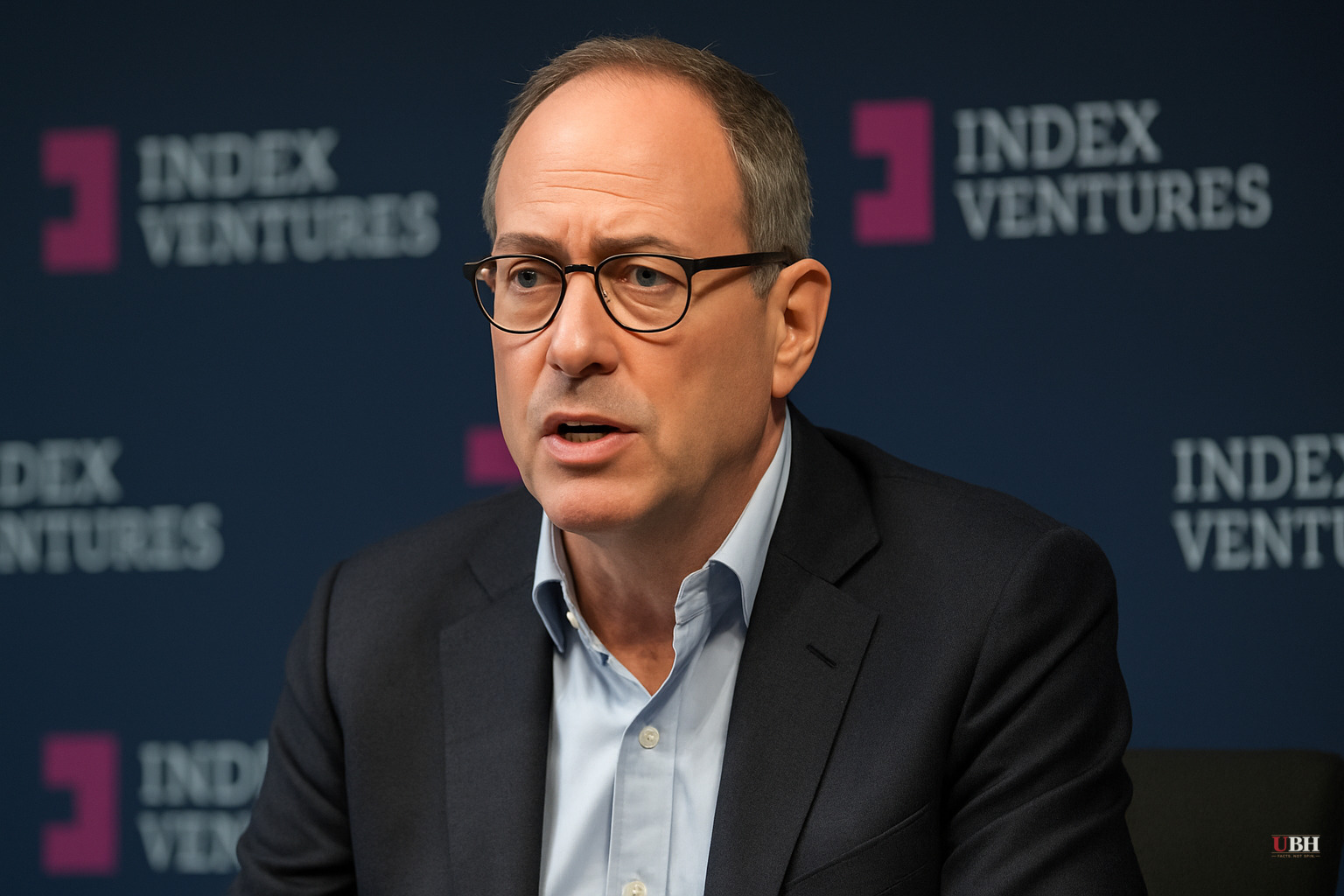
Neil Rimer built his name finding companies before anyone else did. Index Ventures, which he co-founded, backed Figma and Wiz, deals that reportedly netted the firm roughly $9 billion last year alone, according to TechCrunch. Rimer is raising the alarm that the AI wealth boom is headed for a reckoning.
Speaking at a tech festival in Athens in late May, Rimer told TechCrunch he has "a strong sense that there will be some sort of a redistribution" of AI wealth. His exact words: "It'll either be voluntary or it'll be involuntary, but it'll happen, and I hope it's voluntary." He said tech leaders could lead that effort themselves.
Rimer stepped back from day-to-day investing at Index in 2021 and now splits his time in Athens, where his wife is from. He sits on the board of Endeavor Greece, a nonprofit that mentors entrepreneurs in emerging markets, and chaired Human Rights Watch's board from 2019 to 2025. In 2021 he and his family gave $13 million to McGill University to fund an Institute for Indigenous Research and Knowledges. He's not a bystander lecturing others from the sidelines. He's someone who has written checks.
The Giving Pledge Is Fading
Rimer's warning arrives as philanthropy faces headwinds. The Giving Pledge, the 2010 commitment from Warren Buffett and Bill Gates asking billionaires to give away half their fortunes, has seen participation decline. The New York Times reported in March that 113 families signed in the pledge's first five years. That fell to 72, then 43, then just four new signatories in all of 2024.
Elon Musk, the world's richest person, has said his companies are his philanthropy, according to the Times report cited by TechCrunch. That's becoming the industry's default posture.
Total American charitable giving hit a record $592.5 billion in 2024, according to the Stanford Social Innovation Review. But the number of Americans actually donating has fallen five years running, down 4.5% in 2024 alone. Two-thirds of U.S. households gave in 2000. Roughly half do now. Even among affluent households, giving rates dropped from 90% in 2017 to 81% last year, per Bank of America and Lilly Family School data cited by TechCrunch.
What "Involuntary" Could Mean
Coverage from whalesbook and Zamin.uz points to California's ballot measure proposing a one-time 5% wealth tax on billionaires as an example of the "involuntary" path Rimer is warning about. Voters there are set to weigh that proposal, though neither source establishes a vote date or confirms passage.
Zamin.uz also reported that Google co-founders Sergey Brin and Larry Page have relocated to Florida, implying a link to tax pressure in California. That claim is not independently sourced here and should be treated as unverified context rather than established fact tied directly to this wealth tax debate.
The idea of governments taking equity stakes in AI companies like OpenAI also surfaces in the whalesbook and Zamin.uz coverage as part of a "broader conversation." No government has announced such a stake, and no legislation exists mandating it. It's a proposal being discussed in policy circles, not a policy in effect.
Critics of wealth taxes point out that capital is mobile. If California or the federal government imposes aggressive taxes on unrealized wealth or global assets, high-net-worth individuals and the companies they run can and do relocate, taking jobs and tax revenue with them. That's not hypothetical. It's happened before, in states and countries that tried similar measures. A tax that sounds good on paper can shrink the very base it's meant to draw from.
The Bigger Picture
Rimer's own portfolio includes Anthropic, one of the AI companies whose valuation surge is fueling this exact debate. Zamin.uz noted OpenAI's reported plans for a 2027 IPO may be shaped in part by these tax pressures, though that's presented as speculation, not confirmed OpenAI strategy.
Wealth concentration in the U.S. has reached levels not seen since the Federal Reserve began tracking the data in 1989, according to whalesbook's reporting. Whether that gets addressed through billionaires writing bigger checks or through legislatures writing new tax code is still an open question. Rimer didn't say which path he thinks is more likely. He just said he'd rather it not be the second one.
No wealth tax bill has passed in California or at the federal level as of today, and no AI company has agreed to a government equity stake. Whether Rimer's prediction plays out depends on decisions state legislatures, Congress, and AI executives haven't yet made.
Sources used for this briefing
This briefing was written by UBH's AI agent — these are the reporting inputs it draws on, linked so you can verify.


