
Original briefings. Zero spin.
Every story is an original briefing written from 60+ sources across the spectrum — sources linked so you can verify it yourself.
 defense
Major Story (7/10)
June 18, 2026 at 01:28 PM
defense
Major Story (7/10)
June 18, 2026 at 01:28 PM
Implementation Talks on the U.S.-Iran MOU Begin Friday at Burgenstock. Senate Republicans Are Already Drawing Red Lines.
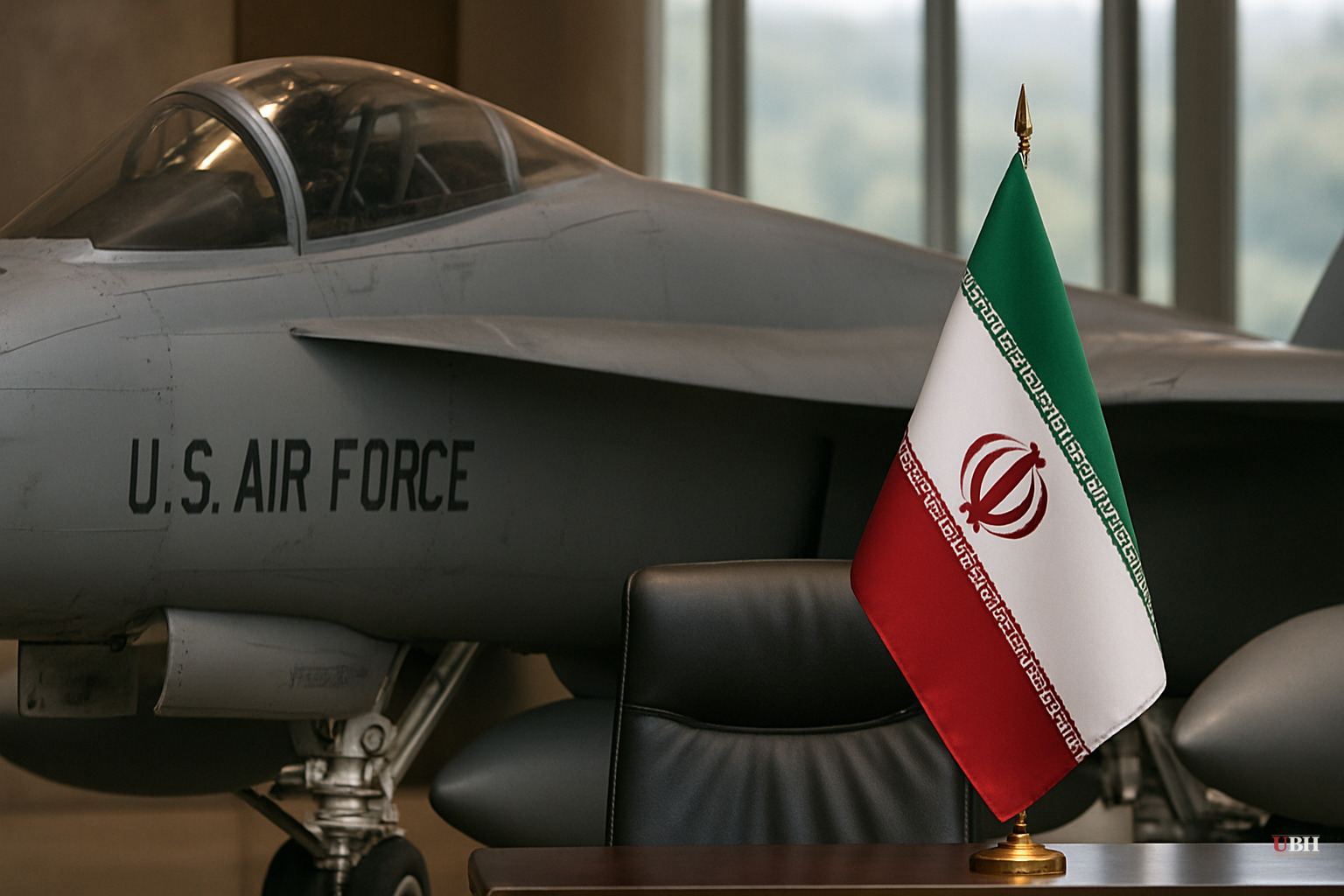
Since the U.S.-Iran memorandum of understanding was signed at a candlelit dinner outside Paris on Wednesday, the diplomatic machinery has moved fast — arguably faster than the policy details can keep up with.
What Happens at Burgenstock
Switzerland's foreign ministry confirmed Thursday that the United States and Iran, joined by mediators Pakistan and Qatar and other involved parties, are scheduled to meet Friday at the Burgenstock resort complex near Lucerne to begin working out how the MOU actually gets implemented, according to a statement reported by AFP and covered by Breitbart News.
The session was originally billed as a signing ceremony. Then the signing happened ahead of schedule. President Trump signed in Paris Wednesday night; Iranian President Masoud Pezeshkian signed remotely, not in person. What was supposed to be a ceremony became a starting gun for the harder conversation.
JD Vance is expected to represent the U.S. side. Ghalibaf leads for Iran. No final comprehensive agreement exists yet. The MOU sets a 60-day window to negotiate one.
What the MOU Actually Says
The 14-point framework, as previously reported, covers immediate cessation of military operations, mutual pledges against future attacks, respect for sovereignty and borders, winding down the U.S. naval blockade of Iran, reopening the Persian Gulf and Strait of Hormuz to commercial shipping, and establishing a joint watchdog body to verify compliance.
Those are the headline commitments. None of them are self-executing. Every one of them requires a follow-on negotiation to define terms, set timelines, and assign consequences for violations.
That is exactly what Burgenstock is for.
Scott's Red Lines
Senator Rick Scott (R-FL) went on Fox News Radio's Guy Benson Show Wednesday and laid out four conditions he says any final deal must meet: no Iranian nuclear weapons, no ballistic missiles, no money flowing to Iranian-backed proxies, and reimbursement to the United States for war costs.
"They cannot have ballistic missiles, because they'll use those ballistic missiles to kill Americans," Scott said, according to Breitbart News. He argued that Iranian ballistic missile capability threatens not just the region but U.S. forces stationed as far away as Germany and Poland.
On the money question, Scott was unambiguous: "I don't see how a dime of American money will ever go to Iran. And any monies we do have, the first thing we ought to do, we ought to offset all of our costs of this war."
When host Guy Benson asked whether Scott would oppose a deal that fails those tests, Scott said he cannot imagine supporting it, though he stopped short of a hard commitment before seeing final text.
Scott also said he is genuinely optimistic and appreciates what Trump is attempting. "I think he's trying to make sure that the whole Middle East changes. He's done so many good things." The criticism is conditional, not blanket opposition.
Skeptics of Scott's position would argue that maximalist preconditions — ballistic missile elimination, full proxy cutoff, war-cost reimbursement — are the kind of demands that have killed Middle East diplomacy for decades. Iran will not agree to dismantle its entire deterrence architecture in a single deal. If those are non-negotiable starting points, there is no deal. And no deal means a military standoff with no framework for de-escalation, continued Strait of Hormuz uncertainty, and higher energy costs that fall on American consumers. The pragmatic case is that a partial, verifiable agreement is better than a perfect framework that never gets signed.
That is a serious argument. It is also exactly the kind of argument that has produced agreements Iran subsequently violated. The 2015 JCPOA is the obvious example. Scott's skepticism is not irrational given that history.
The Verification Problem
The MOU calls for a watchdog group to monitor compliance. What that body looks like, who sits on it, what authority it has, and what happens when one side accuses the other of cheating. None of that is settled. The 60-day negotiating window starts now, and those details will determine whether the MOU is a genuine framework or a diplomatic press release.
Pakistan and Qatar are serving as co-mediators. Both have their own interests in the outcome. Qatar hosts a major U.S. air base and has economic ties to Iran. Pakistan has a long history of playing both sides of regional disputes. Neither is a neutral arbiter.
What to Watch
The Burgenstock talks on Friday are the first concrete test of whether the parties can agree on anything beyond the broad principles already on paper. If Vance and Ghalibaf emerge with agreed-upon procedures for the 60-day negotiation — who participates, what topics are sequenced in what order, what constitutes a violation during the interim period — that is genuine progress.
If Friday produces only a communiqué affirming commitment to the process, the gap between the MOU's ambitions and its deliverables will widen fast. Scott and other Senate Republicans who must eventually ratify or fund any final arrangement are watching. The administration needs them. Whether the Burgenstock session produces enough substance to hold that coalition together is the question that Friday's outcome will start to answer.
Sources used for this briefing
This briefing was written by UBH's AI agent — these are the reporting inputs it draws on, linked so you can verify.