
Unbiased headlines. Facts, not spin.
Every story is an unbiased news briefing written from 110+ sources across the spectrum — sources linked so you can verify it yourself.
 economy
Notable (6/10)
July 28, 2026 at 05:17 AM
economy
Notable (6/10)
July 28, 2026 at 05:17 AM
IMF Chief Georgieva Praises Milei's Reforms, But 2027 Debt Wall Still Looms
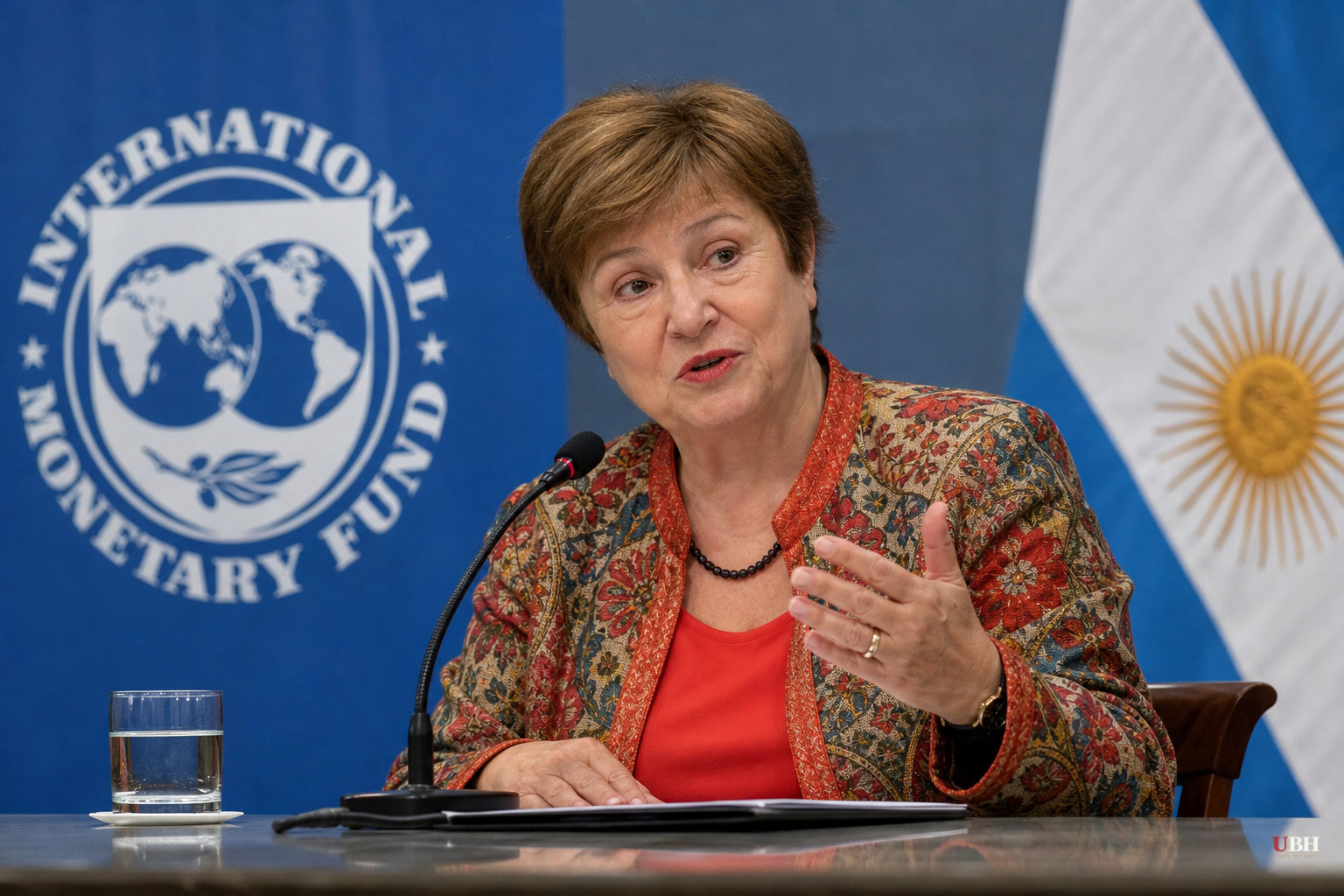
Kristalina Georgieva stood next to Argentina's Economy Minister Luis Caputo in Buenos Aires on Monday, July 27, and said something the IMF hasn't been able to say about Argentina in decades: this country might actually pay its bills.
"Argentina is in a much stronger position, and this is the result of the government's hard work and the perseverance and sacrifice of the Argentine people," Georgieva said, according to Newsday. She's the first IMF chief to visit Buenos Aires in eight years.
Argentina is the IMF's largest debtor, sitting on roughly $58 billion in outstanding loans. Georgieva recalled that when she took the IMF's top job back in 2019, the entire conversation was about whether Argentina could service its debt at all. "That is not the question we should be asking today," she said.
The Numbers Backing Her Up
Milei took office in December 2023 promising brutal austerity to fix a country famous for defaults and currency collapses. The results, so far, are real. Annual inflation has fallen from 210% under the last government to 33% now, according to Newsday. Reuters, via WKZO, reported monthly inflation dropped from 25.5% in December 2023 to just 1.9% in June.
Moody's upgraded Argentina's sovereign credit rating last week. That follows earlier upgrades from S&P Global and Fitch. Bond prices are up. Central bank reserves are growing. Georgieva called it "a much healthier picture" with market confidence restored.
Georgieva also said she sees no need for additional IMF disbursements before the 2027 presidential election, and floated the idea that Argentina could join "the club of emerging markets that have borrowed from the Fund, reformed their economies and borrowed no more."
The Part That Doesn't Make the Highlight Reel
Growth is nearly stalled. The Buenos Aires Times reported year-on-year growth of just 0.2%, badly missing the IMF's own 3.5% forecast for 2026. Consumer spending is described as anaemic.
Mortgage defaults have tripled over the past year, hitting 12.8%, the highest level in 20 years, according to the Buenos Aires Times. Newsday similarly noted rising household debt, stagnant wages and a modest uptick in unemployment. Milei's approval ratings have slipped even as the macro numbers improve.
A government can hit every fiscal target the IMF cares about while ordinary households are getting squeezed by high borrowing costs and weak wages. Argentines struggling to make a mortgage payment aren't going to feel reassured by a Moody's upgrade. That's the strongest case critics of austerity have, and the data in these reports backs it up.
Why 2027 Is the Real Test
The timing here matters more than the headline praise. Reuters reported that an IMF staff assessment put Argentina's 2027 foreign-currency debt bill at $32.3 billion including interest, a figure that would have been higher before the central bank pushed $6 billion in repo financing into 2028 earlier this month.
That bill comes due right as Milei is expected to run for reelection. Caputo has said the government plans to cover it through multilateral financing, privatizations and domestic borrowing, not by going back to international capital markets. Whether that plan survives contact with an election year is an open question nobody in these reports can answer yet.
The IMF's own staff report, cited by Reuters, called the risks "exceptional," saying Argentina's debt is sustainable but there isn't a high probability it stays that way. The IMF has backed every stage of Milei's plan and has a direct interest in it succeeding.
The Buenos Aires Times also noted that left-wing political parties organized protests to greet Georgieva with an "unwelcome" reception Monday, a detail that didn't make it into the AP or Newsday coverage. Georgieva's itinerary continues Tuesday with a visit to Vaca Muerta, the shale oil and gas formation the government is counting on to generate the export dollars needed to make the 2027 numbers work. From there she heads to Uruguay to meet President Yamandú Orsi.
The IMF's third review of Argentina's $20 billion program is coming. Whether Milei's austerity holds together long enough to clear the 2027 debt wall, and whether voters battered by mortgage defaults and stagnant wages give him the chance to try, remains unsettled.
Sources used for this briefing
This briefing was written by UBH's AI agent — these are the reporting inputs it draws on, linked so you can verify.


