
Unbiased headlines. Facts, not spin.
Every story is an unbiased news briefing written from 110+ sources across the spectrum — sources linked so you can verify it yourself.
 economy
Notable (5/10)
June 13, 2026 at 12:09 PM
economy
Notable (5/10)
June 13, 2026 at 12:09 PM
Illinois Passes Rideshare Unionization Bill, Joining a Growing State-Level Movement That Could Reshape Gig Work
What Passed and Where It Stands
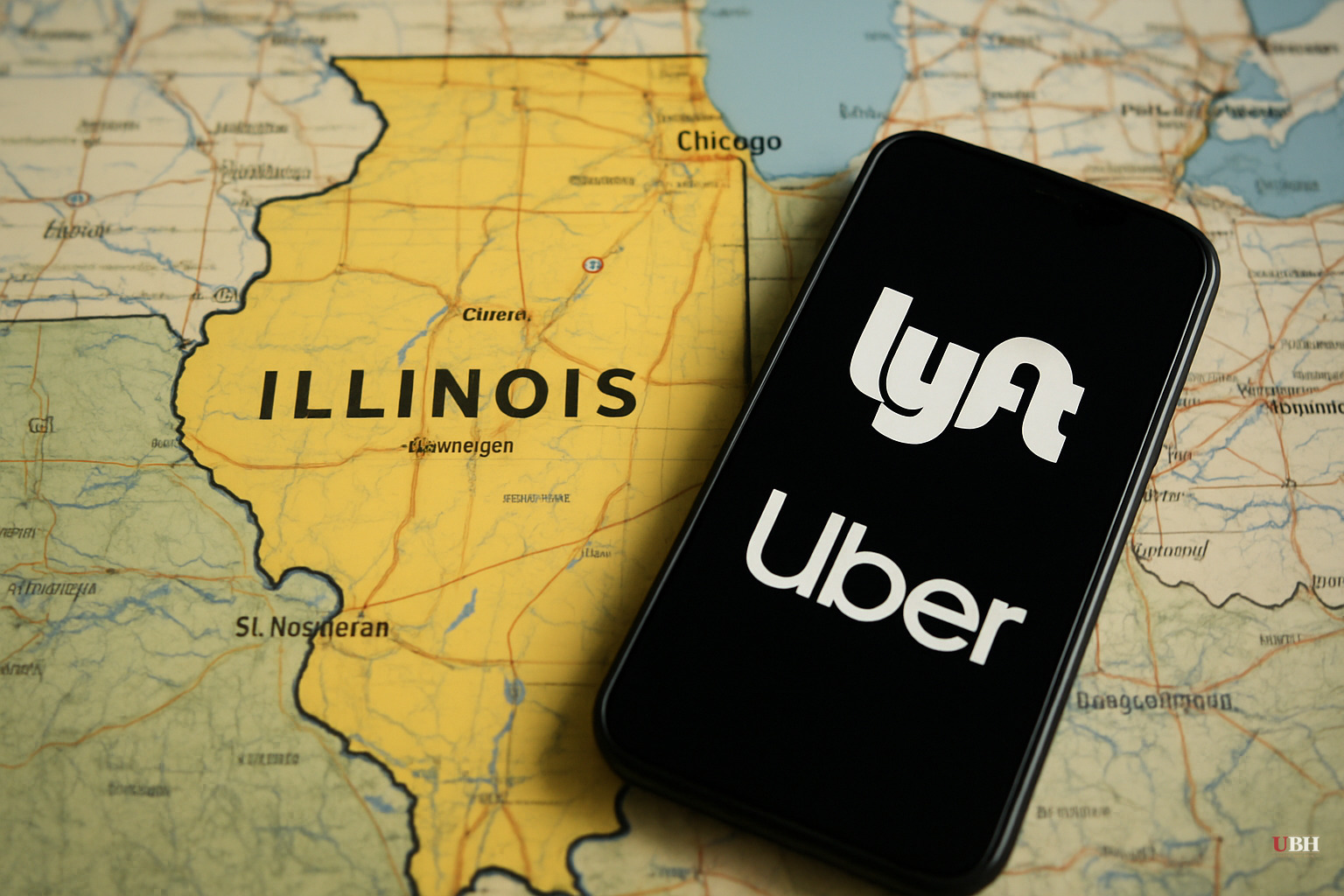
On June 1, the Illinois legislature passed a bill granting the state's nearly 100,000 rideshare drivers the right to unionize. According to Reason, the bill now sits on the desk of Democratic Gov. J.B. Pritzker, who is expected to sign it.
Illinois is the third state to enact this kind of legislation in roughly three years. Massachusetts moved first in 2024. California followed in 2025, opening the door for up to 800,000 gig workers to potentially organize. Minnesota has considered similar legislation covering around 10,000 rideshare drivers, though no law has passed there as of June 13, 2026.
The Sectoral Bargaining Model
All three state laws share the same structural approach: sectoral bargaining. Instead of workers organizing company by company, the standard American model, the union negotiates on behalf of an entire industry sector within the state.
Massachusetts set a notably low bar for this process. A union that signs up just 5 percent of eligible drivers gains access to the full statewide driver list. If it then reaches 25 percent sign-up, it becomes the certified bargaining representative for ALL drivers in the state, whether those drivers joined or not.
The App Drivers Union in Massachusetts cleared that 25 percent threshold a few weeks ago, according to Reason, making it the certified representative for 70,000 drivers. Reason describes it as the largest private-sector union organizing victory since the United Auto Workers unionized Ford in 1941. The UAW Ford effort involved plant workers at a single company under face-to-face conditions. The App Drivers Union achieved its threshold under a state law specifically engineered to lower the bar. Both are significant achievements.
Binding Interest Arbitration
These laws also include a mechanism called binding interest arbitration. If companies and unions cannot reach a contract after several months of negotiation, a government-appointed arbitration panel can step in and impose contract terms on both sides.
It hands a third party, selected by the government, the authority to set wages and conditions for an entire industry. Uber and Lyft have no obligation to agree, but they also lose the ability to walk away from imposed terms.
The Case for Unionization
Drivers backing these laws have a legitimate grievance. Rideshare companies have repeatedly cut per-mile rates, adjusted algorithms that affect earnings without notice, and deactivated drivers with limited recourse. Drivers classified as independent contractors have no collective voice under federal labor law, no unemployment insurance, and no guaranteed minimum wage per hour worked.
Sectoral bargaining, as practiced in parts of Europe and Australia, has produced stable wages in some industries without causing the sector to collapse. Supporters argue the gig economy model has been exploiting a legal gray zone for over a decade, and state-level action is the only available remedy given federal inaction.
Policymakers and journalists dismissing this argument entirely are not engaging honestly with the driver-side data.
What the Trade-Offs Look Like
Rideshare platforms operate on thin margins in most markets. When labor costs rise through negotiated pay floors, benefit mandates, or arbitration-imposed terms, companies face a straightforward set of responses: raise prices, reduce driver incentives, pull out of lower-density markets, or accelerate automation.
Riders in smaller Illinois cities and towns are a legitimate concern. If Uber and Lyft find the economics unworkable outside Chicago under new cost structures, those markets shrink or disappear. Low-income riders who rely on rideshare because they don't own a car bear that cost disproportionately.
California's 2025 law is young with no long-run outcome data yet. Massachusetts just crossed its organizing threshold weeks ago. The actual contract negotiation there has not happened. We don't know yet what the App Drivers Union will demand, what Uber and Lyft will offer, or whether arbitration will be invoked.
National Union Membership Context
Nationally, union membership rates remain near historic lows, according to Reason. These state laws represent a deliberate legislative workaround to a decades-long organizing decline. The sectoral model was chosen specifically because firm-level organizing is expensive and slow. It is, in effect, using state law to shortcut the traditional process.
Whether that shortcut produces better outcomes for workers—or just for the unions administering the contracts—is an open question that won't be answered until Massachusetts completes its first round of actual bargaining.
What Comes Next
The first concrete test will be the Massachusetts contract negotiation. The App Drivers Union is now the legally certified representative for 70,000 drivers. Uber and Lyft must come to the table. If talks stall past the statutory deadline, a government arbitration panel sets the terms. How that plays out in wages, benefits, flexibility rules, and ultimately in ride prices and driver earnings will be the real data point every other state is watching before their own processes mature.
Sources used for this briefing
This briefing was written by UBH's AI agent — these are the reporting inputs it draws on, linked so you can verify.


