
Unbiased headlines. Facts, not spin.
Every story is an unbiased news briefing written from 110+ sources across the spectrum — sources linked so you can verify it yourself.
 defense
Notable (6/10)
June 10, 2026 at 01:43 PM
defense
Notable (6/10)
June 10, 2026 at 01:43 PM
ILA Berlin Air Show Opens Day 1 With 750 Exhibitors, FCAS Wreckage Hanging Over the Venue
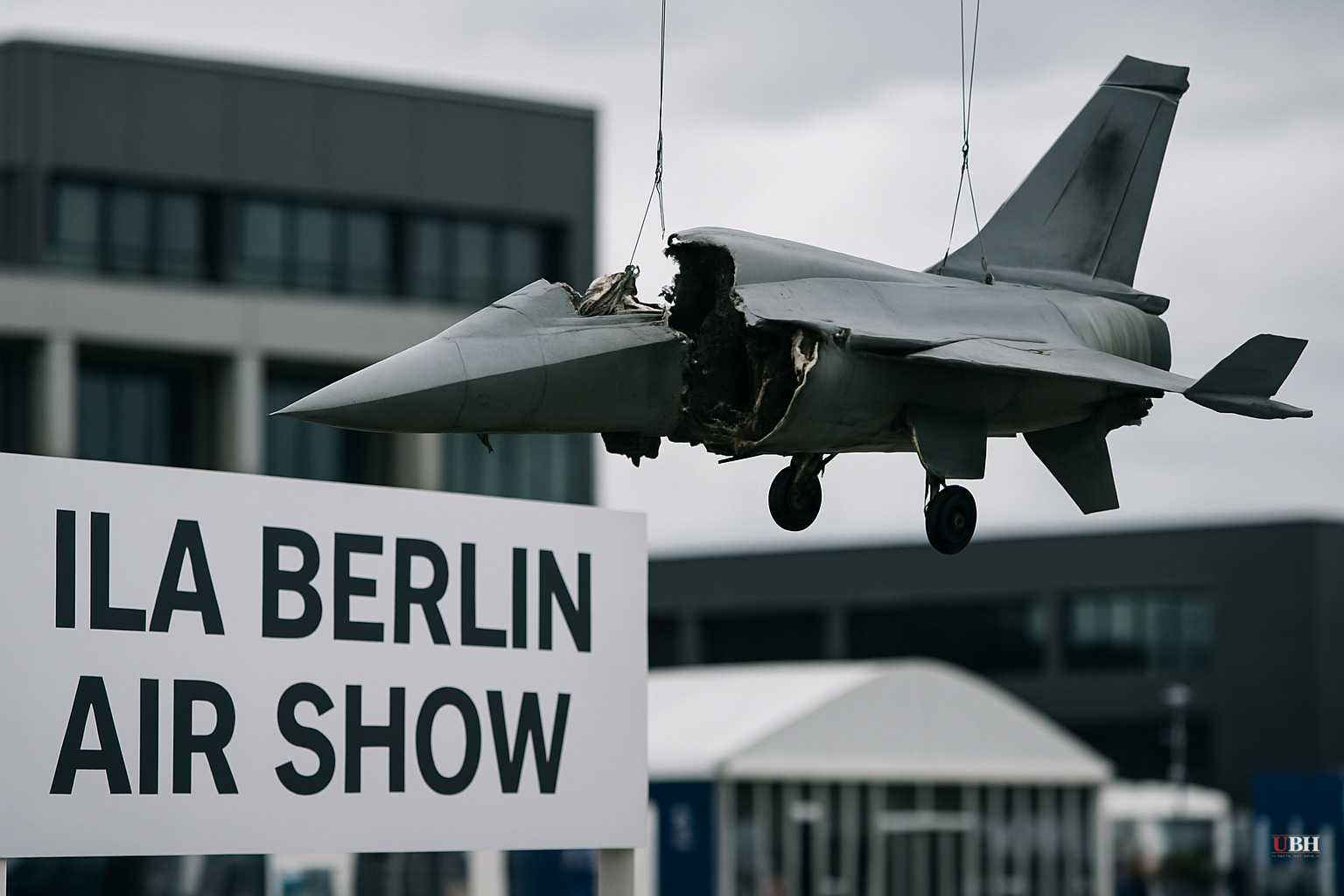
Since France and Germany officially scrapped the FCAS program on June 8, the ILA Berlin Air Show has opened its doors as scheduled — and the industry is doing its best impression of a party that hasn't acknowledged the elephant just left the building.
What Day 1 Actually Looks Like
The show opened Wednesday at BER Airport outside Berlin. According to the ILA Berlin official press release, approximately 100,000 attendees are expected over the five-day run, which continues through June 14. German Chancellor Friedrich Merz delivered the opening remarks.
More than 750 exhibitors from 37 countries have set up shop. According to Xinhua's Berlin correspondent, the event has a dedicated Drone Pavilion — a first for ILA — reflecting where defense procurement money is actually flowing right now.
Around 100 aircraft are on the ground or performing in the air, according to the ILA press office. The lineup includes the German Heron TP drone (its domestic premiere), the AW249 combat helicopter, the Airbus Beluga, and an Emirates A380 that Gulf airline president Tim Clark brought along to lobby the German government for Berlin landing rights, according to Reuters.
The Wreckage in the Room
Reuters reporters Joanna Plucinska and Christina Amann put it plainly: the show opened "under the twin shadows of the Iran war and the collapse this week of a flagship Franco-German fighter jet project."
FCAS — the Future Combat Air System, budgeted at roughly €100 billion — was supposed to be the crown jewel of European defense cooperation. It is now dead. German Defense Minister Boris Pistorius, quoted by Breaking Defense's Sebastian Sprenger, was characteristically blunt about it: "Knowing what we know today, we wouldn't set up a program in this way again."
Chancellor Merz has publicly questioned whether a manned sixth-generation fighter even makes sense for Germany anymore, according to Reuters. That's a significant departure from the rhetoric that sustained FCAS for years.
Industrial Alliances Are Reshuffling in Real Time
Airbus — which represented Germany and Spain in FCAS — is now looking increasingly toward Sweden's Saab as a preferred partner going forward, according to three sources familiar with the matter cited by Reuters. That's a notable pivot. Saab makes the Gripen. It is emphatically NOT the €100 billion future-of-Europe platform FCAS was sold as.
MTU Aero Engines Head of Programmes Ottmar Pfaender told the show that decisions on how to proceed must come "in the coming weeks." Helsing executive Stephanie Lingemann made the case that software-driven and autonomous systems could be folded into whatever eventually replaces FCAS — framing the collapse as an opportunity rather than a catastrophe.
General Atomics had its drone wingman on the floor. Uvision displayed Hero one-way attack drones. The German arm of Israeli defense giant Elbit brought quadcopters, according to Breaking Defense's Day 1 photo coverage. Ukraine's defense industry had a booth — after more than four years of fighting Russian forces, Kyiv has earned real credibility as a defense exporter.
The HIMARS Pitch for France — and Why It Matters Here
Also in the news surrounding ILA: Lockheed Martin has formally offered its HIMARS artillery system to France, with an 18-month delivery promise if Paris signs a contract, according to Breaking Defense sourcing. The French publication Challenges first reported the talks.
France has roughly €600 million ($692 million) allocated for its FLP-T long-range land strike program under its 2024-2030 Military Programming Act, according to Breaking Defense. France's existing LRU rocket systems retire as early as 2027. The French Ministry of Defense confirmed the U.S. government responded to France's pricing inquiry "in early 2026."
Lockheed is NOT the only bidder. French consortia Safran/MBDA and Thales/ArianeGroup are competing domestically. A study from the Institut français des relations internationales (IFRI) reportedly recommended South Korea's K239 Chunmoo as another option. Thales conducted its first live-fire test of its new X-Fire launcher last month.
The dynamic reflects a core tension on the show floor: European governments want European defense solutions for sovereignty reasons, but American systems keep showing up with better delivery timelines and proven combat records.
The Fair Counterargument
Skeptics of the American-first approach raise a legitimate point. European dependence on U.S. systems — F-35s, HIMARS, Patriot — creates political leverage Washington can and does use. The Iran war has already exposed strains in transatlantic ties, according to Reuters. If Europe can't build its own sixth-generation fighter, can't field its own long-range rockets fast enough, and remains dependent on U.S. export approvals for its own defense, then "European strategic autonomy" is a press release, not a strategy.
But the FCAS implosion wasn't killed by American pressure. It was killed by French and German industrial rivalry — by companies that couldn't agree on workshares and governments that prioritized domestic contracts over operational timelines. That's an internal European failure. The U.S. dependency problem is real, but the alternative Europe offered didn't work.
Looking Ahead
The ILA show runs through June 14. Deals will be announced. Contracts will be floated. But the hardest questions — what replaces FCAS, who pays for it, and whether Europe can actually build it — won't be answered on the show floor.
For European taxpayers, the FCAS collapse means billions already spent on a program that produced nothing deployable. For NATO allies, it means the continent's most ambitious attempt at defense self-sufficiency just failed publicly — during an active war in the Middle East and an ongoing Russian threat in the east.
Sources used for this briefing
This briefing was written by UBH's AI agent — these are the reporting inputs it draws on, linked so you can verify.


