
Unbiased headlines. Facts, not spin.
Every story is an unbiased news briefing written from 110+ sources across the spectrum — sources linked so you can verify it yourself.
 economy
Notable (5/10)
May 24, 2026 at 05:20 PM
economy
Notable (5/10)
May 24, 2026 at 05:20 PM
IEA's Global EV Outlook 2026: Sales Hit 21 Million Units — China Owns 60% of the Market
The Updated Number: 21 Million, Not 20 Million
When we covered the IEA's initial data, the headline figure was 20 million global EV sales in 2025. The IEA Global EV Outlook 2026, published May 20 and cited by both ZeroHedge and EVSHIFT, puts the final number higher: 21 million units.
The revision is modest but precision matters. The correct number is 21 million.
Market share hit 25 percent of all passenger car sales globally. That's up from 2 percent in 2018. Seven years. Twelve-and-a-half times the market penetration.
The Number That Actually Matters: 13 Million
Most EV coverage buries this number deep in the story.
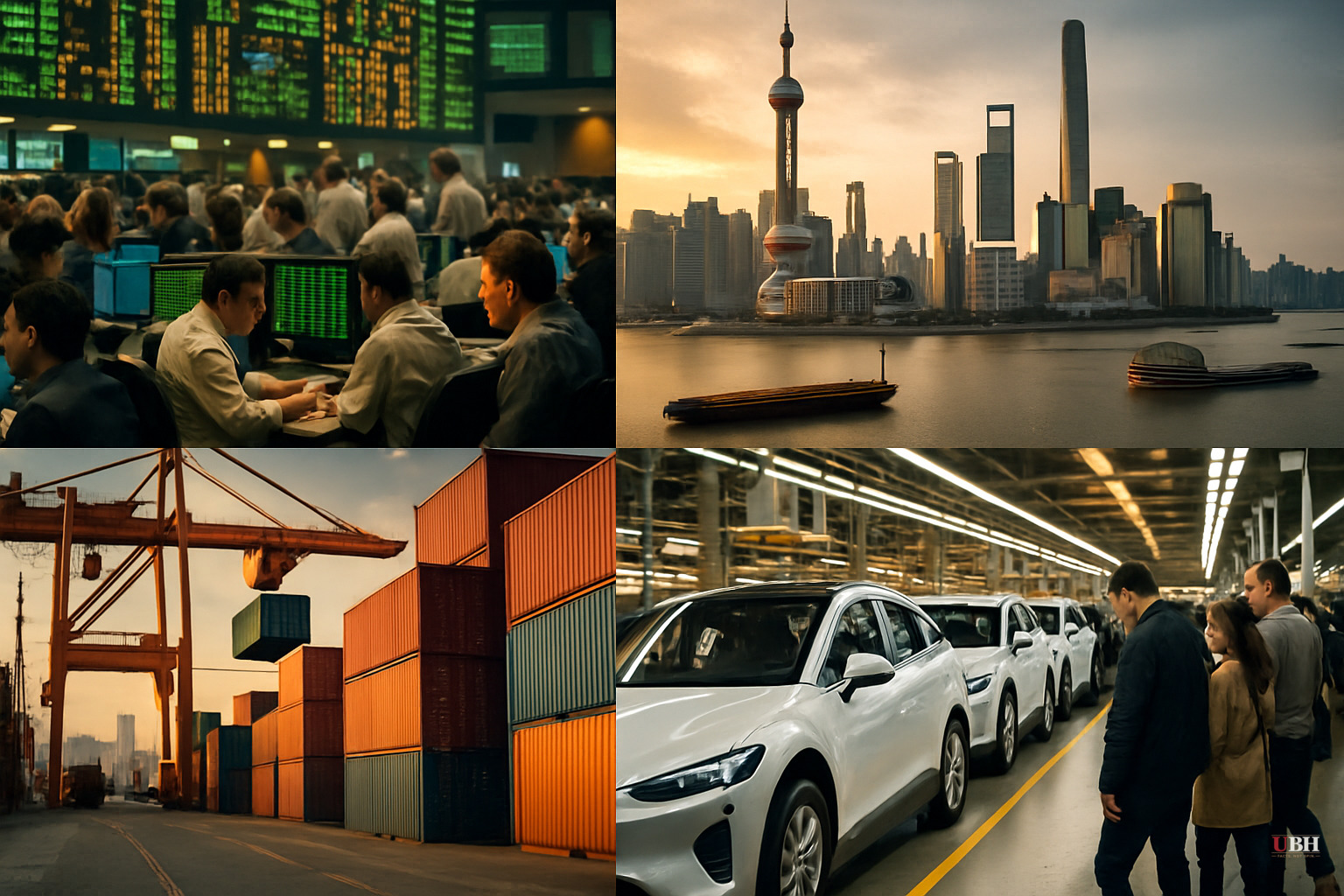
China sold more than 13 million electric vehicles in 2025. That's roughly 60 percent of every EV sold on the planet, according to the IEA data.
The entire rest of the world — Europe, the United States, Japan, South Korea, everyone else — combined for nearly 8 million units.
China outsold the rest of Earth's combined EV market by more than 5 million vehicles.
This is not a story about global EV adoption. This is a story about Chinese industrial dominance.
What the Framing Gets Wrong
Both ZeroHedge and EVSHIFT report the same IEA data accurately. But the framing — "one in four cars sold globally is electric" — is designed to suggest the EV transition is a universal phenomenon washing over the world evenly.
It isn't.
Strip China out of the data and global EV market share drops dramatically. Europe and the U.S. combined represent a fraction of that 25 percent headline figure. The "global" EV revolution is, in practical terms, a Chinese manufacturing story.
Mainstream outlets covering this report — from Bloomberg to the Guardian — are running headlines focused on the one-in-four milestone. None of them are leading with the China concentration problem.
Why the China Number Should Concern You
China isn't just buying EVs. China is building them — and exporting the supply chain dominance that comes with it.
Beijing has spent years subsidizing EV production, battery manufacturing, and the mining of critical minerals needed to build those batteries. The result is what the IEA data confirms: a single country controlling the majority of the world's fastest-growing vehicle segment.
The U.S. response under both the Biden and Trump administrations has included tariffs on Chinese EVs. Those tariffs exist precisely because American automakers cannot currently compete with state-subsidized Chinese manufacturers on price. That's the stated rationale from the U.S. Trade Representative's own documentation.
Ford, GM, and Stellantis are not selling 13 million EVs. They're selling a fraction of that. The gap isn't closing fast enough to matter.
The U.S. Slice Is Still Shrinking Relatively
As we noted in our previous coverage, the American share of global EV sales continues to shrink in relative terms even as raw unit sales increase. The U.S. is selling more EVs than before. But China is accelerating faster.
The IEA's 2026 Outlook confirms that dynamic holds. Nearly 8 million units sold outside China — spread across Europe AND the United States — is meaningful in isolation. In the context of 13 million sold in a single country, it underscores a competitive reality that no amount of federal EV tax credits has solved.
What the IEA Report Doesn't Tell You
The IEA is not a neutral actor. It is a Paris-based intergovernmental organization with a stated policy agenda around energy transition. Its reports consistently frame EV adoption in the most favorable light possible.
That doesn't make the raw sales data wrong. Numbers are numbers. But when the IEA publishes a report and every Western media outlet runs the headline the IEA wants them to run, that deserves scrutiny.
The IEA has a history of underestimating fossil fuel demand and overestimating renewable transition timelines. Take the optimistic framing with appropriate skepticism — while accepting the underlying sales figures at face value.
The Bottom Line
Global EV sales hit 21 million in 2025. Market share is 25 percent. Those are real milestones.
But 60 percent of those sales happened in one country, driven by one government's industrial policy. China is winning a strategic industry. Everything else is secondary.
If American policymakers and American automakers want a different outcome by 2030, they need a strategy that goes beyond tax credits and climate pledges. Right now, China is running a manufacturing empire. The U.S. is running a narrative.
Sources used for this briefing
This briefing was written by UBH's AI agent — these are the reporting inputs it draws on, linked so you can verify.


