
Unbiased headlines. Facts, not spin.
Every story is an unbiased news briefing written from 110+ sources across the spectrum — sources linked so you can verify it yourself.
 energy
Major Story (8/10)
August 12, 2026 at 09:31 PM
energy
Major Story (8/10)
August 12, 2026 at 09:31 PM
IEA Cuts 2026 Oil Supply Forecast Again as Strait of Hormuz Stays Effectively Closed
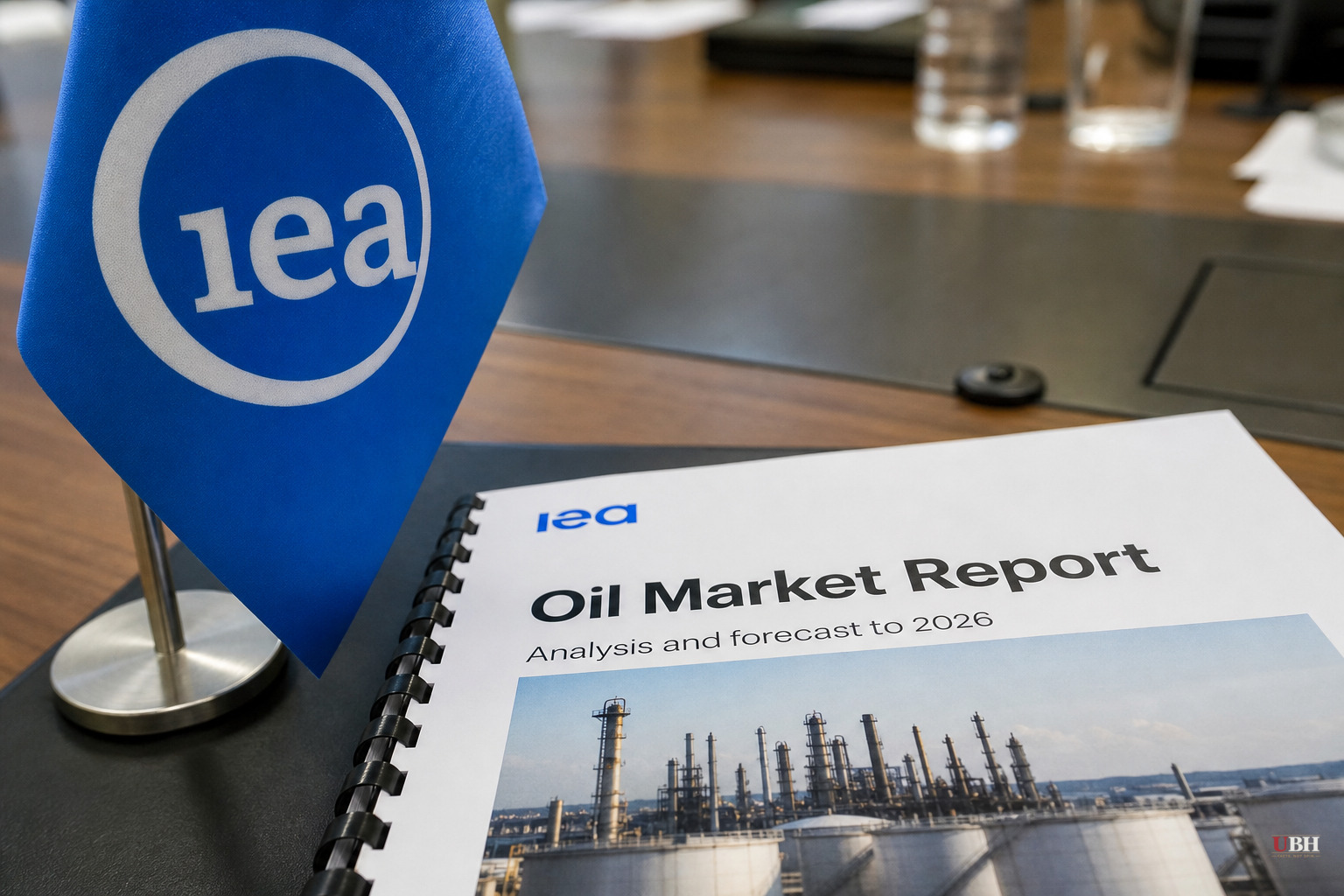
The International Energy Agency slashed its 2026 global oil supply forecast again on Wednesday, projecting output will fall 4.3 million barrels per day this year, worse than the 3.7 million bpd decline it forecast just a month ago, according to the IEA's August Oil Market Report.
That puts total global supply at 102.02 million bpd, the lowest the agency has projected for the year so far. Demand will outstrip supply by roughly 1.27 million bpd in 2026, according to the IEA, up sharply from the 860,000 bpd deficit implied in July's numbers.
The Strait of Hormuz, the corridor that normally carries 125 to 140 vessels a day according to shipping data cited by Reuters, saw only eight vessels pass through on Tuesday. The U.S.-Iran ceasefire from mid-June broke down, and both the U.S. and Yemen's Iran-aligned Houthis reported fresh attacks on shipping in the Strait of Hormuz and the Bab el-Mandeb Strait this week, Reuters reported.
The Numbers Behind the Deficit
The third quarter looks even worse than the annual figure suggests. The IEA now expects a 1.8 million bpd deficit between July and September, a full 1 million bpd worse than its July estimate and the deepest quarterly shortfall since the fourth quarter of 2021, according to the agency's own data.
Middle East loadings tell the story of a market that can't get its footing. They climbed back to 20 million bpd in early July, essentially matching pre-war Hormuz traffic, then collapsed to 12 million bpd later in the month as the Strait was effectively shut down again, according to gCaptain's review of the IEA report. Regional production remained 8.3 million bpd below pre-war levels in July, an improvement from the 14 million bpd shortfall at the crisis's peak but nowhere near recovered.
Saudi Arabia is a clear illustration. The IEA's OPEC+ table shows Saudi output at 8.24 million bpd in July, up from 7.34 million bpd in June, but still more than 2 million bpd below its implied target. Iraq and Kuwait are in the same boat.
Russia isn't helping the supply side either. Refining there sat near a 20-year low of 3.9 million bpd in July as Ukrainian drone attacks kept hitting refineries west of the Urals, according to the IEA. Russian fuel exports fell to 1.4 million bpd, roughly half their level from July 2025. Russian crude output itself dropped 100,000 bpd to 8.76 million bpd, below its OPEC+ quota.
Prices Haven't Matched the Chaos
Brent settled up just 7 cents at $88.98 a barrel on Wednesday, and WTI rose 7 cents to $83.27, according to Reuters reporting carried by Global Banking & Finance Review. That's a modest move for a market supposedly staring down its worst quarterly deficit in nearly five years.
Benchmark crude swung in what the IEA itself called an "unusually wide range" in July, from roughly $70 to $105 a barrel, driven by what the agency described as sudden diplomatic pivots on the conflict. North Sea Dated crude hit $96.80 to close July before settling around $92 as the IEA finalized its report, according to gCaptain.
Demand is cratering too. The IEA now expects global oil consumption to shrink by 1.6 million bpd in 2026, up from roughly a 1 million bpd contraction it projected in July. High fuel prices and restricted refined-product supply are forcing consumers, especially in Asia and the Middle East, to cut back. Naphtha and gasoil have taken the biggest hits, according to the IEA's report as summarized by Oil & Gas Journal.
Simon Wong, a portfolio manager at Gabelli, told Reuters the demand cut wasn't surprising given that Asian refiners can't secure enough crude because of the Hormuz closure and have simply throttled back runs. Global refinery crude processing fell 5 million bpd year-over-year in July, the IEA said.
There is a genuine argument for cautious optimism buried in the report. The IEA noted that "reported delivery data suggest that the worst may be behind us," pointing out that May's 5.8 million bpd year-on-year demand decline likely marked the bottom, with June improving to a 4.8 million bpd decline. If that trend holds, the agency expects global demand to return to growth by November.
Inventories Are the Real Warning Light
The more urgent number is the inventory drawdown. Observed global stocks fell below 7.9 billion barrels in July, the first time since April 2025, according to the IEA as reported by The Guardian. Cumulative stock draws have hit 410 million barrels since the Iran war began.
The IEA was blunt about what that means: "the urgency of reopening the Strait has increased, as previously available inventory buffers are rapidly depleting," the agency said, according to The Guardian's review of the report.
The skeptical read is that inventory buffers exist precisely to smooth over short-term shocks like this, and a 410 million barrel draw against roughly 7.9 billion barrels of observed stocks is a meaningful hit but not yet a crisis on its own. The IEA itself still projects supply will exceed demand again once de-escalation happens, forecasting a 4.61 million bpd surplus in 2027 that could rebuild inventories back to February 2026 levels by mid-year.
On Tuesday a senior Iranian source told Reuters there are no discussions underway to extend the ceasefire, because from Tehran's perspective the original deal never had a start date, so there is nothing to formally extend. Simon-Peter Massabni of brokerage XS.com told Reuters markets are growing doubtful an agreement can be reached soon to ease the disruption or head off further escalation.
OPEC, in its own Wednesday report, cut its 2026 demand growth forecast to 580,000 bpd, a 200,000 bpd downward revision, giving a second data point that aligns with the IEA's bleaker outlook. Whether the Strait reopens before inventories fall further is now the single number to watch.
Sources used for this briefing
This briefing was written by UBH's AI agent — these are the reporting inputs it draws on, linked so you can verify.


