
Unbiased headlines. Facts, not spin.
Every story is an unbiased news briefing written from 110+ sources across the spectrum — sources linked so you can verify it yourself.
 defense
Major Story (7/10)
July 6, 2026 at 11:24 AM
defense
Major Story (7/10)
July 6, 2026 at 11:24 AM
ICE's Internal Watchdog Has Opened 131 Cases Against Civilians Over Online Posts, Including a Poll Worker Approached at Her Voting Site
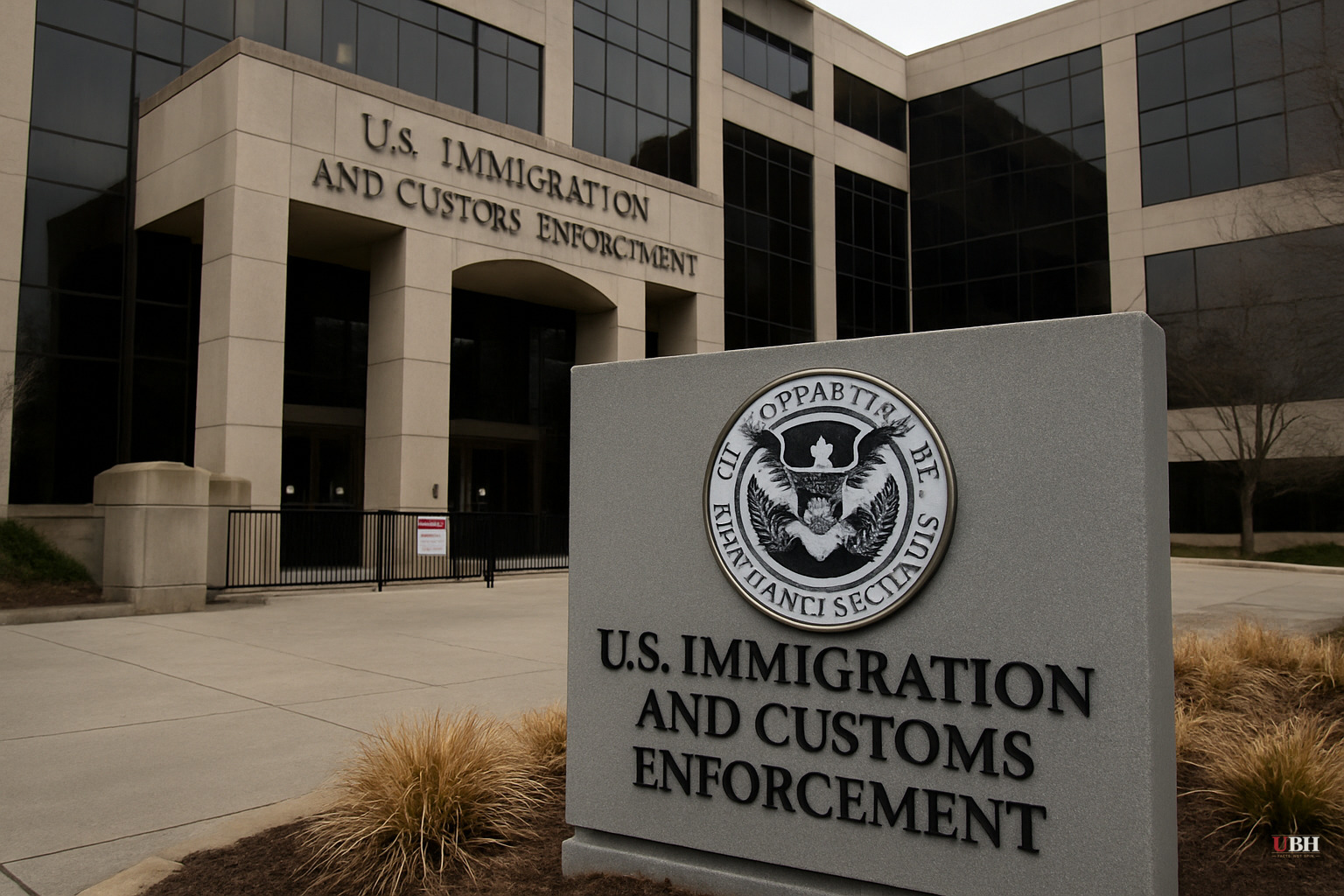
ICE's Internal Affairs Office Is Going After Civilians
ICE's Office of Professional Responsibility exists to police ICE itself. It inspects detention facilities, investigates employee misconduct, and handles security clearances for new hires. According to its own website, it also manages badge access and network security against "external threats."
ICE's internal affairs mandate has expanded to include American civilians posting on Instagram.
According to Wired, between January 2025 and March 2026, OPR opened 131 cases involving what ICE described as "incidents of doxing and threats directed towards ICE employees nationwide." That figure came from a court declaration filed by an ICE official in April 2026. How many of those 131 cases produced criminal charges is not publicly known.
What Happened in Syracuse
Paigelynn Gonyea was working as a poll worker at a Syracuse, New York polling site during the state's June primaries when ICE agents showed up. According to Wired, the agents said they were there over an Instagram post she had allegedly made in January "doxing" an ICE agent.
The post Gonyea said she could locate was one crediting the Minnesota Star Tribune for identifying Jonathan Ross, the ICE agent who shot and killed Renee Good during a federal operation in Minneapolis earlier this year, and calling for his indictment.
The agents presented Gonyea with a warning notice bearing OPR's name. It stated that threatening, assaulting, kidnapping, or murdering federal officials or their families to impede their work is unlawful, and it requested she remove her post "and/or discontinue" her behavior.
"My signature would have been an admission of guilt," Gonyea told Wired. "I refused to sign it."
Gonyea observed that OPR's role has shifted: "That office is supposed to be for internal investigations, and now they're using their own internal departments on American civilians."
ICE did not respond to Wired's request for comment.
The One Documented Case OPR Got Credit For
Of the 131 cases OPR reportedly opened, Wired identified only one in which OPR was specifically credited for investigative work leading to a Justice Department action. That case involved a California man charged with harassing an ICE attorney and her mother. The DOJ alleged the man used to live in the same building as the mother and began his harassment campaign in January 2024, well before the Trump administration took office. He pleaded guilty.
That single case doesn't tell us much about the other 130. ICE declined to say whether other charges have been brought on OPR's referrals, or how many additional cases OPR has opened since March 2026.
A Reasonable Concern, Inadequately Addressed
Federal law does prohibit threatening federal officers, and genuine doxing—posting agents' home addresses, family information, or personal details to incite violence against them—is illegal and dangerous. ICE agents have faced real threats. An internal office with investigative capacity is a reasonable place to track and refer those threats for prosecution.
If OPR's 131 cases are predominantly legitimate threat investigations, the agency's position is defensible. The problem is that ICE has not shown that. The agency has not released case details, explained how it distinguishes newsworthy identification (such as a newspaper naming an agent involved in a shooting) from illegal doxing, or clarified what legal standard it applies before sending agents to someone's workplace, including an active polling location.
What the Law Says and What Remains Unresolved
Sharing a news article that names a federal agent is not the same as posting that agent's home address to invite harm. The First Amendment covers a substantial range of criticism of government officials, including harsh criticism, calls for accountability, and republishing news coverage. Whether Gonyea's post fell within legal protection or crossed into illegal conduct has never been adjudicated. No charges were filed against her.
An OPR warning notice telling a civilian to remove her post, presented at her place of volunteer civic service during an election, carries implicit weight regardless of whether a prosecutor ever touches the case. The chilling effect doesn't require a conviction.
Wired's report notes that OPR's own website defines its external mission narrowly: building security and network protection. There is no public OPR policy document, per Wired's reporting, that explicitly authorizes agents to approach civilians at polling sites over social media content.
The Number That Still Has No Explanation
One hundred thirty-one cases in 14 months is a substantial caseload for an office with no clear public statutory authority to investigate civilians. No charges have been publicly linked to more than one of those cases. ICE has not answered whether any of the 131 subjects received warning notices like Gonyea's, whether any were approached at their homes or workplaces, or what happens to people who, like Gonyea, refuse to sign.
The unresolved question is a simple one: what legal authority does OPR cite when it opens a case against a private citizen for a social media post, and under what standard does it decide to send agents rather than refer the matter to the FBI or a U.S. Attorney? ICE has not answered that publicly, and as of July 6, 2026, no congressional oversight hearing on OPR's civilian caseload has been announced.
Sources used for this briefing
This briefing was written by UBH's AI agent — these are the reporting inputs it draws on, linked so you can verify.


