
Unbiased headlines. Facts, not spin.
Every story is an unbiased news briefing written from 110+ sources across the spectrum — sources linked so you can verify it yourself.
 defense
Notable (6/10)
July 29, 2026 at 01:32 PM
defense
Notable (6/10)
July 29, 2026 at 01:32 PM
ICE Says It Dismantled Nationwide SIM Farm Network Tied to Telecom Fraud
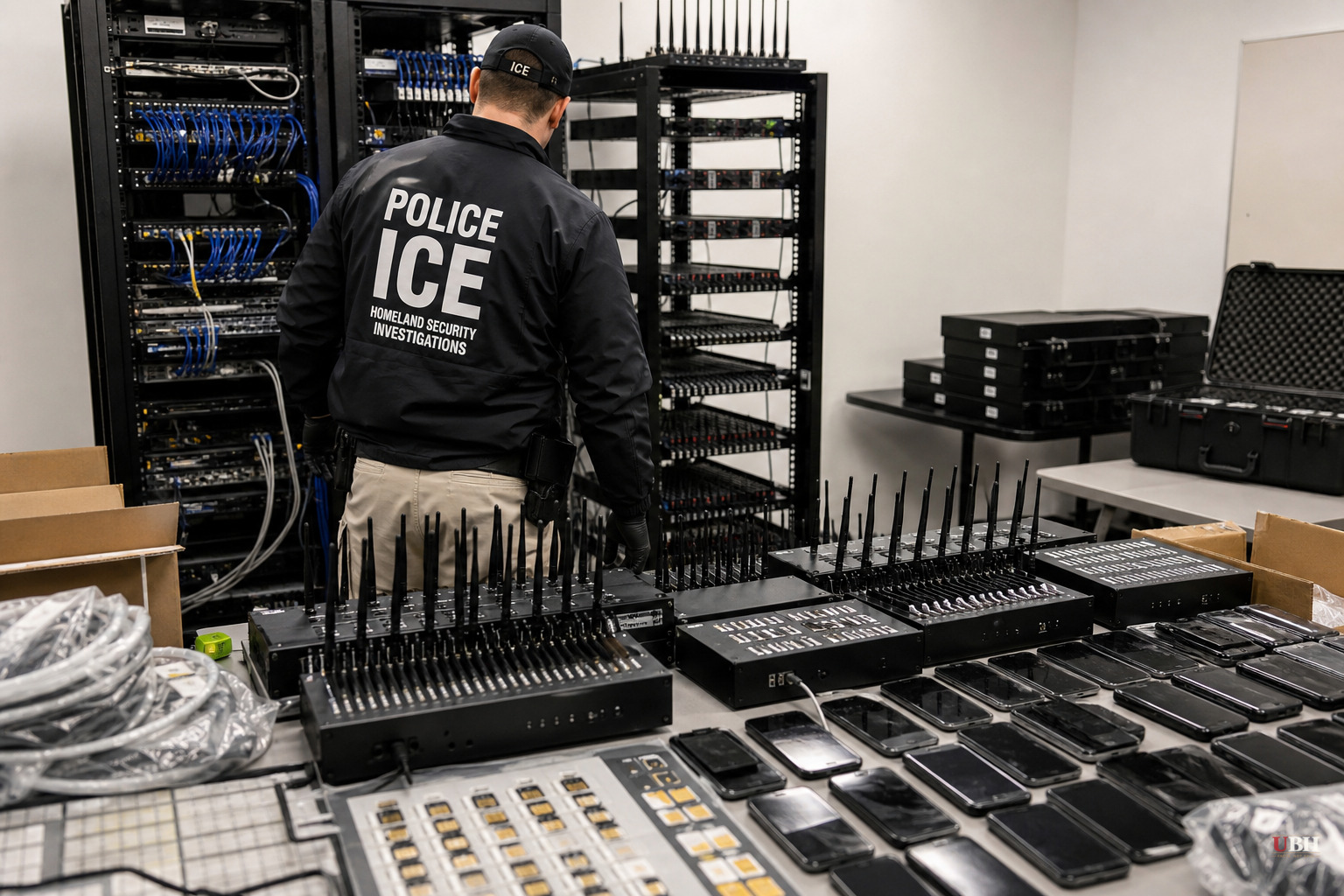
ICE Says It Dismantled Nationwide SIM Farm Network Tied to Telecom Fraud
Homeland Security Investigations, the investigative arm of Immigration and Customs Enforcement, ran a nationwide operation between June 22 and July 10 targeting so-called SIM farms, according to an ICE statement dated July 24 cited by The Epoch Times.
The operation, called Operation Signal Break, deployed specialized SIM Box Surge Teams to California, Florida, Texas, Massachusetts, New York, and New Jersey. Those teams combined criminal analysts, special agents, and computer forensic analysts to track down and seize the hardware, ICE said.
What a SIM Farm Actually Is
A SIM farm is a bank of SIM cards, often stuffed into racks of cellphones, modems, or purpose-built devices called SIM boxes. They're capable of sending and receiving bulk texts and calls at industrial scale.
The underlying technology was built for legitimate business use, like bulk customer notifications. But it's been hijacked by organized fraud rings running phishing texts, scam calls, and fake account setups, according to ICE.
The specific fraud scheme ICE is targeting is known as SIM box fraud or interconnect bypass fraud. IT services provider Synaptique described the mechanics in a November 2025 post: a call originating overseas gets rerouted through voice-over-internet-protocol technology to a SIM box sitting inside the United States, instead of passing through a legitimate international call gateway. The SIM box then fires off a new, local-looking call using one of its domestic SIM cards.
The effect is that a call or text that should look foreign, and get flagged or routed through normal carrier billing, instead appears to come from a local number. That makes it easier to dodge fraud detection and easier to trick people into picking up.
The Money and the Alleged China Link
ICE estimates SIM box operations cost Americans roughly $15 million a year. That figure comes directly from ICE's own statement, not an independent audit, and the agency has not published a detailed accounting methodology alongside it.
ICE said the illicit proceeds are suspected to be linked to Chinese transnational criminal organizations and distribution networks. That's a suspicion stated by the agency, not a proven criminal finding. No indictments tied specifically to this operation had been announced as of ICE's July 24 statement, and none appear in the record since.
Homeland Security Investigations Acting Executive Associate Director John Condon praised the agents involved, saying in the ICE statement that their work "made our communities safer and sends a clear message to those seeking to exploit our sy[stems]."
What Happens Next
ICE says it will now analyze the seized SIM data to identify victims and assess actual losses. That data-mining phase is expected to feed into criminal indictments, sanctions targeting the infrastructure and networks behind the fraud, and asset seizures, according to the agency.
None of those follow-on actions, indictments, sanctions, or seizures had been formally announced as of ICE's statement. The operation's stated results so far are limited to dismantling what ICE calls "critical command-and-control infrastructure" for the fraud networks, not completed prosecutions.
SIM box technology also has legitimate uses, and the same hardware showing up in a business's telecom setup isn't automatically evidence of a crime. ICE's own framing distinguishes between the tech's legitimate origins and its exploitation by fraud rings, and the agency has not claimed every seized device was part of a criminal operation, only that the targeted networks were.
A broader national security angle exists beyond consumer fraud. SIM boxes can be used for clandestine communication, and foreign intelligence services or hostile state actors could theoretically exploit the same infrastructure, a point raised in reporting on the operation. ICE's statement doesn't claim espionage was involved in this specific case, but the dual-use nature of the technology is part of why Homeland Security Investigations, rather than a purely consumer-protection agency, ran the operation.
Both outlets covering this, The Epoch Times via ZeroHedge and USSA News, ran essentially the same underlying wire content from The Epoch Times' Naveen Athrappully, with no independent verification of ICE's $15 million loss estimate or the China-linked suspicion. Neither outlet identified specific victims, specific companies whose SIM cards were exploited, or named suspects.
The open questions are straightforward: how many SIM cards and devices were actually seized, how many victims will be identified once ICE finishes analyzing the data, and whether the promised indictments and sanctions materialize in the coming months. ICE has not set a timeline for when that analysis will be complete or when charges might be filed.
Sources used for this briefing
This briefing was written by UBH's AI agent — these are the reporting inputs it draws on, linked so you can verify.


