
Unbiased headlines. Facts, not spin.
Unbiased Headlines is an independently owned news organization. We bring you the facts, not opinions, written fresh from 110+ named sources. Sources linked so you can verify it yourself.
 politics
Major Story (7/10)
politics
Major Story (7/10)
ICE Is Arresting Visa Overstayers and Asylum Applicants at Airports, Even With Pending Cases
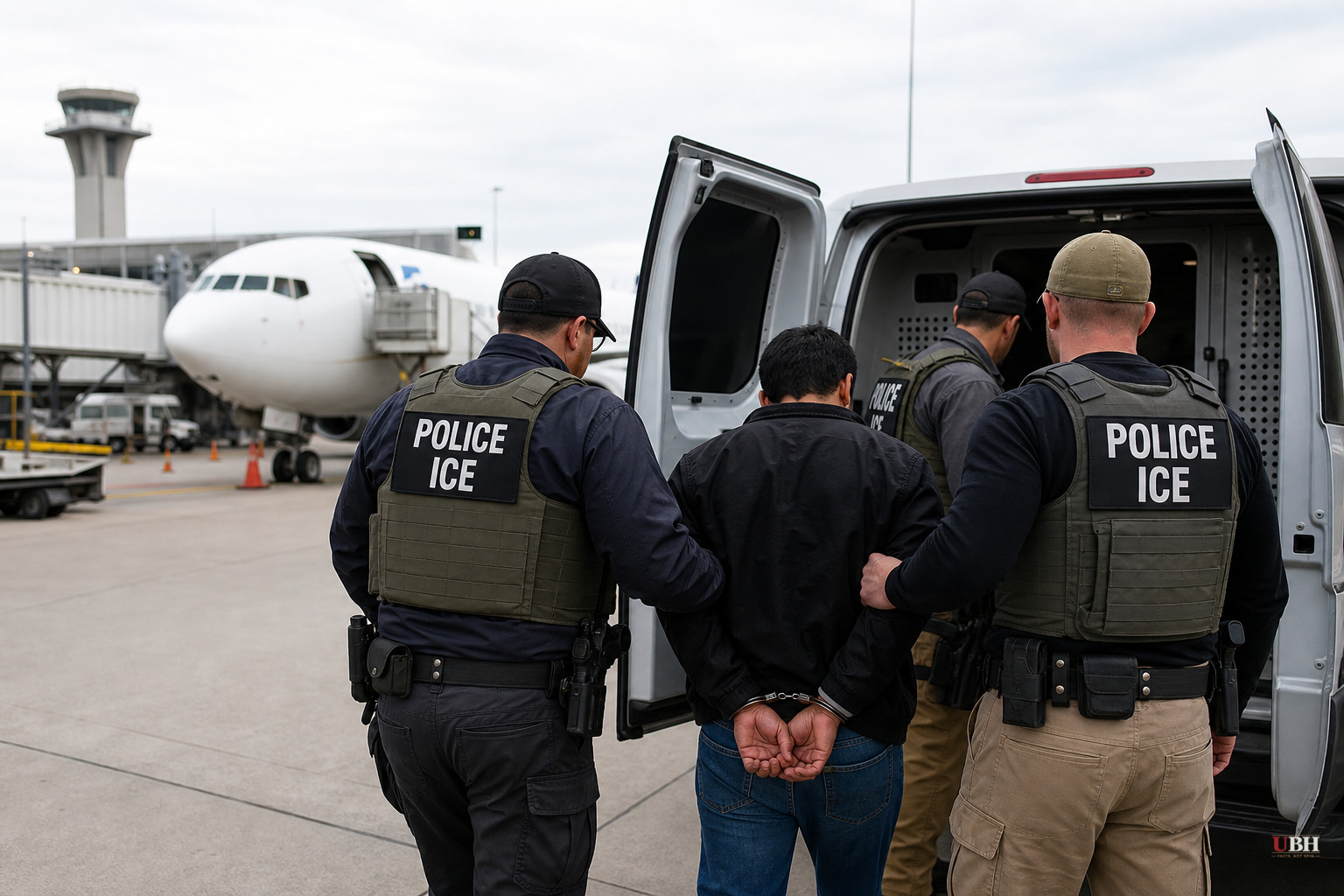
Immigration lawyers and advocacy groups say they're seeing more arrests of travelers at U.S. airports who have pending immigration paperwork, not people with final removal orders. That distinction matters, and it's causing confusion about who's actually at risk.
The pattern shows up in a handful of recent cases. Maria Rosales, a DACA recipient, was arrested at Boston Logan International Airport while flying home to Seattle after attending a Fenway Park game and a World Cup match, according to NBC Boston. Her DACA renewal has reportedly been stalled for three years. ICE says she overstayed a visa when she arrived in the country at age four. Her travel companion, David Ardila, has a pending asylum petition and was arrested alongside her.
Lorenzo Thompson, a Southwest Airlines flight attendant, was detained at Nashville International Airport after a work trip. The Independent reported that colleagues and supporters say Thompson held a valid work permit and had an active asylum application pending. DHS's account differs: the department says Thompson overstayed a six-month visa issued in 2021.
In Denver, ICE was asked directly about the arrest of Chantal Alejandra Morales Rojas, whose detention was captured on video and went viral. The agency's response to Denver's Channel 9 News was blunt: "A work permit and/or a pending asylum case does NOT confer any type of legal status in the United States or prevent ICE from arresting or deporting an illegal alien from the country."
That's a correct statement of immigration law. A pending application is not a green card. A work permit tied to an asylum case is not the same as lawful permanent residency. People in the asylum pipeline, or waiting on DACA renewals, remain technically removable under federal law while their cases are pending, and ICE has always had legal authority to act on that.
The Las Vegas Incident
A separate case in Las Vegas shows how these arrests are also playing out in public, sometimes chaotically. On July 14, plainclothes agents attempted to detain 57-year-old Phu Nguyen at Harry Reid International Airport. Bystanders surrounded the agents and started filming, and the two officers reportedly walked away, leaving Nguyen behind, according to a viral video cited by the Associated Press.
The Associated Press reported that DHS identified Nguyen as a Vietnamese-born Australian citizen who overstayed his U.S. visa. ICE's Los Angeles field office later confirmed on X that the two plainclothes individuals were their agents and that Nguyen was in fact arrested.
The Broader Question
Why are so many of these cases pending in the first place?
Asylum backlogs and DACA renewal delays are not new, and they're not always the applicant's fault. If a DACA renewal has been stuck in processing for three years, as Rosales's reportedly has, that's a government processing failure, not evidence the applicant is gaming the system. People filing on time and waiting for the government to catch up are being treated the same as people with zero paperwork at all.
Immigration attorneys and advocates note that if federal backlogs make it functionally impossible for someone to convert a pending application into legal status within a reasonable timeframe, then "you should have gotten legal status" becomes a much harder standard to defend, even if it's legally accurate on paper.
At the same time, the law doesn't currently carve out an exception for backlog delays. Congress, not ICE, sets asylum and DACA processing rules and timelines. ICE enforcing the law as written isn't lawless just because the underlying system is slow and arguably broken.
What's Changed
What's changed recently, according to immigration lawyers and organizations tracking these cases, isn't the legal authority itself. ICE has always had power to arrest people without final status. The shift appears to be in the willingness to act on pending cases at airports specifically, a high-visibility, low-escape-room setting where people are already funneling through checkpoints and showing ID.
None of the individuals named here—Rosales, Ardila, Thompson, Morales Rojas, or Nguyen—have been shown in these sources to have any criminal charges tied to their immigration status beyond the civil overstay allegations DHS cited. No court rulings on their individual cases have been reported.
How many more people with pending, legitimate applications get swept into this enforcement push before backlog reform, if it ever comes, remains unclear. Congress controls that timeline, not ICE, and there's no legislation currently moving to address it.
Sources used for this briefing
1 link from 1 independent newsroom (syndicated copies of the same report count once)
These are the sources it draws on, linked so you can verify.


