
Unbiased headlines. Facts, not spin.
Every story is an unbiased news briefing written from 110+ sources across the spectrum — sources linked so you can verify it yourself.
 defense
Major Story (7/10)
August 12, 2026 at 10:27 PM
defense
Major Story (7/10)
August 12, 2026 at 10:27 PM
ICE Airport Arrests Using TSA Passenger Data Draw Pushback From Airlines and a New Bill From Rep. Tlaib
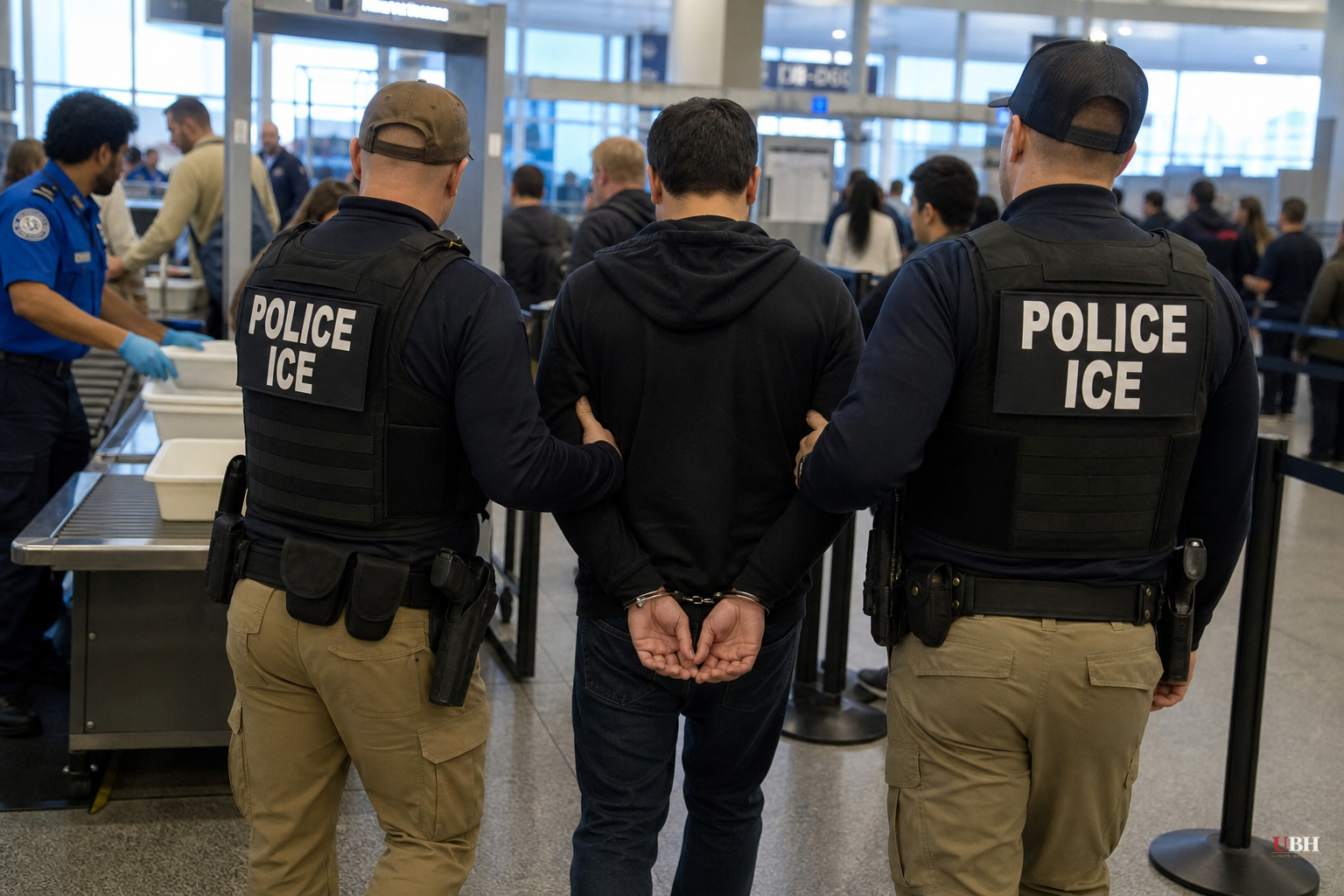
ICE has turned U.S. airports into a regular enforcement zone, and the numbers are no longer anecdotal. Government sources told The Wall Street Journal that ICE officers made between 12 and 36 airport arrests per day last month. That's part of a broader White House push for the agency to hit roughly 2,000 arrests nationwide per day, according to The Independent.
The mechanism is data sharing. TSA has been passing passenger information, including names and photos, to ICE, which cross-references it against enforcement records, according to reporting cited by Jeelani Law Firm and confirmed by documents obtained by watchdog group American Oversight through a Freedom of Information Act lawsuit. That data-sharing agreement dates to May 2025, and The New York Times first reported the arrangement in December 2025.
Who's getting picked up isn't limited to people with final deportation orders. Cyrus Mehta, an immigration attorney writing on his firm's blog with Kaitlyn Box, says arrests have occurred in at least 15 states and increasingly target people whose nonimmigrant visas expired but who have pending adjustment-of-status or asylum applications, sometimes while holding valid work permits or advance parole documents. Mehta notes there's no announced policy change driving this. It's a pattern, not a new rule.
That distinction matters legally. Felipe De La Hoz, writing in The New Republic and cited by Reason, points out that immigrants awaiting a status decision are often explicitly told by the government to stay in the country while their case is pending. Leaving would count as abandoning the petition. A technically expired visa doesn't necessarily mean someone is here illegally; it can mean they're in a government-sanctioned holding pattern.
Several cases have gone viral. ICE agents tackled a Ukrainian woman at San Francisco International Airport, according to Reason. An Ecuadorian au pair was arrested in Denver despite what her lawyer says was a pending status application. Fatima Ameaka, a Johns Hopkins researcher and former Fulbright scholar originally from Cameroon, was detained boarding a domestic flight at Baltimore-Washington International in late July, as reported by The Baltimore Banner and The Independent. A University of Maryland teacher of the year was also detained, according to Reason.
Kelly Rojas, co-director at the Amica Center for Immigrant Rights, told CBS News the escalation looks like quota-chasing. "We think it's because ICE is pursuing detention quotas with regard to underlying eligibility for relief, applications for relief, and also because many of those people are already in the system," Rojas said, adding that such people "are easy targets for ICE."
Airlines are pushing back, not on ideological grounds, but on operational ones. Representatives from the airline industry met with DHS officials to seek clarity on whether agents can execute administrative warrants and whether they'll refrain from boarding aircraft to make arrests, according to The Wall Street Journal as cited by The Independent. Airlines for America, the industry trade group, told the Journal that "airlines have had constructive discussions with ICE and TSA to ensure if law-enforcement activity occurs at an airport, there are proper procedures and protocols in place to prioritize the safety and security of all involved."
That diplomatic language covers real friction on the ground. On July 25 at a Dallas airport, a Southwest Airlines gate agent refused to let an ICE officer board an Orlando-bound flight on an administrative warrant, insisting on a judicial warrant signed by a judge instead, according to internal documents reviewed by The Wall Street Journal. Administrative warrants, issued by ICE itself, don't carry the same authority as a judicial warrant signed by a judge, and airline staff apparently know the difference and are enforcing it.
Rep. Rashida Tlaib (D-Mich.) introduced the No TSA Data for ICE Act on August 3, which would bar DHS from using TSA passenger data for ICE or CBP enforcement and would prohibit stripping people from Trusted Traveler programs over First Amendment-protected activity, according to Newsweek.
DHS's response was blunt. A DHS spokesperson told Newsweek that "as we approach the 25th anniversary of the horrific terror attacks of 9/11, it's not shocking that some in the Democrat Party would want to neuter the Department of Homeland Security's ability to protect Americans from terrorists." The spokesperson said the agency reversed what it called a "horrendous Biden-era policy that allowed aliens in our country illegally to jet around our country," and said Global Entry or other Trusted Traveler memberships aren't revoked for exercising First Amendment rights, only for reasons like criminal activity, immigration violations, or failing to demonstrate low-risk traveler status. DHS added that people who believe a revocation was made in error can request review, and that denial from Global Entry "does not prevent travel."
There's a real security argument underneath the DHS position. Post-9/11 information sharing between TSA and ICE, both DHS components, was built specifically to prevent the kind of interagency blind spots that let the 2001 hijackers slip through. Treating passenger screening data as siloed from enforcement databases would reverse that design choice, and DHS isn't wrong that this tradeoff has real stakes.
The unresolved legal question is what counts as "authorized to remain" versus removable. INA § 287(a)(2) gives ICE broad arrest authority over people believed to be in violation of immigration law, and Mehta notes that a pending application doesn't legally shield someone from arrest even if it makes them a low removal priority under past practice. Whether Tlaib's bill advances, and whether courts eventually weigh in on the administrative-warrant boarding disputes airlines are now contesting, remains to be seen.
Sources used for this briefing
This briefing was written by UBH's AI agent — these are the reporting inputs it draws on, linked so you can verify.


