
Unbiased headlines. Facts, not spin.
Unbiased Headlines is an independently owned news organization. We bring you the facts, not opinions, written fresh from 110+ named sources. Sources linked so you can verify it yourself.
 defense
Major Story (8/10)
IAEA Says It Still Does Not Know Where Iran's Isfahan Enrichment Plant Is or Whether It Holds Nuclear Material
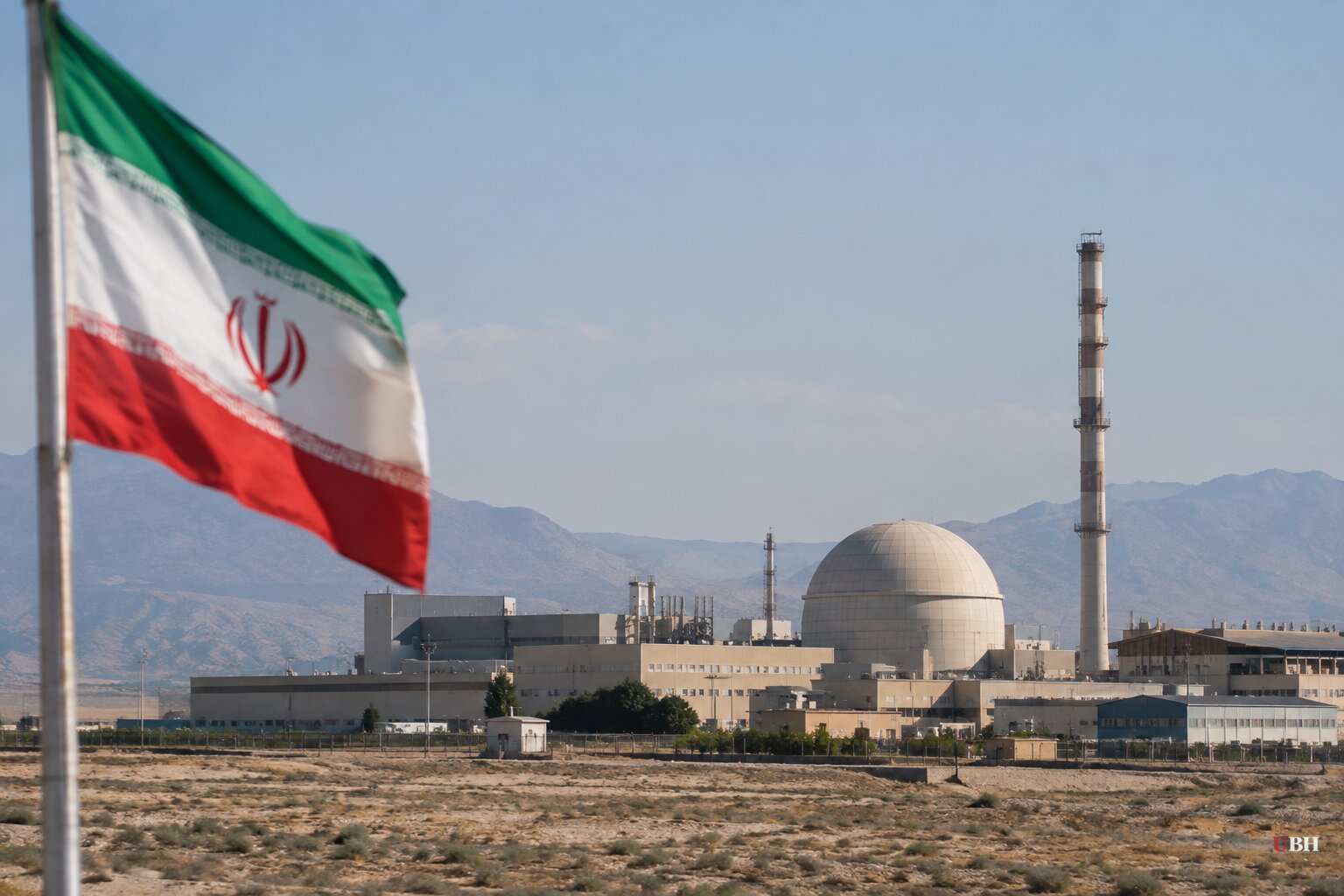
The International Atomic Energy Agency has told its member states it does not know where Iran's newest declared enrichment plant is, what condition it is in, or whether it contains nuclear material.
The finding comes from a confidential quarterly report on Iran circulated Friday, Nov. 13. The agency said it is "increasingly concerned" that Iran has not let it inspect the Isfahan Fuel Enrichment Plant (IFEP) or see its design plans.
A plant declared one day before the bombs fell
Iran declared IFEP to the IAEA on June 12, 2025. Inspectors were scheduled to visit on June 13. That was the day Israel began striking Iranian nuclear sites. The United States joined later that month.
The inspection never happened, and the agency has never seen the plant.
"The Agency does not know IFEP's exact location, status for safeguards purposes or whether it contains nuclear material," the report said.
Diplomats believe the plant sits inside a tunnel network at Isfahan that was among the targets of the 12-day campaign. A senior diplomat said its whereabouts and status remain unknown. The report did not establish that enrichment is actually taking place there.
The stockpile no one can count
IFEP is only part of the problem. Before the June 2025 strikes, Iran had accumulated an estimated 441 kg of uranium enriched to 60%, close to weapons grade. The IAEA's last estimate still puts the figure above 440 kg.
Under the 2015 nuclear deal, Iran agreed to cap its stockpile at 300 kg and enrichment at 3.67%. It later exceeded both limits.
IAEA chief Rafael Grossi said in March that his agency believed a significant amount of Iran's most highly enriched uranium was inside the Isfahan tunnel complex. The agency has not been able to confirm that, because Iran has not let inspectors return to any of the facilities bombed in 2025.
The report called on Tehran to disclose the status of its enrichment plants and account for its highly enriched uranium. It described the lack of information as "a matter of serious proliferation concern" that "needs to be rectified with the utmost urgency."
The agency said it is "fully prepared to resume its safeguards activities in Iran at short notice." Grossi has urged Iran to take limited technical steps that could make visits possible again. Inspectors have had almost no access to Iran's declared facilities since the strikes. The Bushehr power plant is the exception, according to The Media Line.
Tehran's position
Iran does not dispute that access has stopped. It blames the attacks.
The report said Iran told the agency that the situation will not be resolved "until the root causes of the present situation are addressed and the essential requirements for normal safeguards implementation are restored." Iran also told the IAEA this month that monitoring talks cannot proceed while it is under threat of military attack.
Foreign Ministry spokesman Esmaeil Baghaei said Monday that Iran remains committed to the Nuclear Non-Proliferation Treaty. He blamed U.S. and Israeli attacks for limiting cooperation with the agency.
Iran has said its program is for peaceful civilian purposes and that it does not seek nuclear weapons. The IAEA withdrew its inspectors for safety reasons, and Iran later passed a law suspending cooperation with the agency.
Diplomacy and sanctions
The report lands in the middle of an unsettled standoff. Mohsen Rezaei, secretary of Iran's Supreme National Security Council, told state TV on Oct. 31 that Iran is debating whether to keep its longstanding ban on nuclear weapons if hostilities resume. He said no decision on changes has been taken.
Rezaei also said the nuclear issue can only be discussed once the United States meets Iran's demands. In September, a senior Iranian official speaking anonymously told Reuters that Iran would show no flexibility on its nuclear program even if Washington accepted Tehran's proposal to reopen the Strait of Hormuz.
The New York Times reported on Nov. 5, citing five officials including an American and two Iranians, that Iran is reviewing "concrete proposals" from mediators on the future of its nuclear program amid talks with the United States in Doha, Qatar. The officials did not detail the proposals.
Washington is publicly leaning on sanctions. Secretary of State Marco Rubio said earlier this week there was no need to restart military operations in Iran because economic sanctions were working. Treasury Secretary Scott Bessent told CNBC on Friday that President Trump "doesn't think we need a deal" and that the administration will "keep squeezing" Tehran under Operation Economic Outcast, the sanctions campaign launched in late August.
That approach has a cost. The Gulf is still seeing attacks on tankers. The International Energy Agency said in its November report that Gulf oil exports, excluding Oman, reached 18.4 million barrels a day in October, 26% below pre-war levels.
What is left unresolved
Neither sanctions nor strikes have answered the question the IAEA keeps asking: where is the uranium? The agency has not seen Iran's enriched stockpile since before June 2025. It has not seen IFEP at all.
Whether the Doha talks produce any access for inspectors is the open question. For now, Iran ties any nuclear discussion to U.S. concessions, and the United States says it does not need a deal.
Sources used for this briefing
8 links from 8 independent newsrooms (syndicated copies of the same report count once)
These are the sources it draws on, linked so you can verify.


