
Unbiased headlines. Facts, not spin.
Unbiased Headlines is an independently owned news organization. We bring you the facts, not opinions, written fresh from 110+ named sources. Sources linked so you can verify it yourself.
 defense
Major Story (8/10)
Ukraine Launches Nearly 1,200 Drones at Russia as Kallas Warns Against Moscow's 'Traps' in Security Talks
Since U.S. envoys wrapped two days of talks with Russian and Ukrainian delegations in Abu Dhabi this week, the argument has shifted from territory to the future of European security itself. Today, Friday, Nov. 13, Europe's leaders are trying to work out whether they are being invited into the room or just being talked about.
A drone barrage as the diplomacy shifts
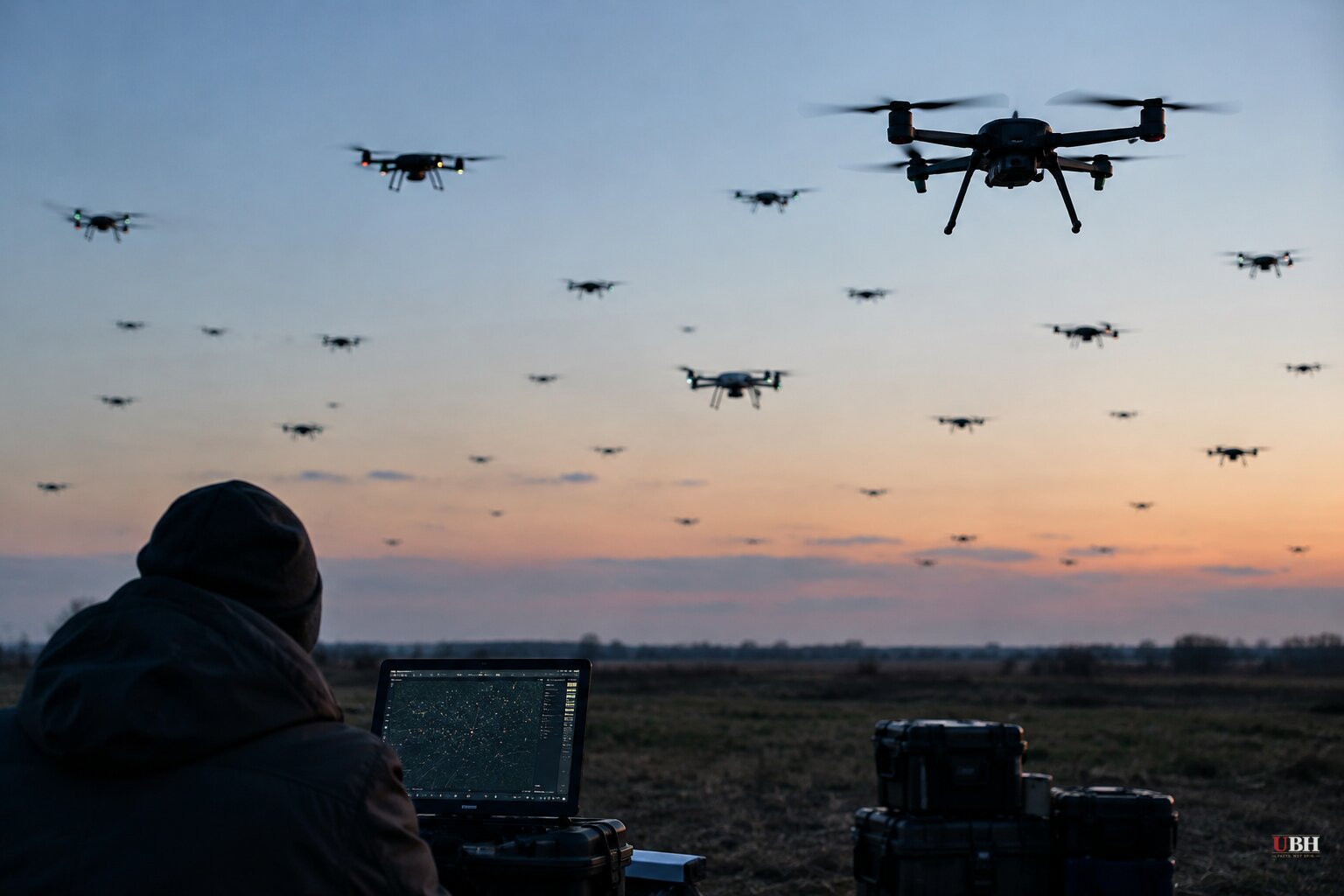
Russia's Defense Ministry said its air defenses downed 1,198 Ukrainian long-range drones between late Thursday and early Friday. That makes it one of Ukraine's largest aerial attacks since the full-scale invasion began nearly five years ago.
Local officials said strikes on three Russian regions killed seven people, including a 12-year-old, and wounded 17.
The overnight attack follows a pattern. On Oct. 30, Ukrainian FP-1 drones hit the Novokuibyshevsk refinery in Russia's Samara region, according to Ukrainian drone maker Fire Point. The company said a diesel hydrotreating unit was among the targets. Kremlin aide Ushakov said Ukraine had "simply" ignored Trump's requests to stop such strikes.
Zelenskyy, meanwhile, repeated his complaint on Friday about speed limits on the U.S. Starshield system, SpaceX's military version of Starlink, which Ukraine relies on for its defense.
What Washington brought back from the Kremlin
After Abu Dhabi, envoys Steve Witkoff and Jared Kushner, the president's son-in-law, briefed Vladimir Putin in the Kremlin in person. They then went to Dublin to brief Zelenskyy, who was meeting EU leaders there.
Kushner said Russia had agreed to include Europe in the next round. Europe's presence, he wrote on X, would let negotiators "address the broader postwar European security arrangements alongside the territorial issues between Ukraine and Russia."
Moscow's own account is narrower. Kremlin spokesman Dmitry Peskov said that "once we understand (Europe's) true intentions and their readiness to facilitate the peace process," Russia could decide on talks in an expanded format. Vladimir Medinsky, Russia's lead negotiator in Abu Dhabi, said it was "unclear what there is to discuss" with Europe.
So the headline claim that Russia agreed is, at best, a claim that Russia has attached conditions to.
Europe's objection
Russia has revived demands for a sweeping overhaul of European security. Similar demands were rejected in 2021 because they infringed on the sovereignty of central and eastern European countries.
Kallas, arriving at the Dublin summit, said Europe should insist on a ceasefire before talks go further. That is the opposite of Putin's demand. "If we start to talk about what Russia is asking regarding the security architecture, we actually walk into the traps that Russia is setting us," she said.
"We have one aggressor and one victim, and the aggressor does not have security concerns," Kallas said. "Nobody has ever attacked them. They have attacked others."
German Chancellor Friedrich Merz, referring to NATO, said: "Russia wants to talk about questions of European security architecture. We don't need to talk about that. There is one." He said it was a "given" that Germany would sit in any European delegation.
European Commission President Ursula von der Leyen called Europe's inclusion "self-explanatory," both to protect European interests and to support Ukraine. Luxembourg Prime Minister Luc Frieden put it bluntly: "We cannot let neither the Americans nor the Russians decide about our future."
The Institute for the Study of War assessed Thursday that Moscow is aiming "to dismantle NATO and the post-Cold War European security architecture."
Who speaks for Europe
There is no agreed answer, even though Washington has now asked for one. Paris and Berlin want their envoys to keep a role in the E3 format with Britain, alongside EU representatives. Smaller member states lean toward European Council President António Costa and Kallas.
Swedish Prime Minister Ulf Kristersson said the debate over representation was "slightly overstated."
European leaders are also wary of Trump's praise for Putin and his administration's sharp criticism of Europe, according to AP's account of the Dublin meetings. That leaves Europe negotiating on two fronts: against Moscow's agenda and over how much Washington will push for it.
What we know and don't
The U.S. envoys say further talks are planned. No date or venue for the next round has been announced, and the Kremlin has not committed to Europe's participation.
A large prisoner exchange was agreed in Abu Dhabi, but the talks ended with no major breakthrough on the war itself.
The immediate test is simple. If Moscow keeps its condition on Europe's "true intentions" and Europe keeps its condition of a ceasefire first, the expanded format Kushner described may never convene. Whether Washington will press Moscow to accept the European demand, or press Kyiv and Brussels to accept the Russian agenda, is the open question.
Sources used for this briefing
8 links from 8 independent newsrooms (syndicated copies of the same report count once)
These are the sources it draws on, linked so you can verify.


