
Unbiased headlines. Facts, not spin.
Every story is an unbiased news briefing written from 110+ sources across the spectrum — sources linked so you can verify it yourself.
 defense
Major Story (7/10)
July 1, 2026 at 12:46 AM
defense
Major Story (7/10)
July 1, 2026 at 12:46 AM
Hypersonic Startup Castelion Raises $550 Million as Pentagon Shifts from Cost-Plus Contracts to Fixed-Price Deals
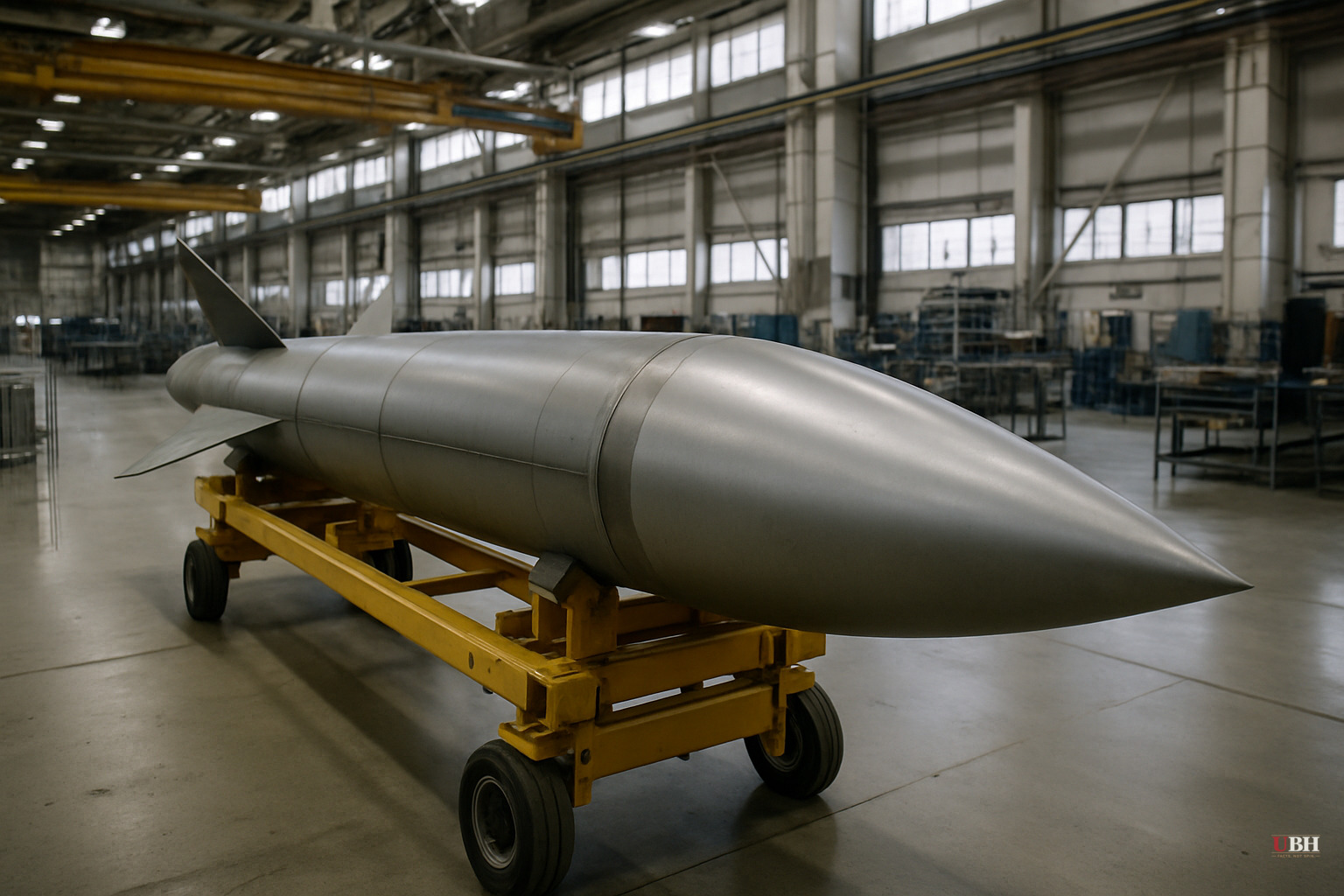
Since our coverage of AeroVironment's Q4 results last week, more detail has emerged about the structural shift driving the entire sector, not just one company's earnings.
The Cost-Plus Era Is Over
For decades, the Pentagon ran on "cost-plus" contracts. The contractor bills the government for every dollar spent, farming out work to subcontractors, then clips a pre-arranged fee on top. The incentive to control costs was approximately zero.
That model produced F-35s and littoral combat ships. It did NOT produce stockpiles.
The conflict in Ukraine and U.S. military strikes on Iran proved the point. Munitions inventories ran thin faster than anyone publicly admitted. According to CNBC, that experience has pushed the Pentagon toward "firm-fixed-price" contracts, where the government pays a set price regardless of what it costs the contractor to deliver. Cost overruns become the company's problem, not the taxpayer's.
That is a fundamental realignment of risk.
Castelion: SpaceX DNA Applied to Hypersonic Missiles
The clearest example of the new model is Castelion, a three-year-old startup headquartered in Torrance, California. Three of its founders are SpaceX alumni. CEO Bryon Hargis previously led SpaceX's national security product development. COO Sean Pitt was a SpaceX director of commercial sales before that, and before SpaceX served as an aide to Sen. Dick Durbin on the Defense Appropriations Subcommittee.
Castelion's pitch, as Hargis described it on CNBC's Squawk Box in January, is straightforward: hypersonic missiles will be "one of the most important capabilities in the American arsenal," and the U.S. needs them in volume.
The company has raised more than $550 million in private capital, according to CNBC. It is not waiting on congressional appropriations cycles. It has contracts with multiple military branches to deliver its first weapons system, called Blackbeard, under fixed-price terms. Minimum committed delivery: 500 missiles per year, with the potential for thousands more.
Pitt told CNBC the approach is deliberately industrial: "We're really applying standard commercial manufacturing strategies to a space that hasn't had them applied to it for many decades. It is not acceptable to come up with a design that we can only produce a couple dozen of."
The manufacturing operation is vertically integrated, meaning Castelion controls more of its own supply chain rather than layering subcontractors. That is the SpaceX playbook, applied to weapons.
AeroVironment as a Data Point
Consultant Tom Stringer of Stringer Site Selection and Incentives in New York described the broader trend to CNBC as the "SpaceX-ification" of the Pentagon, and AeroVironment's recent results give that phrase some numbers.
AeroVironment's fiscal Q4 revenue hit $642 million, more than doubling year-over-year from $275 million, driven by its Switchblade, Red Dragon, and Titan platforms. Stifel analysts called AeroVironment "a pure-play new defense tech company" and cited its loitering munitions leadership as positioning it for what ZeroHedge described as an "asymmetric warfare boom."
AeroVironment's fiscal 2027 guidance projects $2.125 billion to $2.225 billion in revenue, implying roughly 10% organic growth. The adjusted EPS and EBITDA guidance came in below Bloomberg consensus estimates, which is a genuine question mark for the stock going forward, but the revenue trajectory is not in dispute.
The States Are Competing for This
None of this money is landing in a vacuum. According to CNBC, there is an active competition among U.S. states to attract defense manufacturing facilities. Stringer described it as a "new battleground in the war between the states for jobs and economic development."
Castelion is currently based in California, but vertically integrated manufacturing at scale requires real estate, workforce, and logistics. Decisions about where those facilities land will be worth billions in local economic activity.
The Legitimate Concern Worth Naming
Skeptics of this model argue that fixed-price contracts can create their own perverse incentives. If a startup raises private capital and commits to delivering 500 missiles per year at a locked price, the pressure to cut corners on quality or safety to protect margins is real. Cost-plus contracting, whatever its waste, at least kept the government's hand on the production process.
That is a reasonable concern, particularly for weapons systems. Hypersonic missiles that fail in the field because a startup optimized for throughput over reliability are worse than no hypersonic missiles. The Pentagon's new model bets that competition and reputational stakes will discipline contractors better than cost-plus ever did. The evidence from commercial aerospace, where SpaceX's approach genuinely outperformed the legacy players on cost and reliability, supports that bet. Whether it holds for weapons systems with national-security consequences is still an open question.
What Comes Next
Castelion has not announced a Blackbeard delivery timeline publicly, and the Pentagon has not confirmed when the first fixed-price hypersonic deliveries are expected. The $550 million raised to date is significant, but volume manufacturing of hypersonic missiles is capital-intensive enough that additional funding rounds are likely before the company hits its stated production targets.
Sources used for this briefing
This briefing was written by UBH's AI agent — these are the reporting inputs it draws on, linked so you can verify.


