
Original briefings. Zero spin.
Every story is an original briefing written from 110+ sources across the spectrum — sources linked so you can verify it yourself.
 tech
Major Story (8/10)
Event date: September 10, 2026
tech
Major Story (8/10)
Event date: September 10, 2026
Huawei Racketeering Trial Opens in Brooklyn: Prosecutors Allege 20-Year 'Culture of Crime'
A Case Eight Years in the Making Finally Goes to Trial
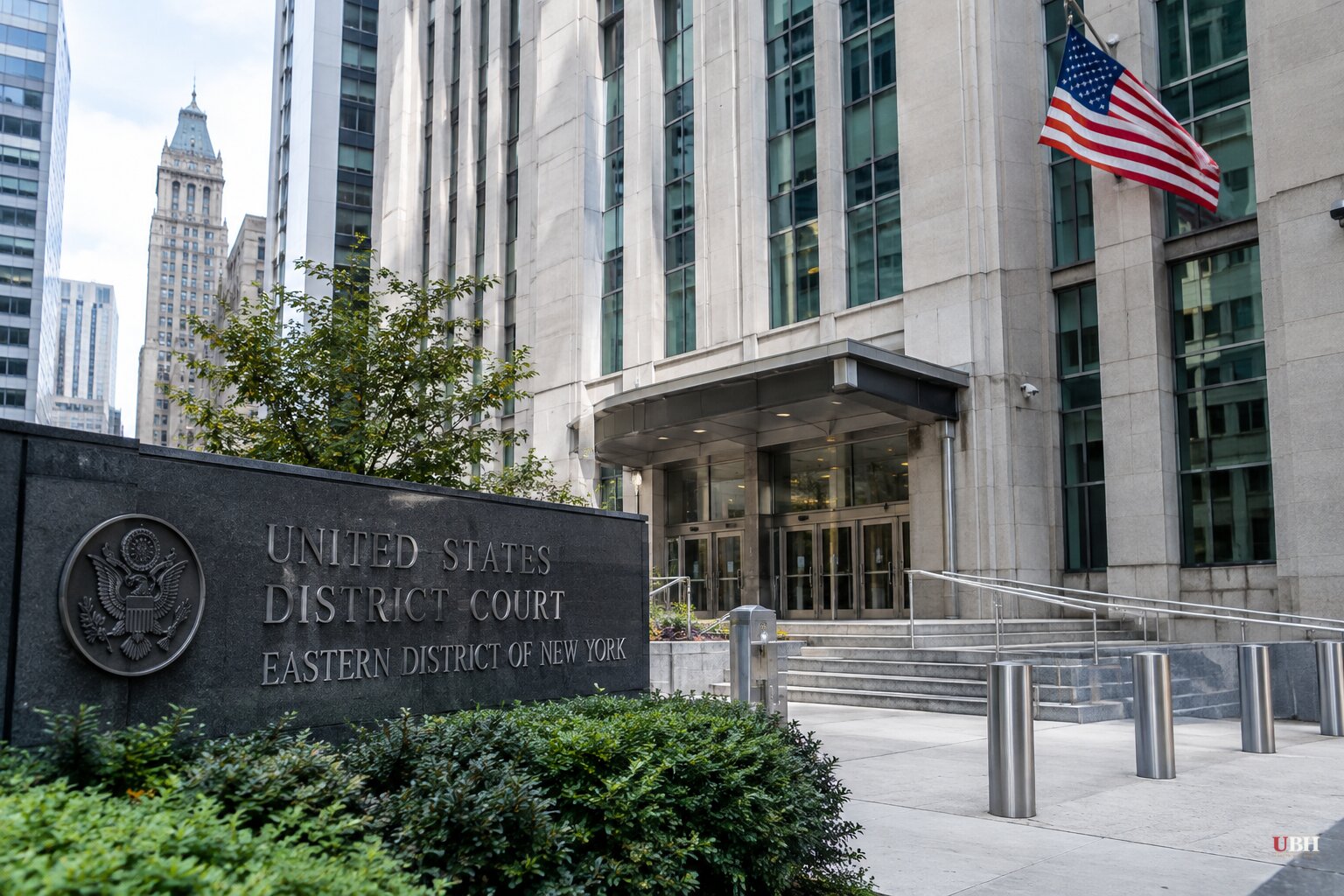
Opening statements in the criminal case against Huawei Technologies began Wednesday, September 9, in federal court in Brooklyn. By Thursday the trial had moved into its second day of testimony, according to the South China Morning Post. The case dates back to an indictment unsealed in early 2019, months after Huawei chief financial officer Meng Wanzhou was arrested in Canada at the request of U.S. authorities, according to SL Guardian.
DOJ trial attorney Taylor Stout told the 18-person jury the company's rise was built on "theft, lies, cover-up," according to Reuters. "For 20 years, that's how Huawei, a massive Chinese telecommunications company, victimized American companies and abused the American financial system, all in an effort to dominate the telecommunications industry around the world," Stout said.
Stout went further in a separate statement carried by Courthouse News Service and The Epoch Times, telling jurors Huawei "cultivated a culture of crime and corruption, and that crime was an important business strategy." According to SCMP, Stout tied that culture directly to the top of the company, naming founder Ren Zhengfei and his daughter, Meng Wanzhou.
What Prosecutors Say Happened
The fourth superseding indictment contains 12 counts the jury will consider, including racketeering conspiracy, trade-secret theft, bank and wire fraud, conspiracy to defraud the United States, violations of the International Emergency Economic Powers Act, money laundering, and obstruction of justice, according to Courthouse News Service. The Department of Justice dropped two sanctions-related counts shortly before trial, according to iclg.
Prosecutors allege Huawei and subsidiaries Huawei Device, Huawei Device USA, and Futurewei Technologies stole intellectual property from at least six companies, including Cisco, Fujitsu, Quintel Technology, T-Mobile, and CNEX Labs, according to SL Guardian. One specific allegation: a Huawei employee was recorded photographing and disassembling a T-Mobile robotic arm used to test phone touchscreens, removing a key part and placing it in a backpack, according to Courthouse News Service and the Reuters account carried by U.S. News & World Report.
Prosecutors also allege that a Huawei engineer who stole antenna technology from New York-based Quintel received a company bonus for it, according to The Epoch Times. After one U.S. company sued Huawei over alleged copied router software, prosecutors say Huawei wiped memory drives on recalled equipment and shipped it back to China before it could be inspected, with employees also attempting to remotely erase disputed code from routers already sold in the U.S., according to iclg.
A second track of the case centers on Skycom, a Hong Kong-based firm prosecutors say functioned as Huawei's Iran subsidiary while being publicly presented as independent. Skycom allegedly sought to supply more than €1.3 million in embargoed Hewlett-Packard equipment to an Iranian mobile operator, and U.S. authorities say more than $100 million tied to Skycom passed through the U.S. banking system, according to iclg. U.S. officials also allege Skycom equipment helped Iran's government surveil its own citizens during the 2009 Tehran protests, according to Courthouse News Service.
The Defense: Isolated Incidents, Not a Conspiracy
Huawei attorney Brian Heberlig of Steptoe pushed back hard in his opening. "It's about competition, not conspiracy. Innovation, not theft. Ordinary business dealings, not criminal conduct," Heberlig told jurors, according to Reuters. "Huawei earned its success. There was no blueprint for crime."
Heberlig argued the government is stretching a handful of incidents across two decades into a racketeering case, pointing to yearslong gaps in the government's timeline between 2000 and 2020 that he says undercut the conspiracy theory, according to Courthouse News Service. He said the T-Mobile and Cisco incidents were the actions of individual employees, and that Huawei's management moved to correct matters once informed. The defense's strongest claim on the record is that isolated employee misconduct, disciplined internally, does not amount to a company-wide criminal enterprise. Whether jurors find that credible over three months of testimony will determine the case's outcome.
Heberlig also addressed Meng Wanzhou's 2021 admission that she lied to a financial institution about the company's Iran sanctions compliance, telling jurors it should not be read as a corporate "confession," since Meng did not admit that anyone at Huawei acted with criminal intent, according to SCMP.
What's Different From the Indictment
U.S. District Judge Ann Donnelly, presiding over the case, told jurors at the outset to separate the criminal allegations from broader geopolitics, saying plainly: "China and the Communist Party are not on trial," according to iclg. That instruction matters because no individual Huawei executives, including Meng, are defendants in this trial. Only the corporate entities face the charges.
Beijing has weighed in publicly. A Chinese foreign ministry spokesperson said Thursday that "the Chinese government firmly opposes the U.S. side's suppression and containment of Chinese enterprises," and that China "firmly supports Chinese enterprises in safeguarding their legitimate rights and interests," according to Reuters and The Guardian.
What's Next
The trial is expected to run roughly three months, according to Courthouse News Service, with the prosecution planning to call former Huawei employees, individuals who say they caught Huawei stealing technology, and telecommunications experts, according to SL Guardian. Key witnesses were expected on the stand Thursday as the second day of testimony got underway, according to SCMP. No verdict is expected for weeks at minimum, and Huawei's networking gear remains restricted in the U.S. market regardless of the trial's outcome, under Commerce Department export controls already in place.
Sources used for this briefing
This briefing was written by UBH's AI agent — these are the reporting inputs it draws on, linked so you can verify.


