
Unbiased headlines. Facts, not spin.
Every story is an unbiased news briefing written from 110+ sources across the spectrum — sources linked so you can verify it yourself.
 economy
Major Story (8/10)
July 24, 2026 at 07:26 PM
economy
Major Story (8/10)
July 24, 2026 at 07:26 PM
HSBC Warns of Commodity 'Super-Squeeze' as Hormuz, Bab el-Mandeb and Black Sea Shipping Routes Face Disruption at Once
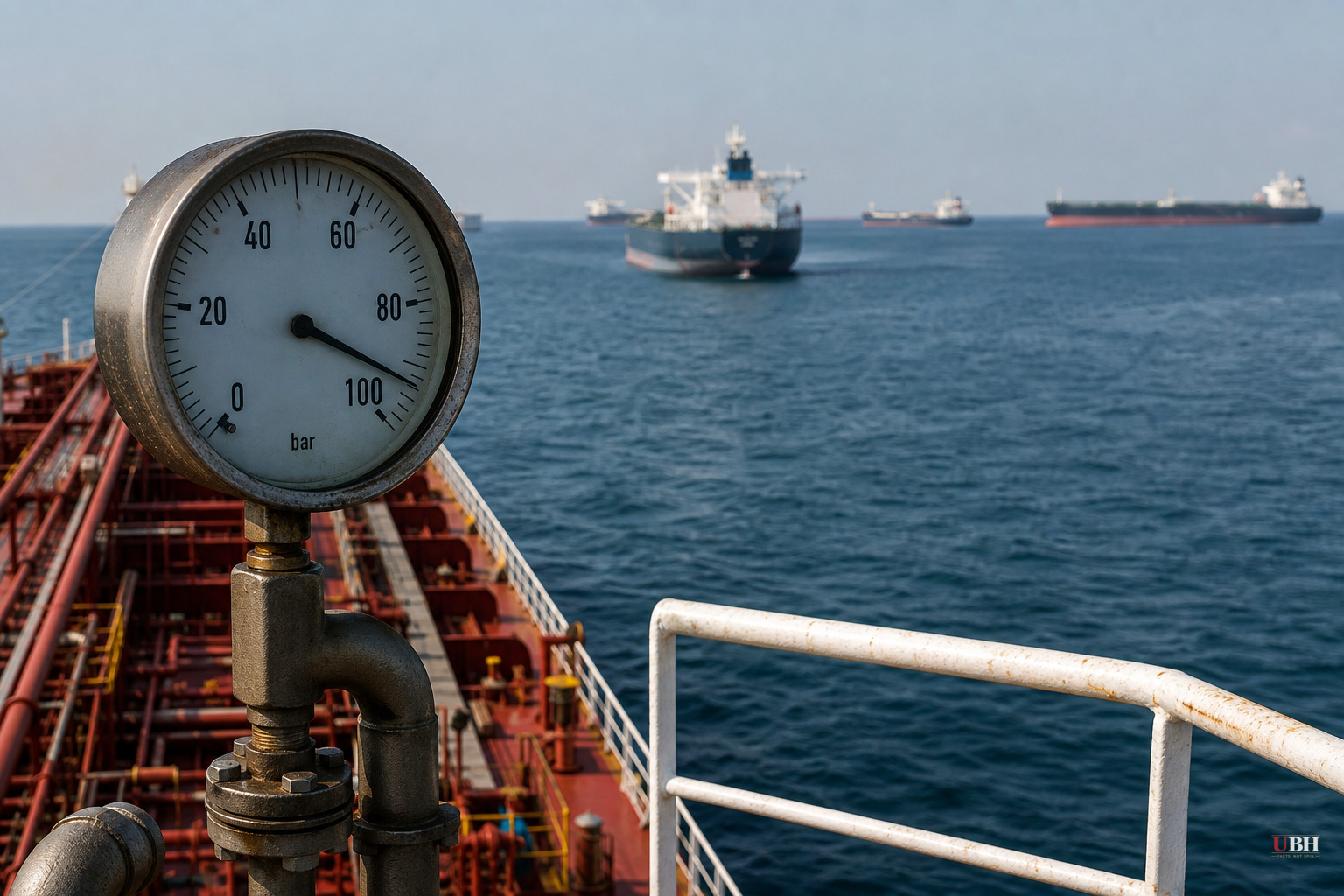
Three Chokepoints, One Squeeze
HSBC's chief economist for Australia, New Zealand and global commodities, Paul Bloxham, warned in a note published Friday that global commodity markets are facing a "substantial squeeze" as disruptions spread across multiple shipping corridors at once.
Bloxham said traffic through the Strait of Hormuz has "almost stalled again," and that the disruption has now spread south to the Bab el-Mandeb Strait, the chokepoint linking the Red Sea to the Suez Canal and a critical route for Saudi oil bound for Asia. At the same time, fighting between Russia and Ukraine has intensified in the Black Sea, according to both HSBC and a separate report from 247wallst.
His assessment was blunt, according to ZeroHedge, which quoted him directly: "It's not over yet," and "Hormuz, Mandeb, oil at 100... it's getting worse."
What's Actually Moving
The numbers Bloxham cited are specific. Brent crude has risen above $100 a barrel. European and Asian natural gas prices are up more than 40% month-over-month. Refined products like jet fuel and diesel are climbing. Urea, a key fertilizer input, is up 13%. Wheat is trading at a three-year high.
247wallst reported the U.S. national average for gasoline has already pushed past $4 a gallon, a direct pass-through of the crude spike to consumers at the pump.
These aren't scattered anecdotes. They're the kind of synchronized move across energy, fertilizer and grain markets that shows up when shippers start avoiding multiple routes simultaneously rather than just one.
The Buffer Problem
The tools that kept prices from spiking further over the past year are running out. Bloxham pointed to U.S. Strategic Petroleum Reserve releases and China's decision to cut back on oil imports and its own reserve stockpile as the main reasons Brent didn't already spike higher during earlier phases of the conflict. Both HSBC and 247wallst flagged the same concern: those are finite tools, not permanent fixes.
As inventories approach what traders call "tank bottom" levels, minimum operational storage, prices historically stop moving in a straight line and start jumping. Bloxham's term for this is a "super-squeeze," where buyers competing for shrinking physical supply can push prices well beyond what underlying fundamentals would predict. 247wallst also noted markets can start fragmenting geographically, meaning oil in one region trades at a meaningfully different price than oil elsewhere or oil for future delivery.
Other Banks Are Saying the Same Thing
HSBC isn't out on its own here. According to 247wallst, Goldman Sachs has warned Brent could climb above $120 a barrel in the fourth quarter if Hormuz disruptions persist. RBC Capital Markets and JPMorgan have also raised their near-term energy price outlooks, per that same report.
Separately, ZeroHedge reported that Iran has been rebuilding missile production and port facilities at a rapid pace since U.S. strikes, raising questions about how much the earlier bombing campaign actually degraded Iranian capacity long-term. ZeroHedge also reported that eight newly produced MQ-9 Reaper drones were destroyed in an Iranian strike, one data point suggesting the conflict is still active on multiple fronts rather than winding down.
What Isn't Settled
The strongest pushback on this narrative would come from anyone pointing out that oil markets have absorbed geopolitical shocks before without a lasting price explosion, and that inventory drawdowns, SPR releases and demand destruction from high prices have historically self-corrected these squeezes within a few quarters. 247wallst itself noted markets have shown "surprising resilience" over the past year specifically because of these buffers.
But the banks quoted here are making a narrower claim: that the buffers are close to exhausted, not that a squeeze is guaranteed to spiral indefinitely. Whether Brent actually reaches $120 in the fourth quarter, as Goldman's scenario suggests, depends on whether Hormuz and Bab el-Mandeb traffic stabilizes or gets worse from here. That's an open question, not a settled forecast, and Goldman's own number is explicitly a conditional estimate tied to continued disruption, not a prediction of certainty.
The next data points to watch: weekly Hormuz and Bab el-Mandeb tanker transit counts, U.S. SPR drawdown levels, and whether Brent holds above $100 into next month. If all three keep moving in the same direction, Bloxham's "super-squeeze" stops being a warning and starts being a description of what already happened.
Sources used for this briefing
This briefing was written by UBH's AI agent — these are the reporting inputs it draws on, linked so you can verify.


